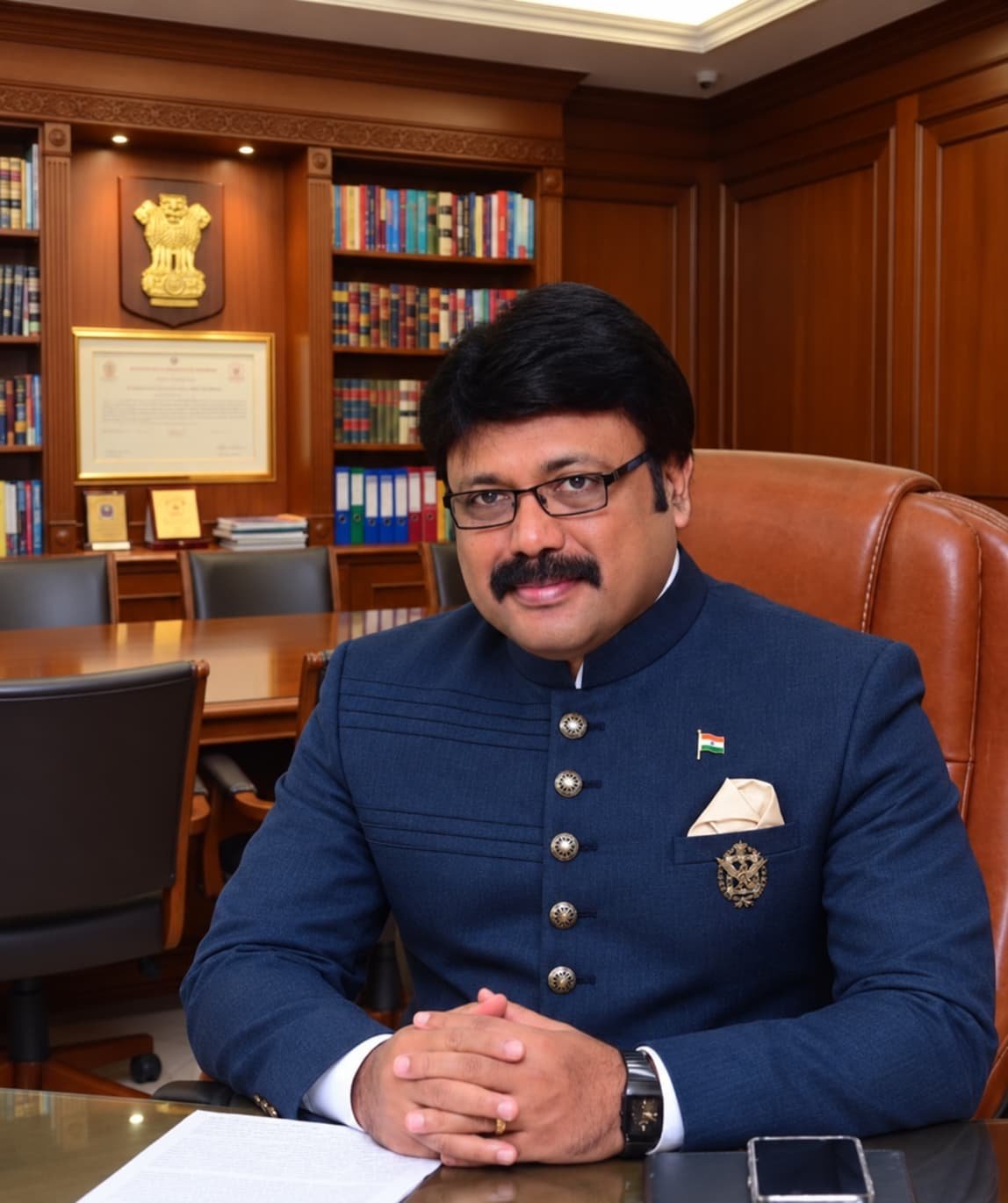
– Dr. Anup Dayananda Sadhu
“Nation building isn’t really about vision statements. It’s about people, the systems they work within, and whether execution actually happens on the ground.”
Over three decades in Indian Railways have given Dr. Anup Dayananda Sadhu a career that has crossed multiple dimensions of public service. From operations and safety to commercial management, multimodal logistics, cybersecurity and digital transformation, his journey has moved between grassroots execution and strategic leadership.
For Dr. Sadhu, the defining moments have rarely been the announcements surrounding an initiative. They have been the occasions when a genuine problem was converted into measurable improvement, whether through stronger safety records, higher freight throughput, modernised passenger services, strengthened logistics networks or maintaining continuity during the COVID 19 crisis.
His experience has shaped a straightforward understanding of nation building. Vision is important, but its real value is determined by whether it survives the test of reality. Effective nation building, in his view, depends on people, systems and disciplined execution working together.
DIGITAL INNOVATION WITH THE CITIZEN AT THE CENTRE
Dr. Sadhu’s approach to digital transformation has consistently been grounded in a simple principle: technology should make public services faster, simpler and easier for ordinary citizens.
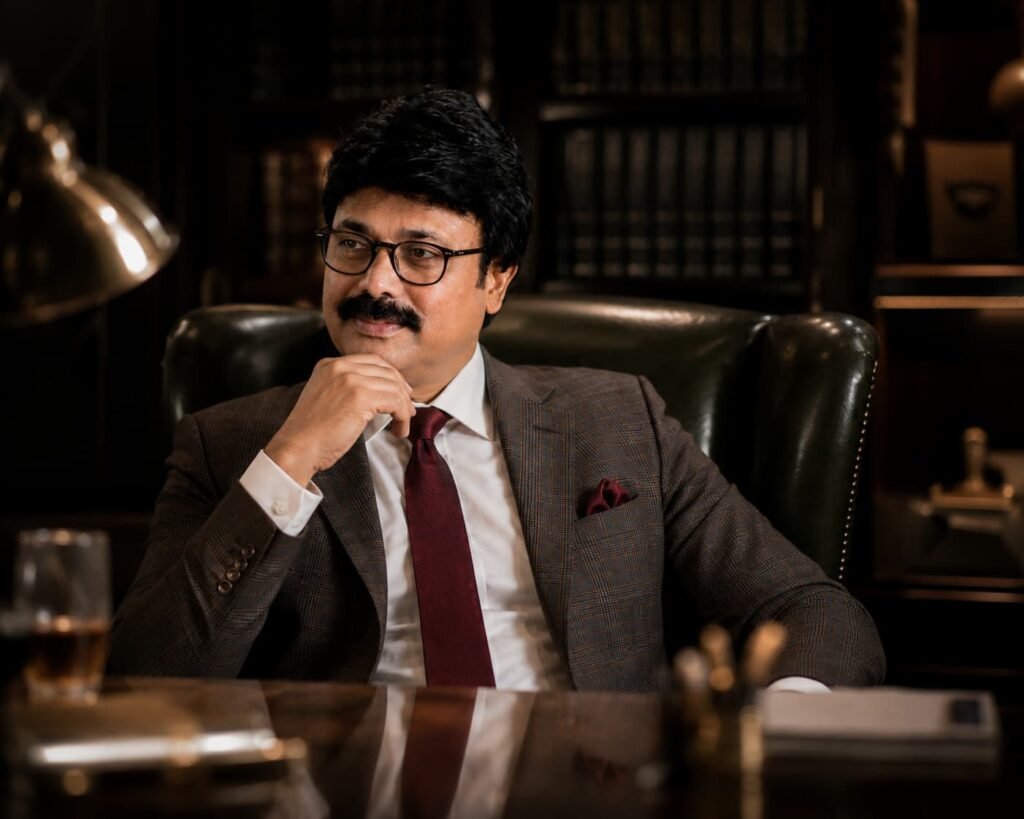
“Technology is only worth introducing if it makes a public service faster, simpler, or easier for an ordinary citizen to use.”
This philosophy shaped initiatives including E TR, QR based ticketing, UTS on Mobile, Automatic Ticket Vending Machines and railway station Wi Fi. Some of these initiatives achieved significant adoption. E TR reached close to 96 percent adoption across South Western Railway, while QR ticketing accounted for roughly a fifth of ticketing and ATVMs crossed a quarter of total ticket sales.
Yet for Dr. Sadhu, adoption figures were only part of the story. The deeper transformation was the movement toward self service, greater transparency and a passenger experience that reduced dependence on traditional queues.
His approach to innovation begins with observing how people actually use a system rather than simply examining how the system was designed. By identifying the gap between what an institution offers and what citizens need, he seeks opportunities to rethink established processes.
The onboard railway infotainment system, the railway station Wi Fi facility at Mysuru and the PPP retiring room emerged from this philosophy of identifying a need, bringing the right people together, testing an idea and scaling it once its value becomes clear.
SAFETY THROUGH SYSTEMS, DISCIPLINE AND PEOPLE
Safety has been another defining dimension of Dr. Sadhu’s leadership. During his tenure in the Bangalore Division, he helped build and roll out a Rail Safety Management System, contributing to a reduction in train accidents of more than 50 percent.
His experience demonstrates that safety cannot depend upon a single intervention. It requires systems thinking, disciplined processes, data, continuous monitoring and a strong culture of accountability.
The approach involved strengthening operational and safety procedures, identifying vulnerabilities, monitoring compliance and encouraging a culture where safety became a shared responsibility.
For Dr. Sadhu, sustainable safety emerges when technology, processes and people move in the same direction. The lesson extends beyond railways: complex institutions perform reliably when systems are designed to support the people responsible for operating them.
BUILDING AN INTEGRATED LOGISTICS ECOSYSTEM
His experience with CONCOR provided another perspective on India’s infrastructure landscape, particularly through exposure to multimodal logistics and EXIM trade.
India’s logistics ecosystem remains fragmented, but Dr. Sadhu sees significant potential in creating stronger integration between rail, road, ports, inland container depots and logistics parks. These components need to function as a connected chain rather than as independent systems.
The next phase, in his view, requires stronger modal integration, better digital visibility, improved last mile connectivity, expanded logistics parks and closer coordination between ports, rail and road.
Rail has an important role to play as the backbone of long distance freight. Reducing logistics costs and improving cargo movement would not merely create operational efficiencies. It would strengthen India’s competitiveness in global markets.
CREATING PUBLIC VALUE THROUGH EFFICIENCY
Dr. Sadhu’s leadership philosophy does not position financial discipline, efficiency and innovation as competing priorities. Instead, he sees them as complementary elements of effective institutional management.
His approach revolves around three practical questions: Can this be done better? Can it be done more economically? And can technology or innovation create additional value?
This philosophy has guided initiatives involving freight optimisation, savings, logistics infrastructure and non fare revenue, contributing to more than ₹150 crore through savings and revenue enhancement.
For him, effective public sector management is ultimately about creating maximum public value from every rupee spent while maintaining service quality and avoiding compromises.
CYBER RESILIENCE AS INSTITUTIONAL GOVERNANCE
As digital systems become increasingly embedded in critical infrastructure, Dr. Sadhu believes cybersecurity must evolve beyond conventional protection mechanisms.
His experience in cybersecurity governance has reinforced the importance of cyber resilience, including stronger data protection, identity and access management, regular risk assessments and the ability to recover quickly when incidents occur.
But technology alone cannot provide security. Human behaviour, organisational habits and accountability remain equally important. This is why he views cybersecurity as a board level governance responsibility rather than an issue that belongs exclusively to the IT department.
His perspective reflects a broader understanding of institutional resilience: organisations must prepare not only to prevent disruption but also to respond effectively when disruption inevitably occurs.
BRINGING INSTITUTIONAL EXCELLENCE TO HEALTHCARE
Dr. Sadhu’s leadership journey is now extending into healthcare as CEO Designate and Administrator at Acharya Healthcare. While healthcare represents a new institutional environment, many of the principles developed during his public service career remain relevant.
His medical education at Bangalore Medical College and MD in Psychiatry from NIMHANS provide an additional perspective grounded in medicine. Combined with his experience managing large and complex organisations, this background informs his vision for healthcare institutions.
At Acharya Healthcare, his objective is to bring clinical quality, patient experience, technology, operational efficiency and ethical governance together rather than treating them as isolated functions.
The underlying principle remains consistent with his approach to public service: institutions should be designed around the needs of the people they serve.
A VISION FOR SYSTEMIC NATION BUILDING
Looking ahead, Dr. Sadhu envisions an India where infrastructure is integrated, technology enabled and centred on citizens.
For transportation, this means seamless movement across different modes. For logistics, it means stronger coordination between rail, road and ports. For healthcare, it means accessible institutions designed around patient outcomes. Across sectors, digital infrastructure must contribute to transparency, resilience and improved service delivery.
His vision ultimately extends beyond infrastructure and technology. Sustainable transformation requires institutional leadership capable of developing people, strengthening systems and preparing the next generation of leaders.
For Dr. Sadhu, the essence of nation building is therefore not simply creating something new. It is building systems that continue to function after their creators have moved on, empowering the people who inherit them and leaving behind institutions that continue serving society.
THE LEGACY OF SYSTEMS THAT OUTLAST THEIR BUILDERS
Dr. Anup Dayananda Sadhu’s career reflects a leadership philosophy shaped by execution, innovation and institutional responsibility. From railway safety and digital transformation to multimodal logistics, cybersecurity and healthcare, his journey demonstrates the interconnected nature of modern public and institutional leadership.
His recognitions, including the National Award for Outstanding Service in Administration and the National Tourism Award, reflect different dimensions of this journey. His book Journey of a Thousand Shrines and his work in implementing the Karnataka Bharat Gaurav Train further connect administration with culture, tourism and technology.
Yet the broader measure of his leadership lies in the systems he has helped create and the people those systems serve.
His vision is ultimately about continuity: build well, empower others and create institutions capable of delivering value long after an individual leader has moved forward