“Technology doesn’t replace experience it empowers better decisions. The future of construction belongs to those who combine both.”
– Greg Fuller
Construction has always been measured by what people can see. Towering skylines, landmark developments, and billion-dollar infrastructure projects have traditionally defined success through concrete, steel, and architectural ambition. Greg Fuller sees the industry differently. For him, the true measure of a successful project lies beneath the surface in the systems that manage risk before it becomes failure, the data that guides better decisions before mistakes occur, and the sustainability strategies that create value long after construction has finished.
This perspective has been shaped over more than forty years of experience spanning Australia, the United Kingdom, and the United Arab Emirates. It is a journey that has taken him from managing some of Australia’s largest construction projects to pioneering solar passive building design, developing innovative commercial management systems, and now researching the future of sustainable construction through doctoral studies. Every stage of that journey has reinforced one conviction: construction cannot continue relying on yesterday’s methods to solve tomorrow’s challenges.
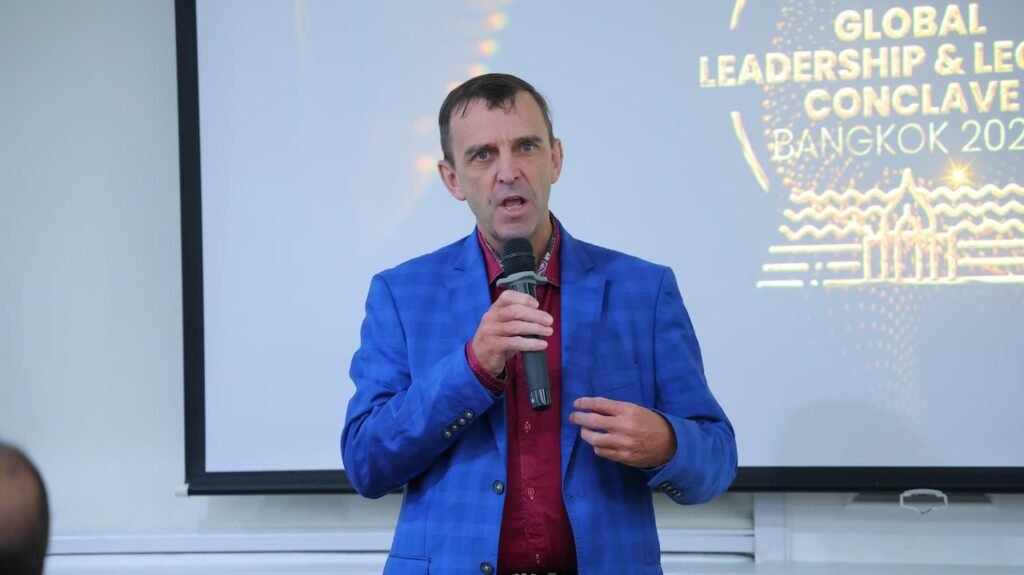
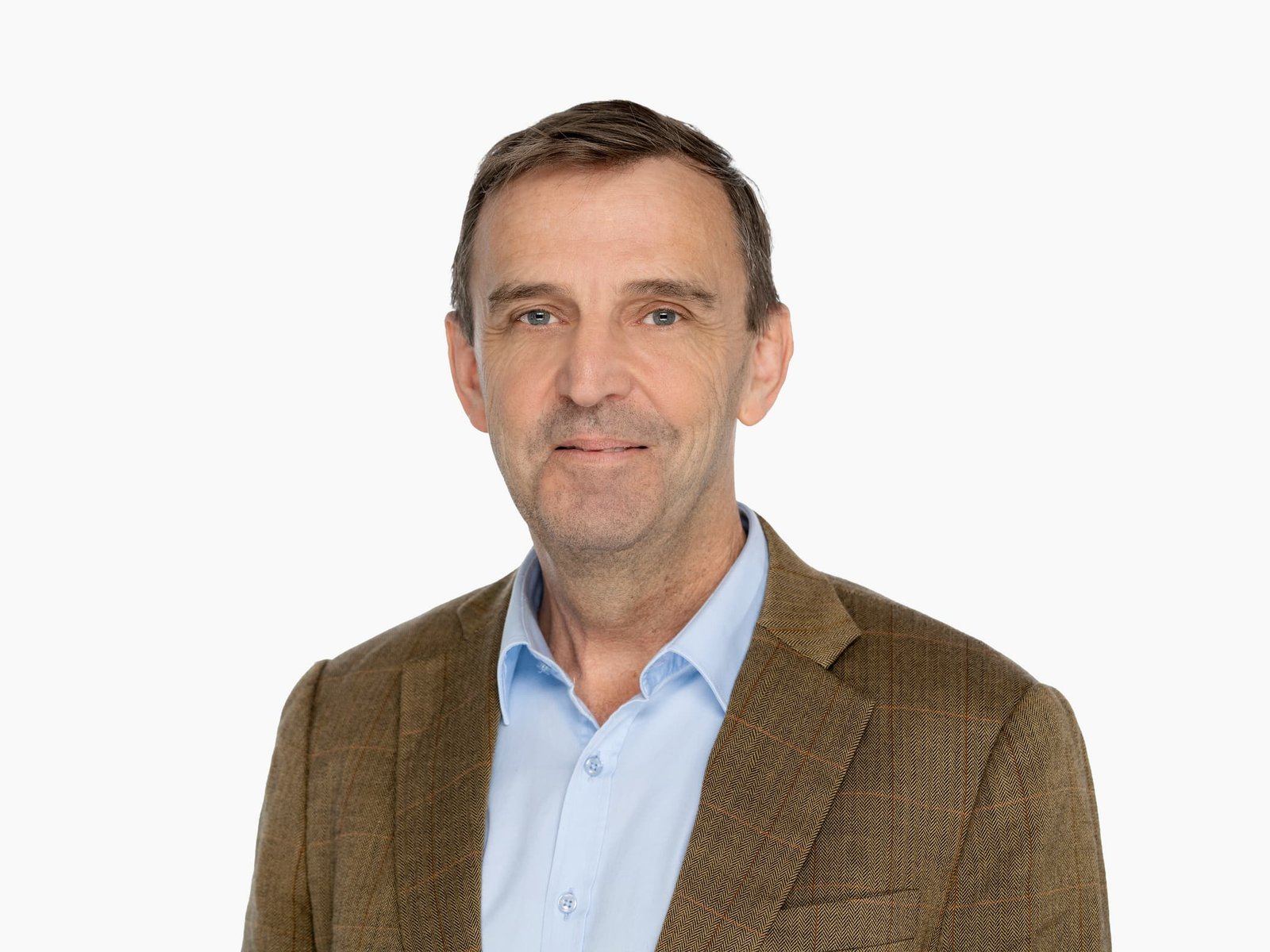
Today, as Founder of Sure Growth Management Services, a LEED Accredited Professional, and a doctoral researcher specialising in sustainability within the UAE construction sector, Fuller is combining decades of practical knowledge with emerging technologies to help reshape how the industry approaches project management, commercial performance, and environmental responsibility.
A CAREER THAT BEGAN WITH CURIOSITY, NOT A CAREER PLAN
Greg Fuller’s introduction to construction was not driven by business ambition or corporate aspiration. It began with simple curiosity. Growing up around building sites, he became fascinated by how projects came together and initially dreamed of becoming a tradesman. His parents, however, encouraged him to pursue university, a decision that would ultimately broaden his understanding of the industry far beyond traditional construction management.
At the University of New South Wales, Fuller studied virtually every discipline connected with the built environment, including structural engineering, commercial management, surveying, property valuation, environmental design, accounting, law, thermal dynamics, and town planning. Rather than viewing construction through a single professional lens, he learned to understand it as a complete ecosystem where technical decisions, financial management, engineering, sustainability, and human behaviour constantly influence one another.
That broad perspective became one of the defining characteristics of his career. Securing one of the most competitive cadetships in Australia with Graeme Evans Construction, he quickly progressed from purchasing into project management, earning recognition for his ability to identify inconsistencies within complex documentation and resolve commercial challenges before they disrupted project delivery.
QUALITY WAS NEVER THE DESTINATION. IT WAS THE FOUNDATION
One of the defining moments of Fuller’s career came during the expansion of Sydney International Airport in 1990. While delivering one of Australia’s most significant infrastructure projects, he helped establish what became the world’s first actively operating construction Quality Assurance system together with a fully functioning Safety Management System.
“Building Smarter Today to Create a More Sustainable Tomorrow.”
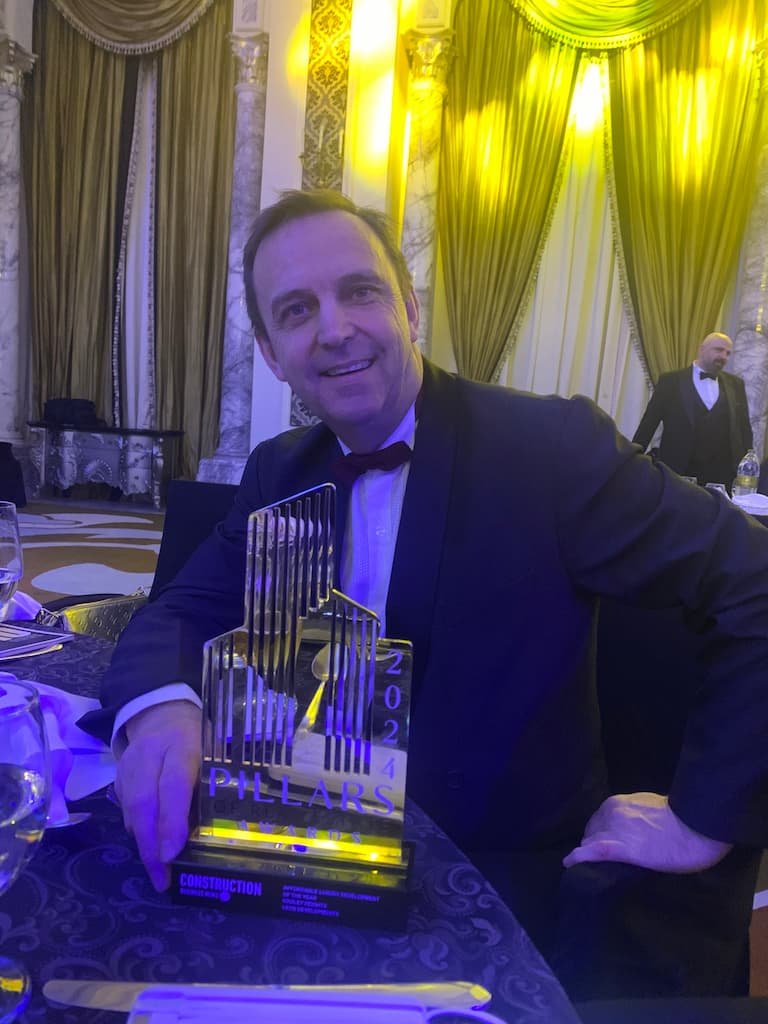
For many professionals, this achievement would have represented a career milestone. For Fuller, it became something much more important. It confirmed that great projects are rarely created by individual brilliance alone. They succeed because strong systems allow people to make better decisions consistently.
That philosophy has remained constant throughout his career. Whether managing billion-dollar developments or advising organisations on commercial performance, Fuller has always believed that process, discipline, and continuous improvement deliver results far more effectively than reacting to problems after they appear.
LONG BEFORE SUSTAINABILITY BECAME A GLOBAL PRIORITY
Today, sustainability dominates conversations across the construction industry. Carbon reduction, circular economies, green certifications, and net-zero commitments have become strategic priorities for governments and developers alike. Greg Fuller began exploring these ideas decades before they became industry expectations.
While operating his own business in Canberra, he focused extensively on true solar passive housing design, creating buildings that maximised natural heating, cooling, orientation, and energy efficiency rather than relying solely on mechanical systems or expensive technologies.
Many of those projects challenged conventional design standards of the time. Existing regulations often measured energy performance using simplified criteria that overlooked the practical benefits of passive design. Instead of accepting those limitations, Fuller continued refining his approach, convinced that sustainable construction required understanding how buildings interact with their natural environment rather than simply complying with minimum standards.
Looking back, he believes the industry’s greatest progress has not been technological alone. It has been the gradual recognition that sustainability extends far beyond environmental protection. Social wellbeing, economic resilience, lifecycle performance, and responsible resource management are now becoming equally important components of sustainable development.
THE POWER OF DATA BEFORE THE COST OF MISTAKES
Perhaps no area better reflects Fuller’s philosophy than his work in digital project management.
Throughout his career, he observed how construction teams frequently made critical decisions using outdated reports, incomplete information, or delayed financial data. By the time problems became visible, the opportunity to prevent them had often disappeared.
His response was to develop integrated commercial management systems capable of providing live visibility across project costs, progress, forecasting, waste generation, and environmental performance. Rather than generating reports simply to satisfy management requirements, these systems are designed to support faster, more informed decision-making throughout every phase of construction.
He believes data should never exist merely for record keeping. Its true value lies in enabling action before challenges become expensive failures.
This philosophy now extends even further through the integration of carbon emissions monitoring alongside traditional commercial reporting. By measuring environmental performance with the same precision used to manage costs and schedules, Fuller believes organisations can make sustainability an operational reality rather than a marketing aspiration.
LEADERSHIP BEGINS WITH UNDERSTANDING PEOPLE
Despite his passion for technology, Fuller insists that construction will always remain a people-driven industry.
His leadership philosophy was shaped by experiences that extended well beyond project sites. Growing up alongside an uncle who was deaf and legally blind taught him that communication cannot be approached with a single method. Different people understand information differently, and effective leaders must adapt rather than expect others to conform.
Years later, while facing a difficult construction challenge, one of the most valuable solutions came from an unexpected source—his fifteen-year-old son. With no formal industry training, his son proposed an idea that successfully resolved the issue.
That experience fundamentally changed Fuller’s approach to leadership.
He realised that expertise should never silence fresh thinking and that every individual, regardless of age or position, has the potential to contribute valuable ideas.
Working across Australia, Singapore, Spain, the United Kingdom, and the Middle East only reinforced this belief. Recognising the importance of communication across cultures, Fuller even studied teaching English as a second language to improve his ability to communicate technical concepts effectively.
From these experiences emerged a simple leadership principle that continues to guide his work today: understand people, communicate clearly, and respect every contribution.
BUILDING TOWARDS NET ZERO
The UAE represents what Fuller believes is one of the world’s most exciting opportunities for sustainable construction.
Driven by ambitious national objectives to achieve Net Zero by 2050, the country has created an environment where innovation is increasingly encouraged across both government and industry. Fuller sees enormous potential to contribute through research, technology, and practical project delivery.
His ongoing doctoral research explores the relationship between sustainability, cost, and programme performance within UAE construction. Rather than asking whether sustainability creates additional costs, his research seeks to understand how better management practices can minimise those costs while maximising long-term commercial and environmental value.
He believes the future belongs to organisations willing to challenge traditional assumptions, embrace technology responsibly, and recognise that commercial success and sustainability are no longer separate conversations.
THE NEXT GENERATION WILL BUILD DIFFERENTLY
Looking ahead, Greg Fuller believes prefabrication, digital project controls, artificial intelligence, advanced material reuse, and integrated carbon reporting will redefine construction over the coming decade. Yet technology alone will never determine success.
Real progress will come from professionals prepared to question accepted practices, think independently, and continually search for better solutions.
After more than four decades of leadership, innovation, and learning, Fuller continues to demonstrate that construction is not simply about creating buildings. It is about creating better systems, better decisions, and ultimately a better future for the communities those buildings serve.

For Greg Fuller, every project remains an opportunity to prove that the most sustainable structure is not simply the one that stands the longest, but the one that delivers lasting value for generations to come.