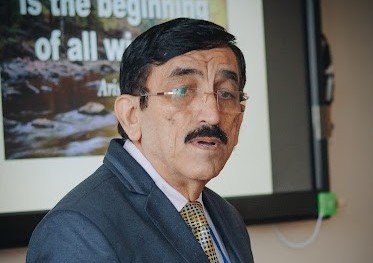
“At the end of journey, what will matter most will not be what all I could gather from life, but what I could give back to life!”
– Prof. Jagdish Khatri
A Life Devoted To Experimenting, Learning & Sharing
There are educators who teach leadership from textbooks. And then there are those who have lived it so completely, across so many reinventions and redirections, that every classroom session carries the weight of genuine personal testimony. Prof. Jagdish Khatri belongs unmistakably to the second category. Corporate trainer, motivational speaker, international keynote speaker, author, TV panellist, founder-director, UNESCO Network Chair holder, and lifelong student of human potential, he has spent more than two decades helping professionals and students across the world discover the most important leadership resource they already possess: themselves.
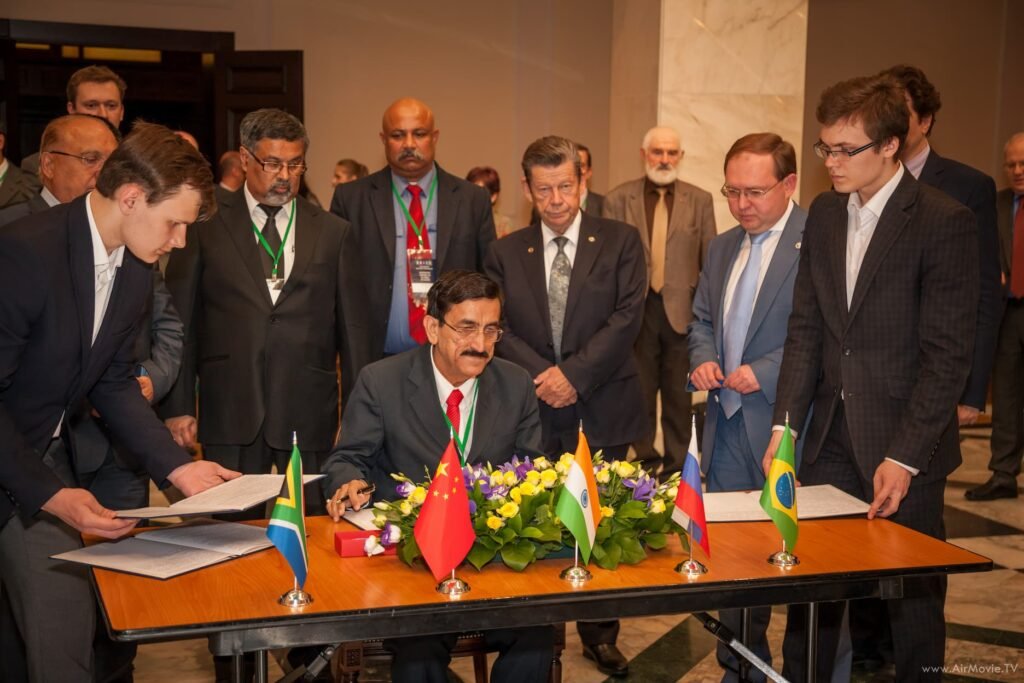
“Knowing Yourself Is the Beginning of All Wisdom”
His is not a story of a carefully mapped career path. It is the story of a man who has consistently chosen growth over comfort, purpose over security, and the honest pursuit of his own potential over the predictable rewards of staying put. And in that consistency of courageous choice, he has become one of the most genuinely inspiring leadership voices operating across India and internationally today.
The Spark That Changed Everything
Prof. Khatri grew up in Damoh, a small town in Madhya Pradesh, in a modest, religious middle-class family. A merit scholarship holder, he earned admission to Mechanical Engineering at Maulana Azad College of Technology in Bhopal in 1971, graduating in 1976 to begin a quarter century of industrial experience at Bharat Pumps and Compressors Limited in Allahabad. Those years gave him a comprehensive understanding of how organizations actually function: the gap between the management principles he was reading in his distance MBA education and the practices he observed around him became a source of constant curiosity and quiet introspection.
The moment that changed his trajectory came without warning. His company’s Training Department called him with ten minutes notice: an outside faculty had cancelled, and he was asked to take a leadership training session for supervisors and senior staff. He jotted down a few points and walked in. The session went remarkably well. It was appreciated. And it became a regular assignment. That one unplanned hour planted a seed that would eventually reshape his entire life.
“Life itself is a journey,” he reflects. “One has to enjoy every stage as it unfolds. There have been many occasions when I have challenged the status quo and dared to chalk out an entirely new path suiting my passion.”
The philosophy that has guided Prof. Khatri throughout his life finds its roots in a famous couplet by Dr. Allama Iqbal, which has inspired him since childhood:
“Khudi Ko Kar Buland Itna, Ki Har Taqdeer Se Pahle, Khuda Bande Se Khud Poochhe, Bata Teri Raza Kya Hai!”
Its essence, he explains, is to strive for such a high level of excellence that even while destiny is being written, the Almighty takes note of one’s aspirations. This philosophy has remained the foundation of his commitment to continuous learning, self development, and purposeful leadership.
After completing his MBA in 1992 and deepening his involvement with the Allahabad Management Association, speaking assignments began arriving from neighbouring industries and social organizations. The question that had been forming quietly for years became impossible to ignore: what if teaching was not just something he could do, but something he was meant to do?
The Radical Decision
In December 2002, Prof. Khatri made the decision that his colleagues found difficult to understand. He voluntarily retired from a comfortable senior management position and stepped into the uncertainty of building a foothold in academia with no guaranteed income and no established platform. He began as a Visiting Professor across multiple institutions, and his industrial experience combined with genuine pedagogical passion made his classes popular quickly.
The affirmation that meant most to him did not come from an institution or an award. It came from his students, who in 2006 launched the Jagdish Khatri Students Forum in his name on Teachers’ Day, attended by senior professionals. Such forums are typically reserved for celebrities, sportsmen, and political leaders. The fact that his students created one for their professor speaks to something that no performance metric captures: the quality of connection he brings to every room he teaches in.
In 2009, he was appointed Founder-Director of Sanskaar College of Management and Computer Applications. And in 2015, an invitation arrived from Lomonosov Moscow State University to present at the Globalistics Congress in Russia. For a boy who had spent childhood reading Soviet publications and promised himself at fifteen that he would one day stand in Red Square, the moment carried an emotional weight that surprised even him.
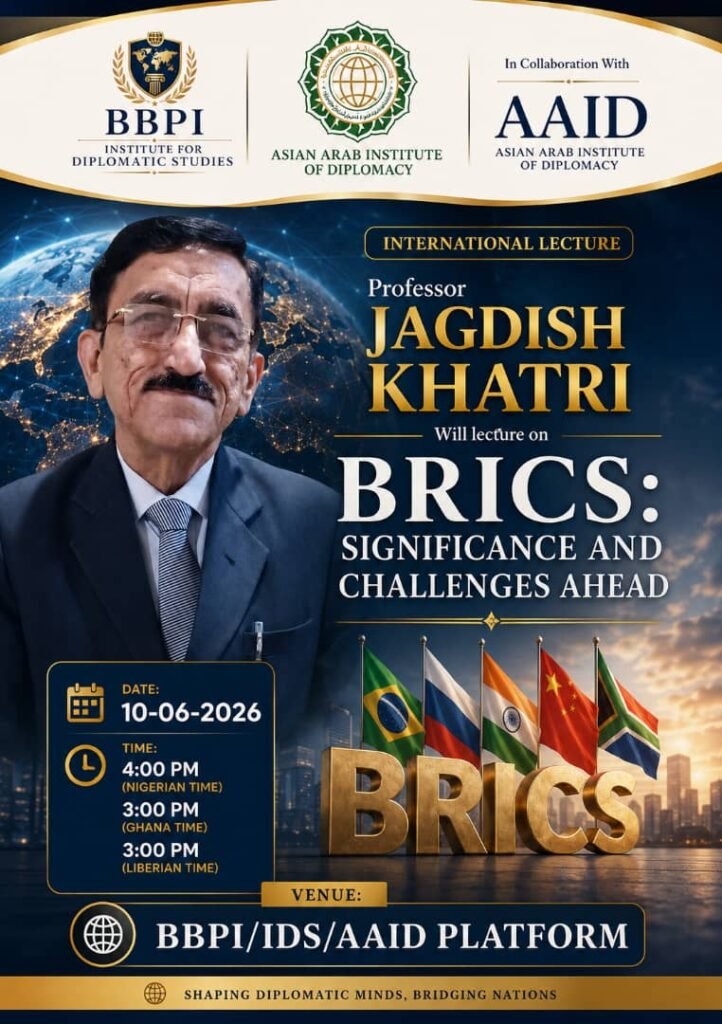
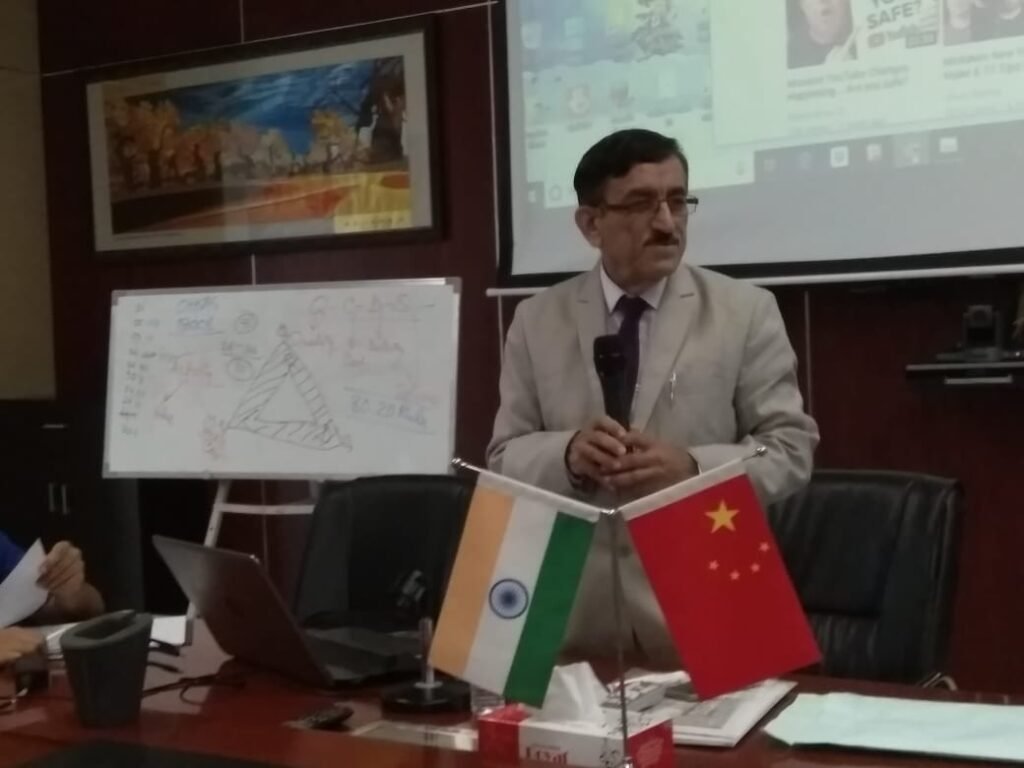
“I was standing at Red Square when I first went to Moscow. Tears rolled down my eyes. After 45 years, a childhood wish had come true.”
That international connection opened doors that would define the next decade of his career. Invitations followed to BRICS Forums and UNESCO conferences in Moscow. And in 2016, while serving as Director at Mandsaur University, he achieved something that astonished the local academic community: establishing a UNESCO Network Chair at the university, with a senior professor flying from Moscow specifically for the inauguration. The international conference on Education, Employment, Ethics and Entrepreneurship that followed was both a professional milestone and a personal vindication of every risk he had taken.
50,000 Hours of Changing How People See Themselves
Since 2007, Prof. Khatri has conducted more than 50,000 man-hours of training sessions for industry, academia, and social organizations. The scope is extraordinary: forty batches of employees at French MNC ALSTOM, including managers, engineers, supervisors, and trade union members across Lucknow, Vadodara, and Kolkata; ongoing sessions for Chinese-owned TBEA at its Vadodara plant; regular training for executives of companies including Allengers, Milestone Gears, and Medicef Pharma; and a remarkable two-day Leadership Training for the Heads of Departments at Medicaps University that included the Vice Chancellor himself.
His international training footprint spans institutions in Russia, Nigeria, Pakistan, Indonesia, Nepal, Turkey, Ghana, Liberia, and London. What makes these sessions distinctive is not simply their geographic reach but the sustained engagement they produce. Prof. Khatri is a lone trainer conducting seven-hour sessions across four consecutive days, and his feedback collection of over 500 written testimonials from trainees reflects a consistent pattern: people leave his sessions differently than they arrived.
The method is deliberate. He does not rely on presentations alone. Games, videos, exercises, and interactive tests weave through every session, covering Self Analysis, Management Fundamentals, Leadership, Team Building, Goal Setting, Motivation, Interpersonal Relationship, Communication Skills, Creative Thinking, Time Management, and what he calls a Healthy Mind and Spirit. Each module connects to the others, because that is how real development actually works: not in isolated skills, but in an integrated understanding of the whole person.
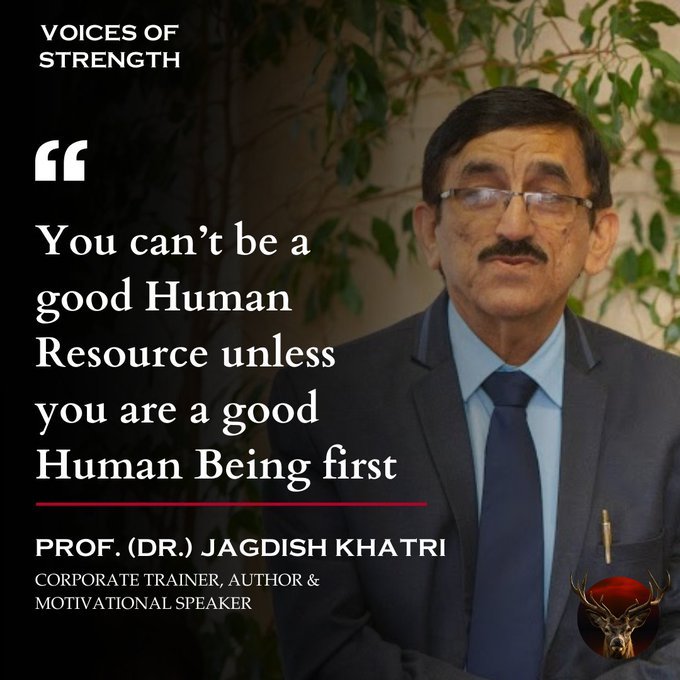
“You cannot be a good human resource until and unless you are a good human being first.”
The S.E.L.F. Framework: A New Language for Self Discovery
The intellectual contribution that Prof. Khatri considers his most original is the Self Empowered Life Framework, which he calls S.E.L.F. Developed through decades of teaching, observation, and personal reflection, the framework maps six progressive stages: Self Awareness, Self Exploration, Self Analysis, Self Development, Self Empowerment, and Self Esteem.
The journey begins with the question that most people spend their lives avoiding in its full depth: Who am I? Self Awareness, in his framework, is not a passive acknowledgment of strengths and weaknesses. It is the active examination of self-concept, self-ideal, and self-image, the honest confrontation of who we are, what we want to become, and how we wish to be remembered. That honesty, he argues, is the only genuine foundation for effective leadership.
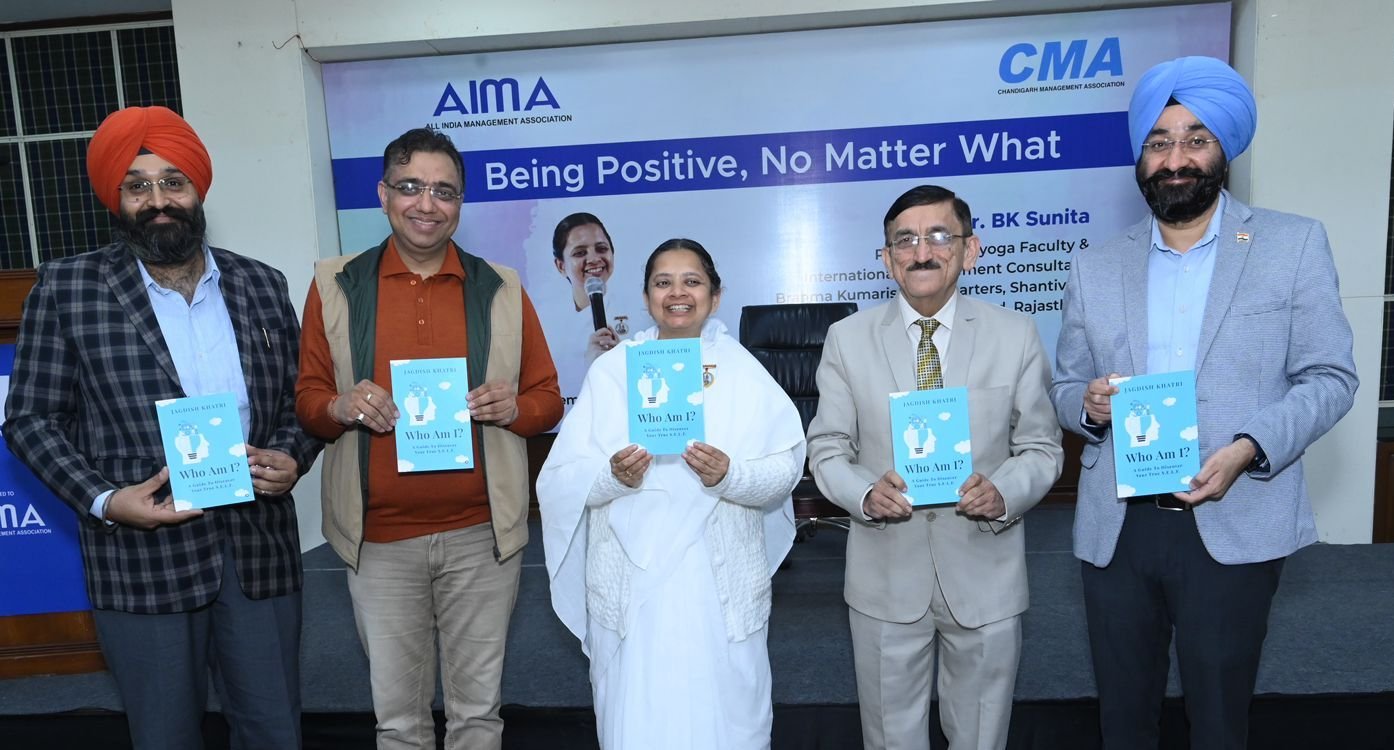
His first book, Discover Your S.E.L.F., was published in November 2020 by Lambert Academic Publishing in Berlin and subsequently translated into eight European languages. His second edition, Who Am I? A Guide to Discover Your True S.E.L.F., received a five-star rating from Readers’ Favorite, an American reviewing firm based in New York, and has gathered consistently encouraging reader responses. He credits the idea of writing it to a quote from American motivational speaker Les Brown that shook him out of intellectual complacency: “The richest place in the world is a graveyard, where so many unwritten books, untold stories and unshared ideas are lying buried.”
For Prof. Khatri, the book was not a career achievement. It was the fulfilment of a responsibility to share what he had learned before the opportunity passed.
Prof. Khatri’s contributions to education, leadership development, and global knowledge sharing have earned him several prestigious international recognitions. These include the International Fellow of Letters and Arts from the Liberia National Academy, the Professor of Excellence from the International Institute of Influencers, Oman, the title of Global Goodwill Ambassador from the GGA Foundation, USA, the Honorary Diploma from the International Global Research Academy, Moscow, and the Eminent Teacher Award presented by the Rotary Club, Allahabad. These honours reflect the international impact of his work across academia, leadership, and professional development.
Beyond his academic and professional engagements, Prof. Khatri has remained actively associated with Rotary International and has contributed to leadership and community initiatives through various Rotary platforms. He has also been invited as Chief Guest by Rotary Clubs in Lahore, Moscow, and Singapore, reflecting the global appreciation for his leadership and educational contributions.
What Separates Leaders From Managers
With more than five decades of combined industrial and academic experience behind his observations, Prof. Khatri draws the distinction between leaders and managers with unusual precision. Managers, he explains, are conformists and efficient: skilled at following rules, procedures, and directions to get work done as per plan. Leaders are effective, creative, open-minded, visionary, and imaginative. They enjoy challenges and strive to guide people toward their full potential while fulfilling planned targets.
The essential starting point for leadership, in his view, is self-awareness. And the essential habit is continuous learning. Not simply reading books, though he values that deeply, but learning through personal experience, through observing others, through training, and through an unshakeable commitment to lifelong growth. His formula for what he considers luck captures the philosophy precisely: Luck equals Preparation multiplied by Opportunity. It is multiplication, not addition. If preparation is zero, the entire result becomes zero.
For the modern environment specifically, he identifies two qualities that leaders must actively cultivate. Agility: the capacity to stay updated about changing environments and take proactive action before challenges arrive. And resilience: the ability to bounce back from failures, defeats, and unexpected setbacks without losing direction or conviction.
Cultural Intelligence and the Ubuntu Principle
Having addressed audiences across Russia, Pakistan, Turkey, Ghana, Liberia, Indonesia, Nepal, Nigeria, and the United Kingdom, Prof. Khatri speaks about cultural intelligence not as a theoretical concept but as a daily practice. The core insight he returns to consistently is that every person in any audience, regardless of nationality, institution, or role, is first and foremost a human being. Once that is genuinely understood and reflected in how a speaker engages, the message travels.
Alongside IQ and EQ, he advocates for what he calls CQ: Cultural Intelligence, the ability and tendency to accept, respect, and assimilate cultural sensitivities and diversity. It has become, he believes, an essential tool in every modern leader’s toolkit. He grounds this in the African philosophy of Ubuntu, a concept he deeply respects: that every person is connected and interdependent, that none of us exist in isolation, and that our humanity is expressed through our recognition of the humanity of others.
Three Tips That Define a Philosophy
When asked what advice he would offer to aspiring leaders and professionals seeking lasting impact, Prof. Khatri distils a lifetime of experience into three directives that he practices as much as he teaches.
The first is to explore yourself. Conduct a thorough introspection. Understand your strengths, your areas for improvement, your dreams, your goals, your values, your role models, and your vision for who you want to become. Leadership that is not rooted in self-knowledge is leadership without a foundation.
The second is to keep learning, keep growing. The observation he returns to most often carries a particular kind of clarity: “We do not GROW old. When we stop growing, we BECOME old.” He maintains a large personal library at home and still spends one to two hours each day reading and learning, at an age when many people consider their education long complete.
The third is to have faith in yourself. Without a strong belief in one’s own capabilities and an unbeatable spirit of persistence, no challenge can be fully met. That faith is not naivety. It is the conviction, tested and renewed through every reinvention and redirection his life has taken, that preparation and persistence eventually meet opportunity in ways we could not have planned.
“Keep Learning. Keep Growing. Keep Going.”
Prof. Jagdish Khatri’s life is, in the most literal sense, a demonstration of everything he teaches. A boy from a small town who once stood in a library reading about Red Square and promised himself he would stand there one day. A man who walked away from security repeatedly, not because comfort was unwelcome, but because growth was more important. A teacher whose students named a forum after him. A trainer whose sessions are remembered years later by the people who attended them. An author whose ideas have been translated into eight languages.
He did not plan any of it. He prepared for all of it. And the universe, as he has always believed, conspired accordingly.