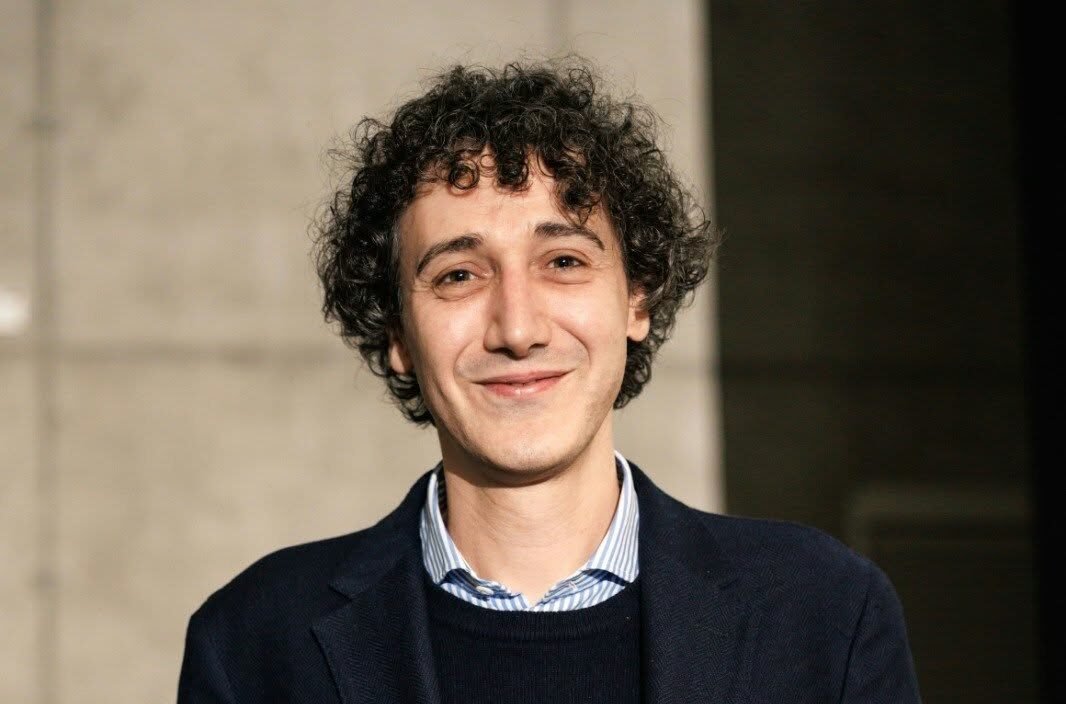
Fifteen years of work on sustainable tourism development in Africa taught Michele Zavoli that a destination thrives only when value stays where it is created. Now, with Travelhive, he is building regenerative destinations with communities, not around them.
Most tourism developers ask how to attract more visitors. Michele Zavoli asks a different question: how much value stays? The distinction sounds simple. Its implications are enormous. And it is that question, pursued with unusual persistence across fifteen years of on-the-ground work in Europe, Africa, and Latin America, that has led him to build one of the most genuinely innovative platforms in the global tourism sector.
Michele is the Co-Founder and CEO of Travelware, an Italian Società Benefit (benefit company) headquartered in Bologna, Italy, with offices in the UAE and Bulgaria, and the creator of Travelhive, the community intelligence platform that is reshaping how destinations govern themselves. He has been awarded the PATWA Gold Award for Excellence in Innovation in Regenerative Tourism, with Travelhive recognised as the best platform in regenerative tourism, and the Innovation Award from the Italia-USA Foundation, which distinguished Travelware as one of Italy’s most innovative startups. “The awards recognise a model, not a person,” he is quick to say. They also add responsibility: now the work must be proven at scale.
But to understand where Travelware and Travelhive came from, it is necessary to begin somewhere less digital: a beach in Cape Verde, a DJ console on a sand cart, and a community that was already doing regenerative tourism before anyone had given it that name.
The Discipline That Projects Demanded
Michele did not plan a multidisciplinary career. He describes it simply: the projects demanded it. Law and economics taught him that every territory is a system of rules and incentives. Architecture taught him to read space, where people meet, where value flows, and where it gets stuck. Marketing and computer graphics taught him that a destination only exists once it can tell its own story. Software and blockchain gave him the tools to make all of this measurable and shared.
In any real project, he notes, these disciplines converge in the same meeting. With a ministry, a hotel group, and an association of local operators at one table, you need to understand the contract, the master plan, the brand, and the data simultaneously. His professional credentials reflect this breadth: a Blockchain and Crypto Master’s from Nuclio Digital School, a Google Project Management Professional Certificate, the GSTC Sustainable Tourism Certification, and an executive programme in Digital Disruption and Transformation Strategies at Cambridge Judge Business School.
The practical application of that formation began with Humana Skala, the collaborative network he co-founded with Stefano Pellegrini, who is today his co-founder at Travelware. Working alongside national institutions and the Ministry of Tourism in Cape Verde, and later across Mozambique, Angola, and beyond, the network delivered more than thirty projects across six countries and over one hundred multi-stakeholder agreements. Through that work, two things became clear. The real infrastructure of a destination is not concrete. It is the alignment between those who live there and those who invest there. And the model that worked could not multiply, because it depended on physical presence. That limit was what Michele set out to solve.
Boa Vista: Where the Method Was Tested
Cape Verde’s island of Boa Vista became the laboratory where Michele’s approach to regenerative tourism moved from theory to practice. When he arrived, tourism lived almost entirely inside fenced all-inclusive resorts. Value was being generated by the destination but not staying in it. His response was systematic: he built the island’s first portal for tourism offers outside the resorts, helped create the island’s tourism operators’ association and a homeowners’ association, and developed a parallel market for nature and sport tourism that allowed local businesses and residents to participate directly in the economic activity the destination was generating.
The philosophy behind it was direct. Environment and society are not externalities: they are the capital every destination business rests on. Start from the communities, because they are the keepers of a place and know its fragilities better than any plan designed from above. Diversify who benefits. And make protection shared rather than imposed.
The beach cleaning initiative he describes captures this philosophy in an image that has stayed with him. Every Sunday, ten kilometres of beach were cleaned with zero budget: a DJ console on a sand cart, fishermen bringing fish, farmers bringing vegetables, bakers bringing bread, and a free lunch for everyone who came. Community engagement through joy rather than obligation. It worked because it belonged to the people doing it.
“The real infrastructure of a destination is not concrete. It is the alignment between those who live there and those who invest there.”
Covid, the Turning Point, and the Birth of Travelware
The moment that transformed Michele’s approach from project-based consulting into platform development came during the Covid pandemic. Tourism stopped, but destinations still had to decide together how to survive. In Boa Vista, working alongside the Câmara Municipal, his team aligned several stakeholder groups within days, including importers, supermarkets, fishermen, farmers, shepherds, and taxi drivers. Over sixty days, [INSERT CLIENT-CONFIRMED FOOD DISTRIBUTION FIGURE AND CORRECT WORDING].
It worked. But it required hundreds of meetings, emails, and chats that scattered decisions and left no structured trace. Stakeholders were not misaligned out of bad will. They had no shared space in which to align. The data communities generate every day was being captured by external platforms rather than remaining with the people who produced it. Travelware was founded to close both gaps, and the Società Benefit structure was chosen deliberately because this mission belongs in the statutes, not just the pitch deck.
The resulting platform, Travelhive, functions as a collective intelligence system for destinations. It connects residents, businesses, institutions, and visitors through a verified-identity social network. Any input, whether a voice note in dialect, a photograph, a comment, or a document, becomes structured, multilingual, blockchain-notarised shared data. That shared data layer becomes the foundation for transparent value distribution, real-time impact monitoring, and genuine community participation in governance and decision-making.
From Sustainable to Regenerative: A Critical Distinction
Michele draws a precise line between sustainable and regenerative tourism that has practical consequences for how destinations are designed and governed. Sustainable means doing no harm. Regenerative means every player feeds the destination instead of extracting from it. The difference is structural, not merely semantic.
The healthcare initiative in Boa Vista illustrates this distinction in practice. The islands had health centres but no operating theatres. Working with the Emilia-Romagna Region and the Ministry of Health, Michele’s team created a format where retired European doctors and surgeons supported the local hospital, while residents with apartments, restaurants, and beach clubs hosted their families on holiday. Equipment came through crowdfunding and diplomacy. The Câmara Municipal funded the hospital expansion. Everyone contributed. Everyone benefited. The destination became safer and more resilient. Today, a share of the fee on every experience sold through the Boa Vista portal keeps the island’s kindergartens running.
This is what regenerative tourism looks like in practice: not a set of environmental commitments added to a conventional business model, but a structural redesign of how value flows within a destination ecosystem. Travelhive is being built to make such cycles systematic and replicable across different territories, cultures, and contexts.
“Sustainable means doing no harm. Regenerative means every player feeds the destination instead of extracting from it.”
The Community 4D Model and Why Conflicts Are Usually About Alignment
Michele describes every destination through a framework he calls Community 4D: stakeholders move along three axes of power, political, economic, and social, and the fourth dimension is a shared purpose. Each actor operates on a different time horizon: investors think in years of return, politicians in electoral cycles, communities in generations. Conflicts rarely come from bad faith. They come from the absence of shared numbers and a shared direction.
In Cape Verde, the moment operators and homeowners were organised into associations with certified figures, those figures convinced European low-cost carriers to open routes to the islands. None of the individual parties could have achieved that outcome alone. The alignment itself was the value creation.
This insight shapes how Michele approaches the challenge of coordinating the diverse interests typical of any complex tourism project: investors, public institutions, architects, engineers, construction companies, managers, legal professionals, and local stakeholders. The goal is not to eliminate competing interests but to build the shared intelligence infrastructure that makes alignment possible and durable.
Technology in Service of Territory
Michele is careful about the role he assigns to technology in this model. The core is not technology but cross-disciplinary knowledge, from anthropology to ecology to urban planning. AI, blockchain, and IoT only orchestrate it. Multimodal AI makes participation accessible: a voice note in dialect, a photograph, or a document becomes structured, multilingual data. Blockchain notarises every contribution, making ownership and value distribution transparent. The result is what he calls a perpetual territorial assembly, where residents, businesses, and institutions collaborate, propose, vote, and monitor results in real time.
“If data is the new oil,” he states with characteristic directness, “the well has to belong to the people who produce it.” That principle, which sounds like a political statement, is also a commercial architecture decision. Travelhive is designed so that communities own and manage the data and content they generate, monetising anonymised insights on the B2B market and reinvesting the returns into local regeneration projects.
Travelhive is being tested in over twenty destinations, expanding internationally into Africa, the EU, the UAE and South America. These initiatives include the Stati Generali del Turismo of Ostia and the Roman Coast, projects across Veneto and Umbria, and a co-managed map of 390 Italian historical, cultural, and natural areas. The scale of the ambition is matched by the discipline of the approach: pilot projects are stress-testing environments designed to gather feedback and improve continuously before scaling with confidence.
The Condition for the Future of Travel
Michele’s vision for where tourism must go over the next decade is grounded in a conviction that is as commercial as it is ethical: destinations must stop measuring only how many visitors arrive and start measuring how much value stays. Communities need a real seat at the table and ownership of their data. And the large players, hotel chains, tour operators, and online platforms, need to contribute to the places they depend on, not out of philanthropy, but out of self-interest.
The argument he makes is ultimately about the future of the industry itself. In a world without diversity, travelling will make no sense. The communities who live in and sustain destinations are the keepers of the cultural, natural, and human richness that makes those destinations worth visiting. Protecting those communities is not a charitable commitment alongside the tourism business. It is the condition for the tourism business to have a future at all.
Michele Zavoli has spent fifteen years building systems that make that protection structural and measurable rather than aspirational and occasional. What he is building with Travelware and Travelhive is a new architecture for how tourism value flows, and who it reaches when it arrives. That architecture is already funding kindergartens in Cape Verde. It is being tested in over twenty destinations, expanding internationally into Africa, the EU, the UAE and South America. And it is being built by someone who learned, on a beach with a DJ console and a crowd of fishermen and farmers, that the most powerful infrastructure a destination can build is not concrete. It is alignment.