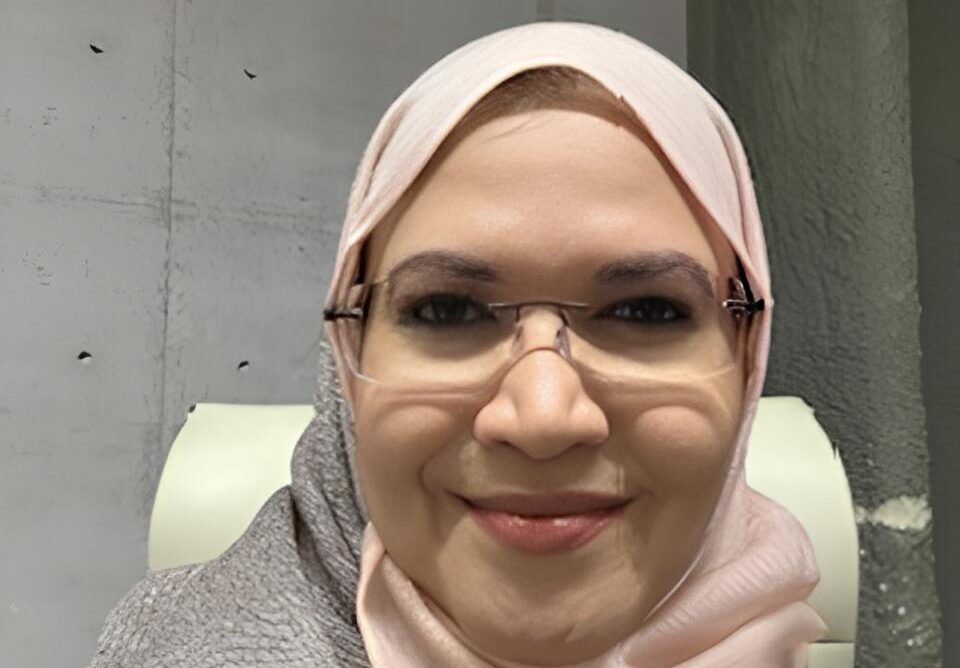
. “When organizations invest in their people through learning opportunities, clear career pathways, and supportive leadership, they unlock both individual potential and collective success.”
– Dr. Fatima Al Hashmi
In every organisation that endures, there is someone who understood early that the most consequential investment any institution can make is not in machinery or markets, but in people. Dr. Fatima Al Hashmi has built her career on precisely that conviction. As Head of Human Resources, Administration and Facilities Management at NIMR Automotive, she oversees one of the most integrated and consequential functions in the organisation, one where workforce strategy, governance, culture, and operational continuity converge. Her approach to human capital leadership is defined not by process efficiency alone, but by a deeper belief: that when people are genuinely supported, developed, and empowered, organisations do not merely perform. They endure.
THE CONVICTION THAT STARTED IT ALL: PEOPLE AS THE ULTIMATE ASSET
Dr. Fatima’s entry into human capital leadership was not accidental. From the early stages of her career, she was drawn to the observable relationship between organisational culture, leadership quality, and institutional performance. She saw how the same technical capability could produce vastly different outcomes depending on the environment in which it operated, and that environment, she recognised, was a function of deliberate choices made by those responsible for people.
Her leadership philosophy crystallised around three principles that have remained constant across every role she has held: empowerment, transparency, and continuous development. Working across HR, administration, and facilities management gave her an unusually integrated perspective. She came to understand that the conditions in which employees work, physically, structurally, and culturally, are not separate concerns. They are dimensions of a single question: what kind of environment allows talent to flourish? Her career has been a sustained effort to answer that question in practice.
BUILDING THE FRAMEWORK: STRATEGIC HR AT NIMR
When Dr. Fatima joined NIMR Automotive, her mandate was clear: build a modern, strategic human capital framework capable of supporting the organisation’s mission and long-term growth. The work she has led goes well beyond policy documentation or process standardisation. It represents a fundamental repositioning of HR as a strategic function rather than an administrative one.
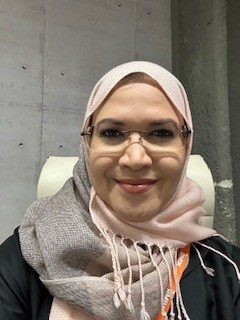
“Strategic workforce transformation requires a shared commitment from leadership. Together, we build a resilient, future-ready workforce capable of driving sustainable growth.”
Central to this effort has been the development of a comprehensive human capital strategy that integrates workforce planning, talent development, and performance management into a coherent whole. Alongside this, she has strengthened governance structures to ensure transparency and consistency across the organisation, and implemented digital HR systems that have transformed how recruitment, employee services, and performance evaluation are managed. The operational gains have been real, but the more significant outcome is the quality of insight these systems now provide. Data, in Dr. Fatima’s hands, is not a reporting tool. It is a decision-making instrument.
ATTRACTING AND KEEPING THE BEST: A HOLISTIC APPROACH TO TALENT
Talent attraction and retention, Dr. Fatima argues, cannot be addressed through individual programmes in isolation. They require a holistic ecosystem in which every element, from employer brand to onboarding, from career pathways to daily work culture, reinforces the same message: this is an organisation that takes its people seriously.
At NIMR, recruitment is designed to identify not only technical expertise but cultural alignment. Once professionals join, the organisation’s commitment to them deepens rather than diminishes. Structured onboarding, professional development programmes, and clearly defined career progression pathways signal that NIMR views its relationship with employees as a long-term investment. Competitive benefits and a work environment that genuinely encourages collaboration and innovation complete the picture. The result is not simply lower turnover. It is a workforce that feels its contribution matters, which is the precondition for the kind of performance that sustains an organisation through changing conditions.
EMIRATIZATION AS STRATEGIC OPPORTUNITY, NOT OBLIGATION
Few priorities in the UAE’s workforce landscape carry more significance than Emiratization, and Dr. Fatima approaches it with a clarity of purpose that distinguishes genuine commitment from compliance. For her, supporting the development of Emirati talent is simultaneously a national responsibility and a strategic opportunity. The two are not in tension. They reinforce each other.
NIMR’s approach is built on substance rather than targets. Targeted recruitment initiatives create entry points for Emirati professionals. Partnerships with academic institutions ensure the pipeline begins before candidates enter the workforce. Structured development programmes, mentorship, and continuous training equip Emirati employees not merely to fill roles but to grow into leadership. By nurturing local talent with the same rigour applied to any strategic investment, NIMR contributes meaningfully to the UAE’s broader vision of building a highly skilled, competitive, and self-sustaining national workforce.
WORKFORCE PLANNING AS A STRATEGIC DISCIPLINE
The gap between HR strategy and corporate objectives is one of the most persistent failures in organisational management. Dr. Fatima has made closing that gap a defining feature of her leadership. At NIMR, strategic workforce planning is not a periodic exercise. It is an ongoing discipline conducted in close collaboration with executive leadership and departmental heads.
Through workforce analytics and forecasting, her team identifies current and future talent needs with the specificity that meaningful planning requires: the right people, in the right roles, at the right time. Succession planning and capability building are embedded into this process rather than treated as separate initiatives. The outcome is an HR function that does not react to organisational change after the fact but anticipates it, ensuring that human capital strategy and corporate ambition move forward together.
PERFORMANCE, ENGAGEMENT, AND THE CULTURE THAT CONNECTS THEM
A performance culture, Dr. Fatima is clear, does not emerge from systems alone. It emerges from leadership that sets clear expectations, creates genuine accountability, and treats continuous improvement as a shared commitment rather than a management directive. The structured performance management framework at NIMR reflects this understanding, built around goal alignment, regular feedback, and professional development that is tied directly to individual career trajectories.
Alongside performance structures, employee engagement is treated as a strategic priority. Recognition programmes, open communication channels, and meaningful opportunities for employees to contribute ideas create an environment where individuals feel heard and valued rather than managed. Continuous learning completes the picture: training programmes, leadership development initiatives, and knowledge-sharing opportunities ensure that the workforce remains adaptive and prepared for whatever challenges the organisation faces next.
GOVERNANCE WITHOUT RIGIDITY: COMPLIANCE THAT ENABLES RATHER THAN CONSTRAINS
One of the more nuanced aspects of Dr. Fatima’s leadership philosophy concerns the relationship between governance and agility. She does not see these as competing imperatives. Properly designed, governance frameworks create the clarity and consistency that organisations need to innovate confidently rather than cautiously. The problem arises when compliance becomes an end in itself rather than a means to an end.
At NIMR, clear policies and procedures exist not to limit initiative but to channel it. Digital HR systems keep processes current and auditable. Regular policy reviews ensure that compliance frameworks evolve alongside the organisation rather than lagging behind it. The result is an environment where regulatory standards are upheld consistently and creativity is not sacrificed in the process. Fairness, transparency, and accountability become foundations for innovation rather than obstacles to it.
THE FUTURE OF HUMAN CAPITAL: DATA, FLEXIBILITY, AND THE IRREDUCIBLE HUMAN ELEMENT
Looking ahead, Dr. Fatima identifies three converging forces that will reshape human capital management over the next decade. Digital HR platforms are already transforming operational capacity, freeing HR professionals from administrative tasks and repositioning them as strategic contributors. AI-driven analytics is expanding the horizon further still: the ability to understand workforce patterns, predict talent needs, improve recruitment outcomes, and design more targeted development programmes represents a step change in how organisations make decisions about their most important resource.
Flexible work models complete the picture. Employees increasingly value environments that support work-life balance without sacrificing collaboration or performance. Organisations that navigate this evolution well, integrating flexibility into a strong engagement and accountability culture, will hold a significant competitive advantage in attracting and retaining the talent that will define their next chapter.
A LEGACY MEASURED IN PEOPLE AND CULTURE
When Dr. Fatima describes the legacy she hopes to leave, the answer is characteristically grounded. She does not reach for grand institutional milestones or personal recognition. She describes strong systems that continue to guide the organisation after her tenure, robust talent development programmes, transparent governance structures, and leadership pipelines that prepare the next generation of professionals to lead with the same standards she has held herself to.
The true legacy of any HR leader, she reflects, is visible in the people they develop and the culture they help shape. If the workforce she leaves behind is more resilient, more capable, and more genuinely committed to excellence than the one she inherited, then the work will have mattered. That is a definition of success as human as the profession itself.