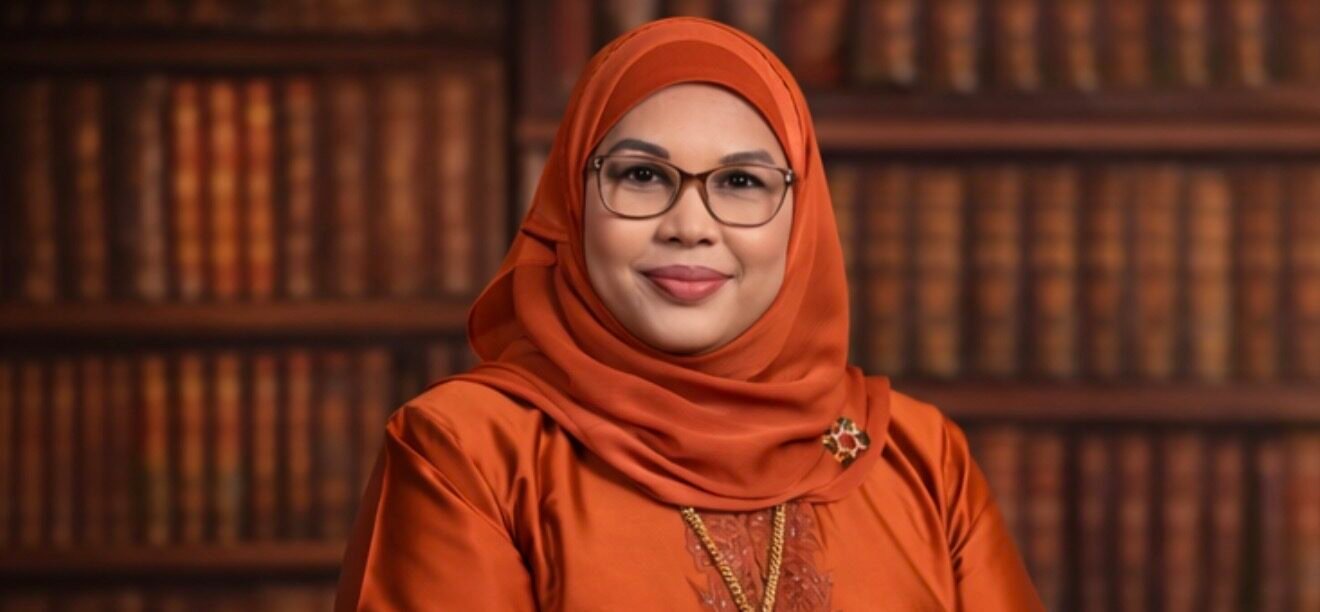
“Leadership, to me, is about building systems that outlast individuals.”
– Prof. Dr. Noor Hamizah Abu Hanifah
Thirty-five years in higher education is long enough to witness several complete cycles of institutional reform, technology disruption, and policy reinvention. What sets Prof. Dr. Noor Hamizah Abu Hanifah apart from leaders who simply endure those cycles is that she has consistently been among those driving them. As CEO, country head, institutional architect, and policy navigator, she has shaped colleges into university colleges, connected Malaysian qualifications to global frameworks, and built governance systems designed to serve learners long after the leaders who designed them have moved on. Her conviction has never wavered: education is the most powerful catalyst for nation-building, and those who lead educational institutions carry a responsibility that extends well beyond their own tenure.
A CALLING ROOTED IN PURPOSE: THE JOURNEY INTO ACADEMIC LEADERSHIP
Dr. Noor Hamizah’s path into higher education was shaped by something more than professional ambition. It was shaped by a belief in what education makes possible: social mobility, national development, and the expansion of opportunity for students who might not otherwise find a route to global success. Early in her career, she worked across both academic delivery and institutional management, gaining a holistic understanding of the education ecosystem from curriculum design through to governance and policy. That dual exposure proved formative.

What drew her toward leadership was the recognition that real transformation happens at the institutional level. Operating within a system is one thing. Shaping the system itself is another. She saw the potential to turn colleges into genuine centres of excellence, to build quality frameworks that meant something in practice, and to create pathways for students from diverse backgrounds to compete and succeed on a global stage. That purpose has remained the animating force behind every initiative she has led since.
THREE PILLARS, THIRTY-FIVE YEARS: A PHILOSOPHY FORGED IN PRACTICE
Ask Dr. Noor Hamizah about the moments that most profoundly shaped her leadership philosophy, and the answer is grounded in complexity rather than comfort. Leading the transformation of institutions from college to university college status required vision, regulatory mastery, and the resilience to sustain momentum through the inevitable resistance that major institutional change generates. Her involvement in national-level initiatives with agencies such as ECERDC and MARA offered a different but equally important education: a direct view of how education policy, when well designed and well implemented, can uplift entire communities rather than simply serving those already advantaged.
From these experiences, her leadership philosophy consolidated around three pillars: integrity in governance, inclusivity in access, and excellence in delivery. The formulation is elegant, but she is careful to note that these are not aspirational values. They are structural commitments. Leadership, in her view, is fundamentally about building systems that outlast the individuals who create them. The measure of great institutional leadership is not what an organisation achieves while the leader is present, but what continues to function and grow after they have gone.
OTHM AND THE GLOBAL STANDARDS MANDATE: BRIDGING QUALIFICATIONS ACROSS BORDERS
As Country Head of OTHM Qualifications in Malaysia, Dr. Noor Hamizah occupies a role that sits at the intersection of international standards and local educational reality. Her mandate is to ensure that international qualifications are not simply imported but genuinely integrated: accessible, aligned with local regulatory frameworks, and responsive to the skills and knowledge that Malaysian industries actually need. She works closely with approved centres to maintain quality assurance standards while expanding the range of learners who can benefit from globally recognised credentials.
Beyond qualification management, she actively facilitates the international collaborations that give those qualifications their real value. By bridging UK qualifications with Malaysian institutions and building progression pathways to universities abroad, she is advancing Malaysia’s positioning as a transnational education hub in a region of growing educational ambition. International recognition is not achieved through marketing alone. It is built through the consistent delivery of quality outcomes that global partners and institutions are willing to stake their own reputations on.
QUALITY ASSURANCE AND INNOVATION: NOT OPPOSITES, BUT PARTNERS
One of Dr. Noor Hamizah’s most consistent arguments in conversations about institutional governance is that quality assurance and innovation are not opposing forces. The assumption that governance constrains creativity is, in her view, a symptom of poorly designed governance rather than an inherent tension. When frameworks like MQA standards and internal quality assurance systems are properly constructed, they do not limit what institutions can do. They create the stable conditions within which bold experimentation becomes possible rather than reckless.
Her approach centres on establishing clear governance policies, robust monitoring mechanisms, and continuous feedback loops. Once these foundations are in place, institutions can innovate with confidence in delivery modes, curriculum design, and industry engagement without constantly looking over their shoulder at regulatory risk. Compliance, in her framing, is not a ceiling. It is a floor from which genuine ambition can be launched.
CLEVERA AND PNH: WHERE POLICY MEETS PRACTICE
Through her leadership of Clevera Sdn. Bhd. and PNH Prestige Ventures, Dr. Noor Hamizah has built an integrated platform that addresses one of higher education’s most persistent weaknesses: the gap between what policy mandates and what institutions can practically implement. Clevera focuses on AI-driven solutions, including learning management and educational management systems, designed to support modern education ecosystems with the digital infrastructure they need to function at scale. PNH Prestige Ventures works at the institutional development level, navigating regulatory complexity, building international partnerships, and translating policy requirements into operational frameworks.
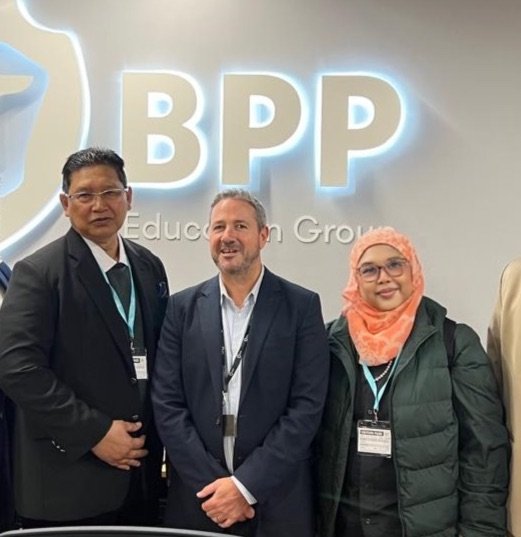
Together, the two organisations create something neither could achieve alone: a bridge between conception and execution. Innovation that cannot be implemented sustainably within regulatory boundaries is of limited value. Dr. Noor Hamizah’s contribution is ensuring that the innovations her organisations develop are not only technically sound and pedagogically grounded but also practically deployable within the environments where they are most needed.
AI, EDTECH, AND THE ETHICS OF TECHNOLOGICAL TRANSFORMATION
Dr. Noor Hamizah holds a measured but forward-leaning position on AI and educational technology, particularly in the context of TVET and open distance learning. In technical and vocational education, she sees AI’s capacity to enhance skills training through simulation, predictive learning, and competency-based assessment as transformative rather than merely incremental. In open and distance learning, AI enables personalised learning pathways and scalable delivery models that expand access to quality education well beyond what traditional classroom formats can provide.
But she is equally clear about the preconditions for responsible adoption. Technology must be guided by pedagogy and ethics. The question is never whether AI can perform a function but whether its deployment genuinely enhances human capability and learning outcomes, or simply substitutes for the human elements that make education meaningful. That distinction, between augmentation and replacement, is where she focuses her attention when evaluating any new technology’s role in an educational context.
TRANSFORMING INSTITUTIONS: THE WORK BEHIND THE MILESTONES
Among the most tangible demonstrations of Dr. Noor Hamizah’s leadership capability is her direct involvement in upgrading institutions including Jesselton University College and Spectrum International University College from college to university college status. These are not administrative reclassifications. They are comprehensive institutional transformations requiring strategic planning, regulatory compliance across multiple dimensions, academic restructuring, and sustained stakeholder engagement across governance, faculty, industry, and government.
The outcome of each transformation is an institution repositioned for long-term growth, enhanced recognition, and expanded opportunity for the students who will pass through its doors for decades to come. That long-term horizon is characteristic of how she approaches all significant work: not as a project with a completion date but as an investment in institutional capacity whose returns compound over time.
MALAYSIA AS A PREMIER EDUCATION HUB: A VISION GROUNDED IN POSSIBILITY
When Dr. Noor Hamizah describes her vision for Malaysia’s future as a regional education leader, the ambition is clear and the pathway is specific. Malaysia, she believes, has the foundations to become a premier education hub in Asia: offering quality, affordability, and global recognition in combination that few regional competitors can match. Her vision centres on leadership in transnational education, AI-driven learning models, and industry-integrated programmes capable of attracting students from across Southeast Asia and beyond.
The opportunities she identifies for the next five years are consistent with that vision: AI integration at scale, micro-credentials and modular learning that serve working professionals and non-traditional learners, and a reimagined TVET sector aligned with the green technology and digital economy industries that will define the region’s economic future. These are not distant aspirations. They are initiatives already in motion through the work she leads every day.
FOR THE LEADERS WHO COME NEXT
To emerging academic leaders and policymakers, Dr. Noor Hamizah offers counsel that reflects the full weight of her experience. Stay grounded in purpose, but be bold in vision. Understand policy not as a constraint but as a language that, when spoken fluently, enables rather than restricts. And never lose sight of what all of this is ultimately for: education is about people, and every decision made within an educational institution should ultimately serve learners and society.
Women in leadership, she notes, bring a particular combination of empathy, resilience, and strategic clarity that education systems need more of at their highest levels. She advocates for more women in board and policy roles, not as a symbolic gesture but because inclusive decision-making at the top produces more durable and more just outcomes for the learners those decisions affect. Across thirty-five years of building, reforming, and leading, that belief in the transformative power of education, wisely governed and boldly pursued, is what has never changed.