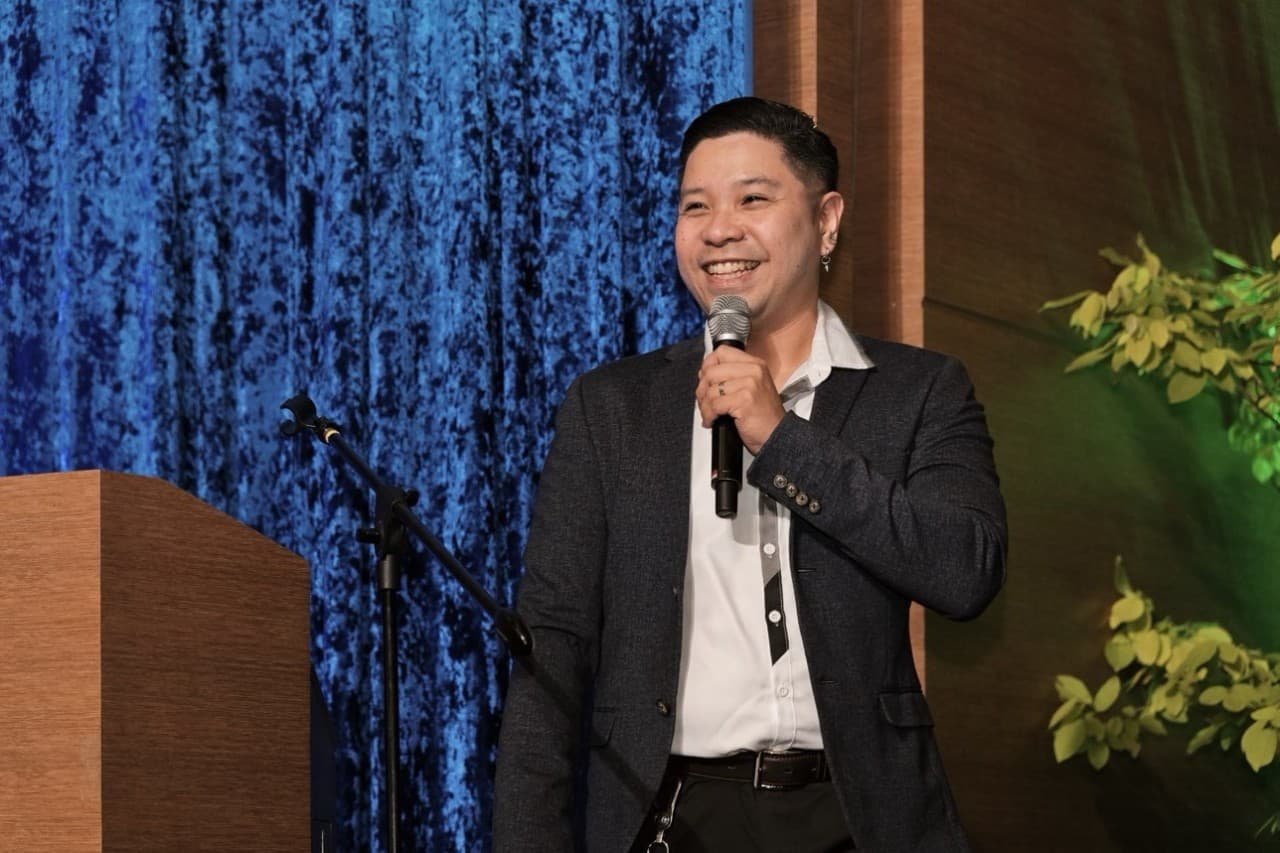
Across twenty years, more than twenty organisations, and five countries in the ASEAN region, Rich Cruz has built a career on a conviction that never leaves him: inclusion is never abstract. It comes down to whether someone speaks up, whether someone listens, and whether someone gets the interview.
There are HR professionals who advocate for diversity, equity, and inclusion as a strategic imperative, and there are those for whom it became personal long before it became a framework. Rich Cruz, Senior HR Leader, DEI Strategist, and Founder of RAC Consulting, belongs firmly to the second category. His commitment to DEIB did not emerge from a research paper or a corporate mandate. It emerged from watching what happened in recruitment rooms: strong candidates filtered out by school, accent, age, or a gap on a résumé. And from watching something else too: a single leader take a chance on someone and change a career.
Twenty years across ASEAN and Korea, leadership roles at IBM, Accenture, and Conduent, and consulting work with more than twenty organisations have consistently confirmed the same lesson. Inclusion is built or broken in individual moments, individual decisions, and individual conversations. Not in policy documents. Not in awareness campaigns. In the people who decide who gets heard and who does not.
What IBM and Accenture Taught Him, and What They Did Not
Rich’s time at IBM and Accenture gave him something foundational: a deep appreciation for the role that structure plays in protecting fairness. Clear criteria and consistent processes keep bias in check in ways that good intentions alone cannot. When the framework is absent, individual preferences fill the space, and those preferences tend to reproduce existing patterns rather than challenge them.
But leading DEIB across the ASEAN region taught him something that structured frameworks cannot fully capture: managers shape belonging far more than any policy does. An organisation can have the most sophisticated inclusion framework in its sector and still produce an environment where people feel unseen, unheard, or undervalued, if the managers within it have not genuinely internalised what inclusion requires of them day to day.
His response has been to coach managers to ask before they tell, to translate global programmes into local realities rather than expecting local realities to accommodate global frameworks, and to make it safe for people to disagree with him. He is candid about the fact that he has not always got this right. He has had to unlearn assumptions and thank people who challenged him at moments when his instinct was to defend himself rather than listen. That honesty is itself an expression of the leadership culture he advocates for.
“Inclusion is never abstract. It comes down to individual decisions: whether someone speaks up, whether someone listens, whether someone gets the interview.”
One Question That Changed How They Recruited
At Conduent Philippines and Malaysia, Rich applied a single question to every hiring process: who isn’t getting through, and why? The answers drove meaningful change. Job descriptions were rewritten to remove barriers embedded in language and assumptions. Sourcing was widened beyond the usual talent pools. Interviewers were trained to recognise and interrupt bias before it shaped outcomes.
Across the Philippines and Malaysia, he encountered career returners, persons with disabilities, and graduates from provincial schools who needed someone to see their potential rather than filter them out for not fitting a template. What he found consistently was that the filtering happened not because people lacked capability but because the systems used to assess them had been built around a narrow definition of what a strong candidate looked like.
But his observation about recruitment reflects something he returns to consistently: hiring is only half the job. People stay and grow when someone backs them after day one. Getting diverse talent into an organisation and then failing to create the conditions for that talent to develop is not inclusion. It is window dressing. The work continues long after the offer letter is signed.
Inclusion Cannot Be Copied and Pasted
One of the most important insights Rich has developed across his ASEAN career is that effective inclusion strategy cannot be copied and pasted between markets. In some workplaces, respect for seniority keeps junior voices quiet. In others, the barriers sit around gender, religion, or educational background. Each context requires its own diagnosis before any intervention is designed.
In the Philippines, he has found that the strongest DEIB work builds on values people already hold rather than importing a Western framework wholesale. Concepts like kapwa, the shared sense of self with others, and bayanihan, the spirit of collective effort and community support, already carry the essential values of inclusion. Working with rather than around existing cultural frameworks produces more durable change than imposing new ones.
The strongest DEIB initiatives, in his experience, usually start small: one team, one honest conversation, one leader willing to admit what they do not know. Scale comes after trust. Trust comes from demonstrating that the work is genuine rather than performative.
Belonging Is Built in Small Moments
When Rich talks about creating a genuine culture of belonging, he consistently redirects the conversation from large structural initiatives to the texture of everyday workplace life. Belonging is built in small moments: who is invited to speak, whose idea gets credit, who is quietly given the chance to grow. The infrastructure matters, but the moments matter more.
Managers who listen, sponsors who open doors, transparent promotion processes, properly supported networks, and leaders who close the loop when employees give feedback: these are the building blocks of belonging. None of them require a large budget. They require attention, intention, and the willingness to notice what is happening in the room rather than simply managing the agenda.
He offers a deceptively simple piece of practical advice: at your next team meeting, notice who hasn’t spoken and invite them in. It is a small act. It is also precisely the kind of act that, repeated consistently by leaders across an organisation, shifts the culture from the inside out rather than waiting for policy to do from the outside in.
“Belonging is built in small moments: who is invited to speak, whose idea gets credit, who is quietly given the chance to grow.”
The Role Men Can Play in Advancing Diversity, Equity and Inclusion
In recognition of International Men’s Day, Rich highlights the responsibility men have in creating more inclusive workplaces. In organisations where men continue to occupy many senior leadership positions, their decisions and actions can have a meaningful influence on whether diversity, equity and inclusion become part of everyday organisational culture.
He believes men should begin by viewing inclusion as an essential part of leadership rather than as a favour extended to others. This means moving beyond simply expressing support and taking practical steps to create opportunities for people who may otherwise be overlooked.
As Rich explains, men can become sponsors rather than limiting their involvement to mentorship, actively advocate for individuals who are not typically represented in important conversations, and ensure that contributions are recognised fairly. They can also intervene when colleagues are interrupted or overlooked, give credit where it is due, and demonstrate through their own actions that parental leave and flexible working arrangements are valuable and acceptable.
Importantly, he also encourages men to recognise that inclusion involves creating workplaces where they can speak openly about stress, seek support, and acknowledge vulnerability without fear of judgement.
For Rich, allyship is not about making statements or delivering speeches. It is about showing up consistently, making room for others, and demonstrating through everyday decisions that everyone deserves to be heard, respected, and given the opportunity to grow.
Moving From Awareness to Accountability
Rich is direct about something that many DEI professionals discover after years in the field: awareness is not enough. He used to think it would be. Policies and campaigns matter, but change happens when leaders set clear goals, look honestly at the data, and take ownership of the gaps those data reveal. That requires a different kind of leadership conversation, one focused on asking hard questions rather than delivering comfortable answers.
Who is being promoted? Who is leaving? Who feels heard? These questions, asked with genuine intent and followed by redesigned processes rather than just adjusted mindsets, produce the kind of measurable change that transforms employee experience. He encourages leaders to pick one gap, measure it, own it, and share the results openly, including the results that do not reflect well on the organisation. Transparency about failure is what builds credibility for the claims of success.
The most powerful evidence for inclusive leadership’s commercial value, he notes, comes from its effect on team performance. The best teams he has led or advised shared one trait: people felt safe enough to speak. That safety is where collaboration deepens, ideas get sharper, and engagement follows. He has watched quiet team members, once genuinely invited in, raise the point that changed a decision. In fast-moving industries like BPO and shared services, that same trust helps teams adapt when business needs shift rapidly and unpredictably.
Technology, Fairness, and the Non-Negotiable Role of Human Judgment
On the question of emerging technology in talent acquisition, Rich holds a position that is both genuinely excited and appropriately cautious. New tools can widen reach and free recruiters to spend more time in genuine human conversation with candidates. They can also repeat old biases at scale, which makes them potentially more harmful than the manual processes they replace. The risks are real and should be taken seriously.
His operating principle is clear: technology supports judgment and never replaces it. That means asking vendors tough questions about how their systems work and what data they were built on, auditing outcomes regularly to identify any patterns of bias in results, telling candidates how decisions are made, and offering human review on request. He also backs skills-based hiring strongly because it gives people from non-traditional backgrounds a fairer opportunity to demonstrate what they can actually do rather than where they studied or who they know.
HR does not need to be intimidated by AI, he argues. It needs to stay in the room and keep humans accountable. The question is not whether to use these tools but how to use them in ways that advance fairness rather than codify existing inequity.
Recognition, Responsibility, and a Book in Progress
Named among LinkedIn’s Top 100 Filipinos in 2024, recognised as a finalist in the 2023 Asia WICTA D&I Champion category, and named a Business Super Achiever at the Philippines’ Leadership Awards 2025 by CMO Asia and CHRO Asia, Rich carries his recognition with characteristic groundedness. Those moments, he says, belong to the mentors, colleagues, and clients who shaped his path. They also came with a responsibility he takes seriously: to share what he has learned, to amplify newer voices, and to be honest that this work is hard and progress is slow.
That sense of responsibility is part of why he is currently writing his first book on DEI: so that more people can access what he wishes he had known earlier in his career. The book is an extension of the same philosophy that has guided his work throughout: that the knowledge and practice of inclusion should not be confined to those who already have access to experienced mentors and well-resourced organisations. It should be available to anyone willing to do the work.
“By the end of this decade, I’d like inclusion to feel ordinary: part of how we hire, promote, lead, and decide, not a separate programme.”
The Decade Ahead and the Work That Never Ends
Rich’s vision for inclusive leadership by the end of this decade is both ambitious and, in its own way, quietly radical: he wants inclusion to feel ordinary. Not a special initiative. Not a response to external pressure. Simply part of how organisations hire, promote, lead, and make decisions. Embedded so thoroughly into organisational practice that it no longer needs a separate programme because it has become the way things are done.
His advice to HR professionals who want to drive that change is practical and honest about the reality of the work. Learn the business. Pair data with stories, because data tells leaders what is happening and stories help them care about why it matters. Start small and celebrate wins. Build allies. And look after yourself, because this work asks a lot. There will be resistance. Some days progress will feel painfully slow. Keep going. Every fair decision and every voice lifted counts, even when the cumulative effect is not yet visible.
For Rich Cruz, that has always been the truth about inclusion work. It is not a destination reached on a particular date. It is a practice renewed in every decision, every conversation, and every moment when someone chooses to notice who hasn’t spoken yet, and invites them in.