“Organisations do not fail because of strategy alone they fail because of execution. And execution is fundamentally a people issue.”
–Prof. Dr. M. Amr Sadik
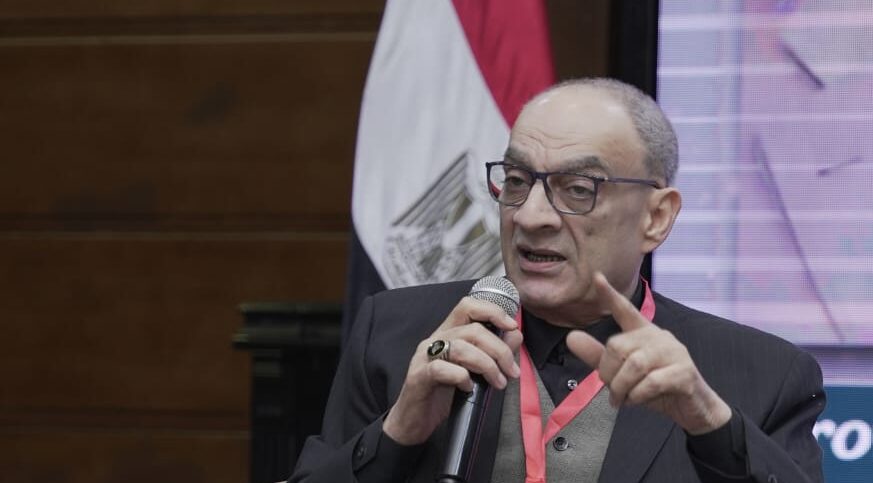
There is a particular kind of professional credibility that cannot be manufactured or awarded into existence. It is the credibility that comes from being in the room when organisations face their most difficult moments, from leading people through restructuring and crisis, from watching technically sound strategies collapse because the human architecture beneath them was never built properly. Prof. Dr. M. Amr Sadik has been in that room many times across three decades, in Egypt, Syria, Jordan, Saudi Arabia, and beyond. What he has built from those experiences is not simply a successful career. It is a body of thought and practice that has made him one of the most consequential HR voices in the Arab region and, increasingly, the world.
THE REALISATION THAT CHANGED EVERYTHING: EXECUTION IS A PEOPLE ISSUE
Prof. Dr. Sadik’s entry into human resources was not driven by accident or default. It was driven by a specific insight he arrived at early and has never abandoned: organisations do not fail because of strategy alone. They fail because of execution, and execution is fundamentally a people issue. That realisation, formed in the early stages of a career that would span more than thirty years and more than a dozen major organisations, reframed what HR leadership could mean when done with genuine strategic intent.
What drew him forward was not the administrative dimension of the profession but its transformative potential. HR, when designed and led with ambition, is not a support function hovering at the edge of organisational strategy. It is the mechanism through which strategy becomes possible, through which behaviour, culture, and capability are shaped into the conditions for real performance. That conviction has been the animating force behind every role he has held, every transformation he has led, and every organisation he has left in better shape than he found it.
THREE ERAS, THIRTY YEARS: WITNESSING HR’S FULL TRANSFORMATION
Few professionals in any field can claim to have lived through the complete arc of their discipline’s evolution. Prof. Dr. Sadik is one of them. He entered HR during what he describes as the administrative era: a world of personnel management, compliance, and transactional processes in which the function’s ceiling was set by its paperwork. He watched the operational era take shape as structured HR systems, performance management frameworks, and formal talent processes began to give the function more substance and consistency.
He now operates at the leading edge of the strategic era, a period in which HR is no longer judged by how efficiently it manages people but by how measurably it contributes to business outcomes. That shift, from activity to impact, from compliance to capability, from cost centre to value driver, is the transformation he has spent his career accelerating. Working across local, regional, and international organisations has given him a panoramic view of where this evolution is advancing quickly and where it is still stalled, particularly in the Arab region, where specific challenges continue to require specific responses.
CLARITY, COURAGE, CONSISTENCY: A PHILOSOPHY FORGED IN DIFFICULTY
Ask Prof. Dr. Sadik about the moments that most profoundly shaped his leadership philosophy, and the answers are not comfortable ones. Leading organisations through crisis and restructuring, where the decisions required were genuinely difficult and the consequences for people were real. Managing cross-cultural teams across multiple countries, where adaptability was not a soft skill but a professional survival requirement. And perhaps most instructively, watching technically sound strategies fail because the leadership and culture alignment needed to execute them simply was not there.
From these experiences, a leadership philosophy crystallised around three words that have remained constant across every context he has operated in: clarity, courage, and consistency. Clarity about what the organisation needs and what the people within it are capable of. Courage to make difficult decisions transparently and to challenge comfortable assumptions that produce mediocre outcomes. Consistency in values and behaviour that makes leadership trustworthy rather than merely authoritative. It is a philosophy grounded in hard experience, not theoretical idealism.
THE ARAB REGION’S HR CHALLENGE: HONEST DIAGNOSIS, STRUCTURAL SOLUTIONS
Prof. Dr. Sadik speaks about the HR challenges specific to the Arab region with the directness of someone who has both witnessed them firsthand and developed workable responses to them. Talent gaps between what the market produces and what organisations need. Persistent shortages in leadership capability at the levels where it matters most. Resistance to change and transformation that is culturally embedded rather than simply individual. And the enduring tension between localisation and nationalisation mandates on one side, and performance imperatives on the other.
His response to these challenges is not to work around them but to address them structurally. Heavy investment in leadership development is non-negotiable. Building data-driven HR capabilities that move organisations beyond gut-feel people decisions is essential. And the fundamental reorientation from traditional HR administration to what he calls capability-building HR is the change that everything else depends on. The organisations that make this shift will not simply manage their people better. They will perform at a categorically different level.
CULTURE IS NOT WHAT IS WRITTEN: IT IS WHAT IS PRACTISED
On the subject of organisational culture, Prof. Dr. Sadik cuts through the abstraction with a formulation that every leader who has ever produced a values statement and then watched it become a wall decoration would benefit from hearing: culture is not what is written. It is what is practised. The gap between those two things is where most culture-building efforts fail, and closing it requires more than communication campaigns or employee engagement surveys.
His approach to building genuine culture centres on behavioural clarity, leadership alignment, and reinforcement through performance management and reward structures. When leaders act in ways that contradict stated values, no amount of internal marketing closes the credibility gap that results. When performance management rewards behaviours that undermine the culture the organisation claims to want, the message employees actually receive is the one embedded in incentives, not the one printed in handbooks. During transformation, culture becomes either the organisation’s strongest asset or its most powerful obstacle. Prof. Dr. Sadik has seen it perform both roles, and his frameworks are designed to ensure the former.
A CAREER OF FIRSTS: THE STEVIE AWARD AND WHAT FOLLOWED
In 2006 and 2007, Prof. Dr. Sadik became the first Arab-Egyptian to receive the American Stevie Award for Best Human Resources Executive, a distinction that placed him at the centre of global recognition for HR leadership at a time when the Arab region’s HR community was still establishing its international profile. He has since received the same global ranking three times from England and America, another first for an Arab-Egyptian professional in the field. The accumulation of awards from the UK, Russia, Ghana, Malaysia, India, and the USA tells the story of a career that has consistently been evaluated against international standards and consistently found to exceed them.
His recognition as one of HR’s Most Internationally Influential Thinkers in 2014 and his 2025 ranking as No. 20 among the Top 50 Global HR Thought Leaders are not simply honours. They are markers of a trajectory: a professional who began his career in the hotels and resorts of Egypt and expanded his influence steadily until it reached the journals, conferences, and leadership councils that shape global HR practice. Along the way, the President’s Award from Sheraton Hotels and the Best Manager Award from Jolie Ville Mövenpick Hotels and Resorts confirmed that his capability was as strong on the operational floor as it is in the strategic boardroom.
BUILDING THE NEXT GENERATION: ACADEMIA, PUBLISHING, AND THE LEARNING ECOSYSTEM
Prof. Dr. Sadik’s commitment to the development of future HR leaders extends well beyond his own organisations. As Co-Founder and Vice President of Learning and Development at Educators Learning Solutions, he leads strategic learning interventions across Egypt, the Middle East, and the UK. His lecturing at ESLSCA Business School, HIBA, and ipe Management School in Paris brings the weight of his practical experience into academic settings where future leaders are still forming their frameworks for thinking about organisations and people.
His publications include several books released in Germany and India, alongside more than forty articles in HR Future magazine in South Africa, one of the continent’s most respected HR publications. His ongoing participation in international conferences, his role as a judge in global HR awards, and his positions on the boards of the Chartered Institute of Education and Training and ICERT extend his influence into the institutional infrastructure that shapes how the profession is defined, evaluated, and taught.
THE FUTURE OF HR: FROM FUNCTION TO FORCE
Looking at the five years ahead, Prof. Dr. Sadik identifies five converging forces that will define what HR must become. AI-driven HR will automate transactional processes and make advanced people analytics a standard rather than an advantage. Skills-based organisations will shift from job-based to capability-based workforce models, demanding an entirely new approach to talent management. Leadership under uncertainty will require greater emphasis on agility, resilience, and decision-making quality as stable operating environments become rarer.
Employee experience will become a genuine competitive differentiator as organisations increasingly compete for talent on the quality of their culture rather than compensation alone. And HR will be expected not merely to support organisational transformation but to lead it. That final point is where his career-long conviction and the direction the profession is heading converge most clearly. The future of HR, in his framing, is not about managing people. It is about building organisations capable of continuously adapting, performing, and leading in conditions of genuine uncertainty. HR must evolve from function to force. After thirty years of modelling that evolution, Prof. Dr. M. Amr Sadik is already living the future he is describing.