A CHILDHOOD THAT BECAME A CURRICULUM
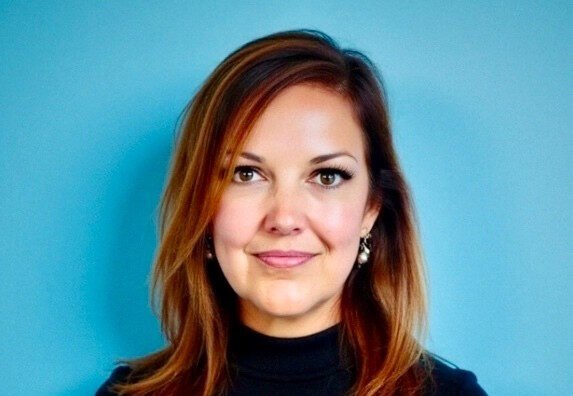
The bridge builder: how beatrice de salles has spent three decades turning language, culture, and empathy into the architecture of global peace
Before Beatrice de Salles ever stepped into a formal diplomatic arena, the world had already been her classroom. Growing up across Brazil, Switzerland, Italy, England, India, Hong Kong, and the United States, she did not just learn about cultural difference. She lived inside it, moved through it daily, and came to understand instinctively what many spend careers trying to grasp: that the spaces between cultures are not obstacles to be managed but opportunities to be honored.
That early life shaped a defining realization that would anchor everything she built afterward. Diplomacy, she understood, is not the exclusive domain of governments and formal negotiations. It happens every single day, in the quality of a conversation, in the willingness to listen past assumption, in the simple human act of trying to understand someone whose world looks nothing like your own.
“Language and culture are powerful bridges between people,” she reflects. “A defining realization for me was understanding that diplomacy is not limited to governments. It happens every day through dialogue, empathy, and intercultural understanding.”
That insight became a compass. And over the course of more than three decades, it has guided Beatrice into some of the world’s most consequential rooms.
PROVING THAT EMPATHY IS A STRENGTH
Entering the world of diplomacy and global affairs as a woman meant navigating spaces that were not always designed with her in mind. Beatrice encountered the familiar pattern that many women in leadership know well: being present in a room while still having to work twice as hard to be genuinely heard within it.
The challenge she faced was not simply about representation, though that mattered enormously. It was also about the persistent undervaluing of the very skills she brought most naturally: cultural sensitivity, multilingual fluency, and emotional intelligence. These were treated in some circles as soft additions to the real work, rather than as the sophisticated and irreplaceable tools they actually are.
Her response was not to adapt herself to those expectations. It was to remain consistent, authentic, and resilient until credibility became undeniable. “I learned that authenticity, resilience, and consistency create lasting credibility,” she says. It is advice she now passes on to every emerging leader she mentors, because it is advice that was earned rather than inherited.
FROM ACHIEVEMENT TO SERVICE: THE EVOLUTION OF A LEADER
Thirty years in any field changes a person. Thirty years in diplomacy, navigating geopolitical complexity, cultural conflict, and humanitarian urgency, changes a person profoundly. For Beatrice, the most meaningful shift has been in how she understands leadership itself.
Where the earlier years of her career were oriented toward achievement, toward building, proving, and establishing, her perspective has deepened into something more expansive. Leadership, she now believes, is fundamentally about service. It is about creating environments more inclusive and more compassionate than the ones you entered. It is about making space for others to rise.
“True leadership is about empowering others, creating opportunities, and leaving spaces more inclusive and compassionate than we found them,” she reflects.
This evolution is visible in every dimension of her current work, from her role as Chairwoman of the Humanitarian Innovation Group to her engagement with the UN Commission on the Status of Women, where the focus is never on individual recognition but on structural, lasting change.
THE SILENT ARCHITECTS OF UNDERSTANDING
Among the many roles Beatrice has inhabited across her career, one of the most quietly powerful is that of translator and interpreter. It is a role that most people underestimate, imagining it as a technical exercise in converting words from one language to another. Beatrice knows it to be something altogether different.
Interpreting, as she practices and understands it, is the translation of meaning, emotion, and cultural nuance. It requires holding two worlds simultaneously, understanding not just what is being said but why it is being said, what history and context surround it, and what emotional register it carries. In high-stakes diplomatic settings, getting that wrong does not merely cause confusion. It can unravel trust that took years to build.
“Interpreters are silent architects of understanding,” she says, “because they help shape communication in real time under complex circumstances.”
This insight sits at the heart of her broader philosophy about intercultural communication as a tool for conflict resolution. Misunderstandings between nations and peoples, she observes, rarely arise from fundamental disagreement alone. They arise from the inability to accurately interpret one another’s perspectives, values, and emotional contexts. Address that gap, and entire dimensions of conflict become navigable.
CULTURE AS THE FOUNDATION, NOT THE FOOTNOTE
In conventional diplomatic thinking, cultural heritage often occupies the margins: something to be acknowledged in opening remarks and then set aside for the real business of negotiation. Beatrice has spent her career arguing for precisely the opposite approach.
Cultural heritage, in her framework, is not decoration. It is the foundation. It preserves collective memory, shapes identity, and carries the accumulated wisdom of generations. When nations come together to protect shared heritage, whether through language preservation, safeguarding historic sites, or honoring traditional knowledge, they do something that formal agreements alone cannot achieve: they build genuine mutual respect.
“Cultural heritage reminds us of our shared humanity,” she says. “When nations collaborate to protect heritage, traditions, and languages, they strengthen mutual respect and create opportunities for peaceful cooperation.”
As Chairwoman of the Humanitarian Innovation Group, the values she brings to this work are consistent and clear: dignity, inclusion, sustainability, cultural respect, and human-centered innovation. Global peace, in her understanding, does not begin at the negotiating table. It begins when people feel heard, respected, and empowered to contribute meaningfully to the world they share.
WOMEN AT THE TABLE, WOMEN SHAPING THE AGENDA
Through her work with the UN Commission on the Status of Women and platforms including WoW and WICCI, Beatrice has been a consistent and vocal advocate for something that should not still need advocating in 2026 but does: the full inclusion of women not merely in diplomatic conversations, but in the decision-making roles where those conversations become policy.
Representation, she is careful to emphasize, is not the finish line. It is the starting point. The urgent work is ensuring women are positioned where they can actually shape outcomes, not simply observe them.
What women bring to high-stakes diplomatic negotiations and humanitarian missions is not a gentler version of what men bring. It is a distinct and powerful set of capacities: emotional intelligence that reads rooms accurately, collaborative problem-solving that builds rather than defeats, community-centered thinking that grounds strategy in human reality, and resilience forged through navigating systems not built for them.
“When women are empowered to lead, policies become more representative of real human needs and social realities,” she says with the quiet certainty of someone who has watched this play out repeatedly across decades of work.
MENTORING AS MUTUAL GROWTH
The mentorship Beatrice offers emerging women leaders is not delivered from a distance. It is relational, reciprocal, and grounded in genuine curiosity about what the next generation is seeing that she might not yet see herself.
Her consistent counsel to those she guides is both simple and demanding: embrace your voice, remain curious, and never underestimate the value of cultural intelligence and empathy. Leadership is not about perfection. It is about purpose, integrity, and the courage to keep growing even when growth is uncomfortable.
And she practices what she teaches. “Mentoring others often teaches me just as much as formal education or professional experience,” she acknowledges. “I remain open to new perspectives, global conversations, and interdisciplinary learning.”
It is a posture that keeps her work vital after three decades, the posture of someone who has never confused experience with arrival.
A VISION FOR 2030 AND BEYOND
Looking toward the future, Beatrice’s hopes for the next generation of global peace ambassadors are both ambitious and deeply human. She envisions more diverse, multicultural, and younger women shaping international agendas by 2030. She hopes future leaders will prioritize humanity over division and cooperation over fear.
Most fundamentally, she hopes they will understand what she has come to know across a lifetime of building bridges: that diplomacy is not only political. It is relational, cultural, educational, and irreducibly human.
“The world doesn’t just need smart people,” she believes. “It needs grounded, humble, and purpose-driven people. Those who can build, uplift, create, and care.”
To the younger version of herself standing at the beginning of this long and remarkable journey, her message is tender and clear: trust the journey more deeply. Do not doubt the value of your voice. Every challenge, in time, becomes part of your mission.
Empowering voices, for Beatrice de Salles, means creating environments where people feel safe and valued enough to lead. It means investing in education, mentorship, and equitable access. And it means continuing, every single day, to build the bridges that bring us closer to the world we are all still working toward.