BUILDING COMMUNITIES, NOT JUST CONVERSATIONS
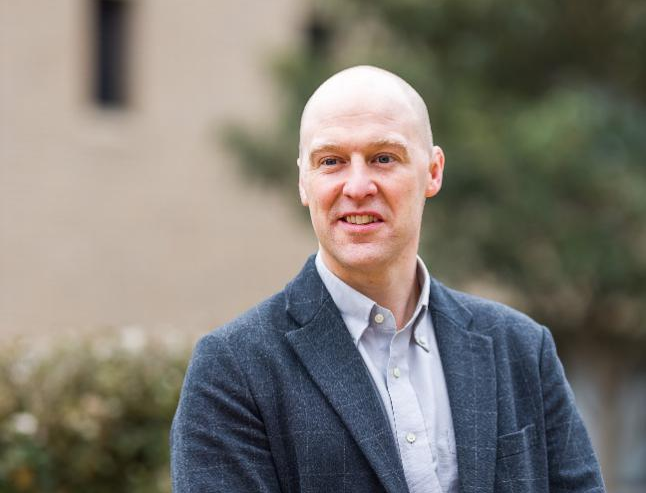
Communication is often described as the ability to exchange ideas. For Dr. Robert Stroud, it is something far more powerful. It is the catalyst that brings people together, transforms relationships into collaborations, and turns individual potential into collective progress. Throughout a career spanning higher education, international teacher development, public speaking, research, and global community building, he has consistently demonstrated that meaningful communication is not measured by how effectively information is delivered, but by the opportunities it creates for people to learn, grow, and build something greater together.
Today, as Professor at Hosei University in Tokyo, TEDx speaker, international keynote presenter, researcher, and founder of several influential global initiatives, Dr. Robert continues to champion a simple yet profound philosophy: strong communities create meaningful innovation, and meaningful communication is the foundation upon which those communities are built.
FROM LANGUAGE EDUCATION TO GLOBAL LEADERSHIP
Dr. Robert’s professional journey began in English language education, where his initial goal was straightforward to help learners communicate more effectively. Yet over time, he realized that communication itself was never the final destination. What fascinated him most was what happened after people found their voice. Ideas began to circulate, friendships developed across borders, collaborative projects emerged, and communities formed naturally around shared interests and common purpose.
One of the defining moments in his career came through The University Grapevine, an international platform designed to connect educators through publishing, collaboration, and professional dialogue. Watching practical classroom ideas shared by one teacher inspire educators on the opposite side of the world fundamentally changed his perspective on leadership. He discovered that facilitating meaningful connections could generate an impact far greater than any individual accomplishment.
That realization continues to guide every initiative he leads today. Rather than positioning himself at the center of every conversation, Dr. Robert focuses on creating environments where people discover one another, exchange ideas freely, and continue collaborating long after the initial introduction has taken place.
CREATING PLATFORMS THAT CONNECT THE WORLD
This philosophy has inspired the creation of several internationally respected initiatives, including Voices of Change, Culture Club, and The University Grapevine. While each project serves a unique purpose, they all share one common objective: helping good people find other good people with whom they can grow.
Dr. Robert often jokes that he has become an international matchmaker only without the awkward dinner reservations. Behind the humor lies a serious observation about today’s digital world. Modern technology has given society countless communication tools, yet genuine opportunities for meaningful human connection remain surprisingly rare.
Rather than overwhelming participants with endless information, his communities prioritize authentic interaction. A single meaningful introduction, an international collaboration, or a conversation that sparks lifelong friendship represents success in its purest form.
Culture Club, in particular, has demonstrated the extraordinary value of intercultural collaboration. Bringing together participants representing dozens of nationalities creates environments where curiosity naturally replaces assumption. Instead of fearing differences, participants learn to appreciate them, discovering that genuine understanding begins when people choose dialogue over division. In Dr. Robert’s view, the world needs fewer echo chambers and many more bridges.
COMMUNICATION THAT LEAVES PEOPLE FEELING UNDERSTOOD
As a TEDx speaker and international keynote presenter, Dr. Robert has addressed audiences across universities, educational organizations, professional conferences, and leadership forums worldwide. Yet despite the diversity of those audiences, his understanding of influential communication remains remarkably consistent.
The most effective communicators, he believes, do not simply deliver information they create connection.
Many presenters focus primarily on the message they wish to deliver. Exceptional communicators begin somewhere entirely different. They ask themselves what their audience is experiencing, what challenges people are facing, and what questions remain unanswered. When listeners feel genuinely understood, communication moves beyond information sharing and becomes transformational.
His TEDx experience reinforced that belief. Great communication is never limited to carefully chosen words alone. It emerges through storytelling, humor, empathy, thoughtful pauses, timing, authenticity, and emotional intelligence working together. Long after individual sentences have faded from memory, audiences continue remembering how a speaker made them feel.
That philosophy has become central not only to his public speaking but also to his work as an educator, mentor, and leadership coach.
LEADERSHIP BEGINS WITH LISTENING
While communication frequently dominates conversations about leadership, Dr. Robert believes listening remains the most underestimated leadership skill.
Leading diverse teams across cultures requires more than technical expertise or persuasive presentation skills. It requires genuine curiosity about people whose experiences differ from our own. Leaders cannot create inclusive environments until they first understand the diversity that already exists within their teams.
Equally important is the willingness to share opportunities rather than attention. Throughout his career, Dr. Robert has encouraged emerging educators, researchers, and professionals to publish their work, present internationally, and develop confidence in their own voices. Great leaders, he believes, create more leaders rather than more followers.
Even something as simple as shared laughter plays an important role. Some of the most successful intercultural activities he has facilitated involved games, conversations, and informal collaboration instead of lengthy presentations. These experiences consistently demonstrate that people usually have far more in common than they initially imagine.
Leadership also requires humility. The strongest leaders are often those comfortable admitting they do not have every answer. Vulnerability, when combined with competence, builds trust far more effectively than the illusion of perfection.
HUMAN-FIRST LEADERSHIP IN THE AGE OF ARTIFICIAL INTELLIGENCE
As artificial intelligence rapidly reshapes education, communication, and professional life, Dr. Robert remains optimistic but also intentional.
His philosophy is refreshingly straightforward: human first.
Technology should strengthen relationships rather than compete with them. In his own classrooms, students are encouraged to exchange ideas, challenge perspectives, and build understanding with one another before turning to AI tools. Once those human conversations have taken place, technology becomes an excellent partner for refining thinking, exploring alternatives, and expanding creativity.
The conversation, however, should always come before the algorithm.
He believes organizations should approach technology with the same mindset. Software can improve efficiency, automate repetitive tasks, and increase productivity, but people continue providing organizations with purpose, values, creativity, and meaning. If innovation saves time, leaders should invest that additional time back into strengthening relationships rather than simply increasing output.
SHAPING THE FUTURE OF LEARNING AND GLOBAL LEADERSHIP
Looking ahead, Dr. Robert believes education is entering one of its most significant transformations.
For generations, educators were primarily responsible for delivering information. Today, information is available almost instantly. The greater challenge lies in helping people interpret knowledge, think critically, collaborate effectively, and solve increasingly complex problems together.
As a result, educators will increasingly become community architects rather than information providers, while organizational leaders will evolve into facilitators who empower others rather than directors who simply provide instructions. In an age increasingly influenced by artificial intelligence, perhaps the most valuable leadership skill will be the ability to unite people around a meaningful shared purpose.
Technology may determine how quickly organizations move.
Community will determine where they ultimately arrive.
A LEGACY OF OPENING DOORS FOR OTHERS
When asked about the legacy he hopes to leave, Dr. Robert offers an answer that perfectly reflects the values guiding his entire career.
He hopes to be remembered not for his titles, publications, speeches, or achievements, but for helping people find one another.
Communities create opportunities. Opportunities build confidence. Confidence empowers people to change their own lives and, in turn, the lives of others.
Whether through Culture Club, Voices of Change, The University Grapevine, international teacher development, academic research, or global keynote presentations, every initiative he has created reflects the same enduring belief: meaningful change rarely begins with grand movements. More often, it starts with a conversation between people who care about the same idea and choose to build something together.
For aspiring educators, speakers, and future leaders, his advice remains wonderfully simple. Start smaller than you think you need to. Help one person. Introduce two people. Create one opportunity. Because lasting influence is never measured by the size of an audience.
It is measured by the strength of the community that continues growing long after you have stepped away.