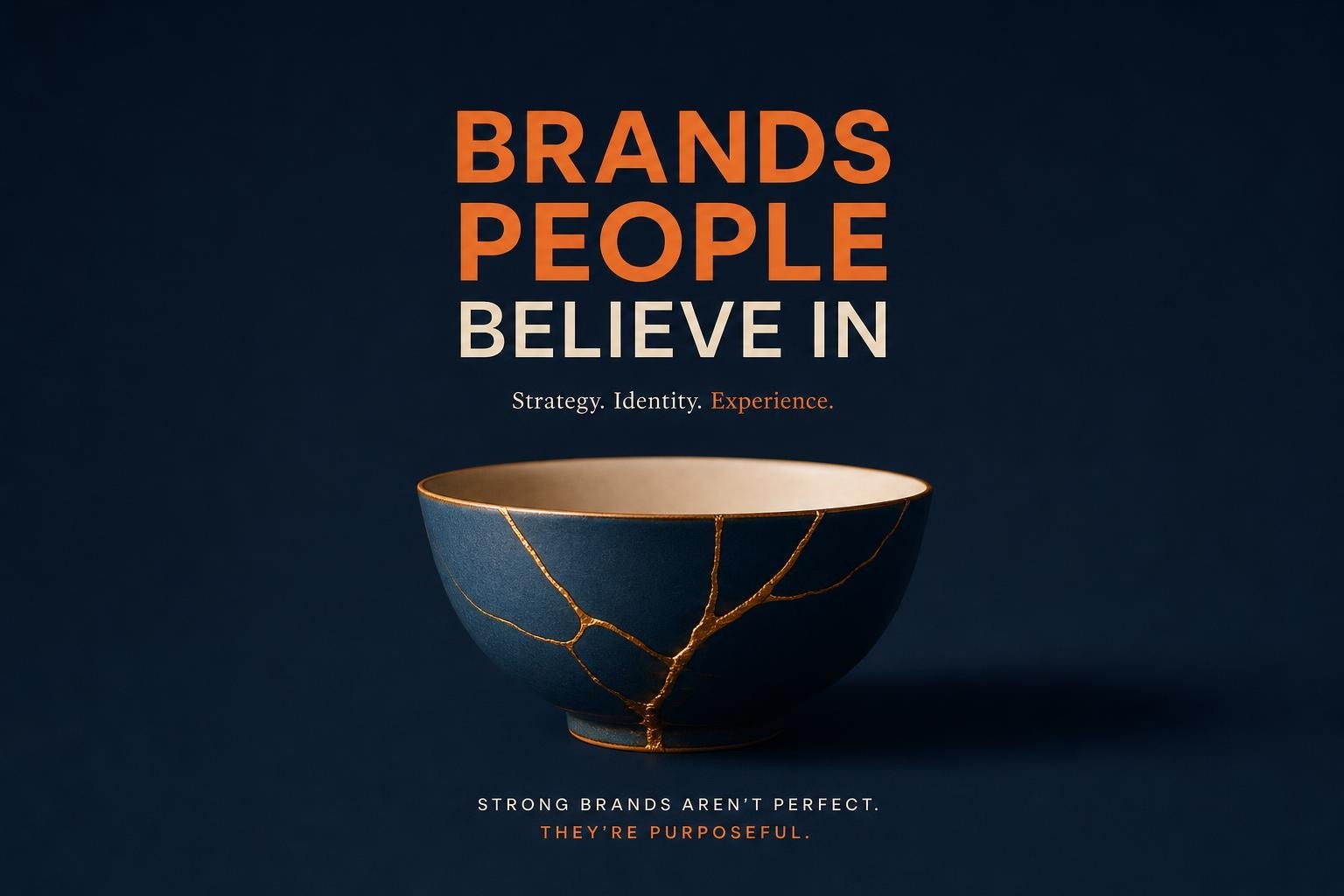
“The greatest educator is not a potter who adds knowledge, but a sculptor who reveals the potential already within.”
-Ky. Col. Prof. Dr. Edward Roy Krishnan
FROM THE CLASSROOM TO A GLOBAL EDUCATION MOVEMENT
Every meaningful educational revolution begins with a teacher who refuses to accept that existing systems represent the limits of what education can become. For Ky. Col. Prof. Dr. Edward Roy Krishnan, that journey did not begin in a boardroom, an executive office, or an international university. It began in the classroom, where for more than two decades he worked directly with learners across multiple countries and witnessed a reality that would ultimately define his life’s mission.
Wherever he taught, the pattern remained remarkably consistent. Extraordinary talent existed in every community, yet access to quality education remained uneven. Geography, financial barriers, and rigid institutional structures continued determining opportunity long before ability ever had the chance to reveal itself. For Dr. Edward Roy, this was not simply an educational challenge. It was a global injustice that demanded a fundamentally different approach to learning.
That realization became the catalyst behind his vision of creating educational ecosystems where excellence and accessibility coexist rather than compete. Instead of asking how universities could become more exclusive, he began asking how world-class education could become genuinely accessible to learners regardless of where they lived or the circumstances into which they were born.
His educational philosophy is beautifully captured through what he describes as the “Theory of Making.” Anyone, he explains, can be a potter by adding material to clay. A true educator, however, is more like a sculptor who recognizes the masterpiece already waiting inside the stone and patiently removes everything preventing it from emerging. Education, therefore, is not about filling empty minds with information. It is about uncovering the potential that already exists within every learner.
That philosophy has become the foundation upon which every aspect of his leadership has been built.
BUILDING A UNIVERSITY WITHOUT BOUNDARIES
That philosophy found its institutional expression in the European International University, Paris, where Dr. Edward Roy has championed a model that challenges many long-held assumptions about higher education. At a time when prestige has often been associated with exclusivity, he has demonstrated that academic excellence and accessibility are not mutually exclusive ambitions. Instead, they can reinforce one another when supported by rigorous standards, innovative delivery models, and an unwavering commitment to learner success.
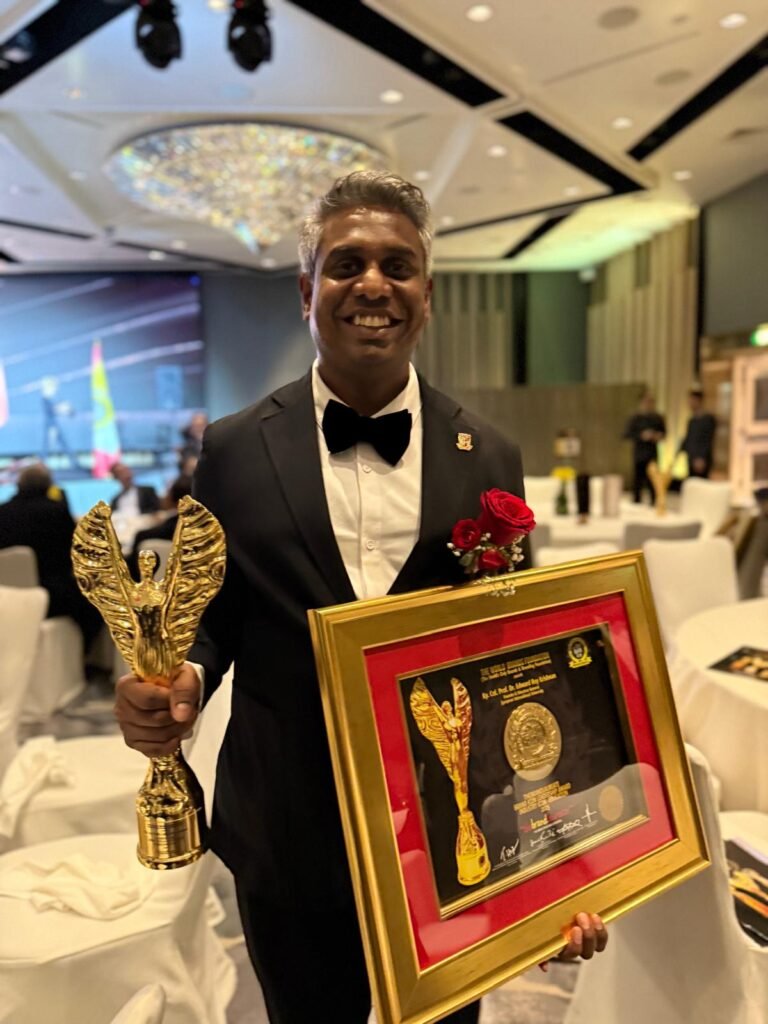
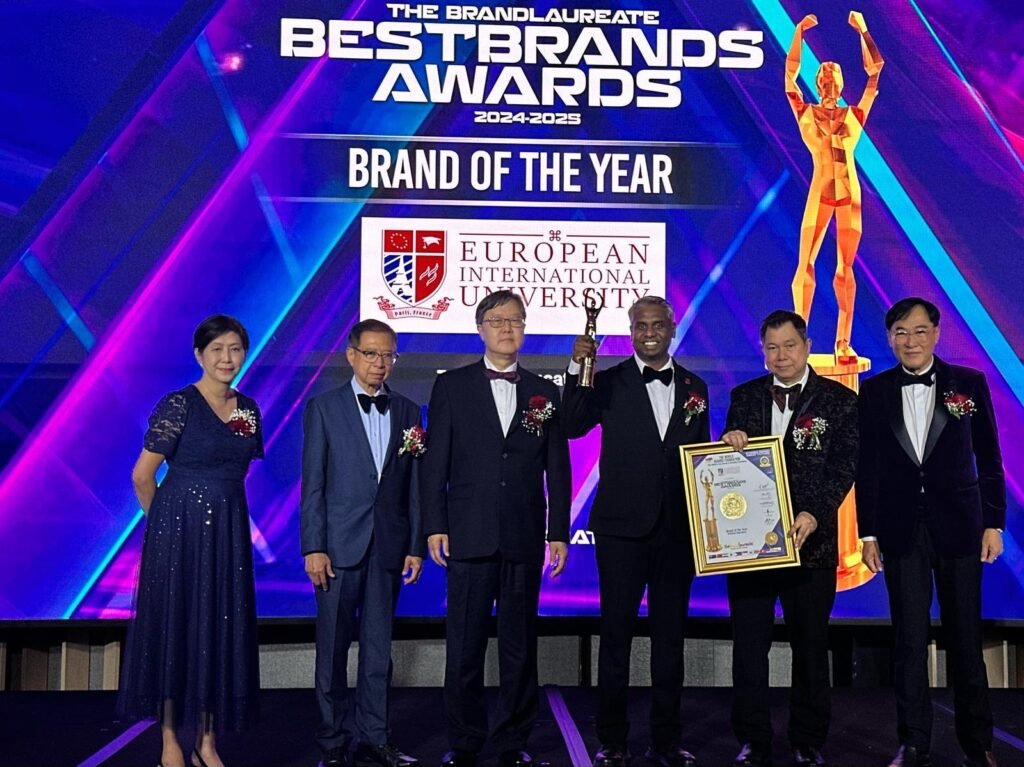
Under his leadership, EIU-Paris has earned international recognition, including ACBSP programmatic accreditation, a prestigious QS Stars 5-Star rating, ASIC Premier Institution status, the BrandLaureate Best Brand Award 2025, and recognition among CEOWORLD Magazine’s Top 50 Business Schools for 2025. While these achievements reflect institutional credibility, Dr. Edward Roy views them as something far more meaningful than awards. To him, they represent promises fulfilled evidence that a learner in Nairobi, Manila, Colombo, or Dhaka can access education that meets the same global standards traditionally reserved for far more privileged audiences.
His vision has never centered on expanding institutional prestige for its own sake. Instead, it has focused on removing unnecessary barriers that prevent capable individuals from realizing their potential. Every strategic decision, academic partnership, and innovation introduced at the university has been guided by one fundamental question: How do we make world-class education available to those who need it most?
LEADING WITH FOCUS, STRATEGY, AND HONESTY
Throughout decades of teaching and mentoring more than five hundred Master’s and Doctoral scholars, Dr. Edward Roy has refined a leadership philosophy built upon three deceptively simple principles: focus, strategy, and honesty.
For him, focus represents disciplined clarity. Leaders who pursue every opportunity often dilute their impact, while those who remain committed to a clearly defined mission create meaningful and lasting change. Strategy transforms vision into reality by ensuring that aspirations are supported by thoughtful planning, disciplined execution, and measurable outcomes. Honesty, meanwhile, remains the foundation upon which every successful institution is built. Without trust, neither leadership nor education can achieve their full potential.
Yet beneath these three principles lies another quality that Dr. Edward Roy considers equally essential care.
He believes remarkable leadership begins long before performance evaluations, academic assessments, or institutional rankings. It begins when educators genuinely believe in their learners, often before those learners believe in themselves. Encouragement, appreciation, and authentic human connection create environments where confidence grows naturally alongside competence. As he often reminds his students, investing in the person inevitably strengthens the intellect. Investing only in intellectual achievement, however, risks producing highly knowledgeable individuals who lack the empathy and purpose required to lead others.
REDEFINING HIGHER EDUCATION FOR THE FUTURE
Dr. Edward Roy believes higher education now stands at one of the most significant turning points in its history. For centuries, universities have measured learning through attendance, semesters, and credit hours. While these structures once served important purposes, he believes they no longer reflect how people actually acquire knowledge or demonstrate professional competence.
The future, he argues, belongs to institutions that measure mastery rather than time.
In an increasingly digital and interconnected world, learning is no longer confined to lecture halls or academic calendars. It occurs wherever motivated learners encounter thoughtfully designed educational experiences supported by meaningful assessment and practical application. Universities that continue equating learning with physical presence risk becoming increasingly disconnected from the realities of modern work and lifelong professional development.
Instead, Dr. Edward Roy advocates for educational models grounded in neuroscience, competency development, and authentic performance. Learning should not conclude when a course ends. It should continue until genuine capability has been demonstrated. This shift fundamentally changes the relationship between educators and learners by replacing passive content delivery with active skill development focused on real-world outcomes.
IKON SKILLS™: CLOSING THE GAP BETWEEN EDUCATION AND EMPLOYABILITY
This philosophy ultimately inspired the development of IKON SKILLS™, an educational ecosystem designed to address one of the most persistent challenges facing global workforce development the widening gap between certification and capability.
For too long, Dr. Edward Roy observed individuals earning qualifications that employers increasingly questioned because certificates alone could not guarantee practical competence. IKON SKILLS™ was created to replace that uncertainty with measurable evidence of mastery.
The platform now delivers 184 micro-credentials supported by more than 1,840 verified competencies through the proprietary IKON Intelligence™ AI Competency Engine. Rather than simply presenting instructional content, the system teaches, assesses, reinforces, remediates, scaffolds, and validates learning using evidence-based principles including schema formation, spaced retrieval, and the testing effect. Every component is intentionally designed to strengthen long-term understanding instead of short-term memorization.
Perhaps its most distinctive feature is its binary assessment philosophy.
Learners are evaluated using only two outcomes: Competent or Not Yet Competent.
For Dr. Edward Roy, the inclusion of the word yet carries profound significance. It reflects a belief that education should never permanently label individuals based on temporary performance. Instead of accepting partial mastery through conventional grading systems, learners receive unlimited opportunities to continue improving until genuine competence is achieved. In this model, employers no longer interpret grades they receive confidence that demonstrated skills meet established professional standards.
EDUCATION THAT SERVES THE REAL WORLD
Dr. Edward Roy firmly believes education fulfills its purpose only when it creates meaningful capability beyond the classroom. Across South Asia, Africa, Southeast Asia, the Middle East, and other emerging regions, learners pursue education not merely to collect qualifications but to strengthen families, launch businesses, improve communities, and transform economic futures.
Every competency introduced within the university therefore undergoes a simple yet demanding test: Will this help someone perform meaningful work in the real economy?
If the answer is uncertain, it has little place within a future-focused curriculum.
This commitment has become increasingly relevant as artificial intelligence, automation, and digital transformation continue reshaping global employment. Dr. Edward Roy believes universities must become far more agile, continuously adapting curricula to meet evolving workforce needs while maintaining rigorous academic standards. The next generation of higher education will belong to institutions capable of integrating AI, competency-based learning, and lifelong education into seamless learning ecosystems that remain responsive to rapidly changing industries.
A LEGACY OF OPENING DOORS
As Dr. Edward Roy reflects on the legacy he hopes to leave, institutional rankings and international recognition remain secondary to something far more personal.
He hopes to be remembered as an educator who opened doors that had previously remained closed.
Whether supporting a working professional balancing employment with education, mentoring doctoral researchers pursuing academic excellence, or helping first-generation learners access opportunities once beyond their reach, his greatest aspiration is to ensure education meets people where they are rather than expecting them to conform to outdated systems.
He imagines a future where a young woman in Colombo, a young entrepreneur in Lagos, or a working parent in Manila gains not only a respected qualification but also the confidence, competence, and opportunity to transform an entire family’s future.
Buildings will eventually age. Institutions will continue evolving. Rankings will inevitably change.
But a learner whose potential has been discovered, nurtured, and empowered creates an influence that extends across generations.
That, ultimately, is the legacy Ky. Col. Prof. Dr. Edward Roy Krishnan continues building one learner, one opportunity, and one transformed future at a time.