FROM FINANCE TO ENTERPRISE LEADERSHIP
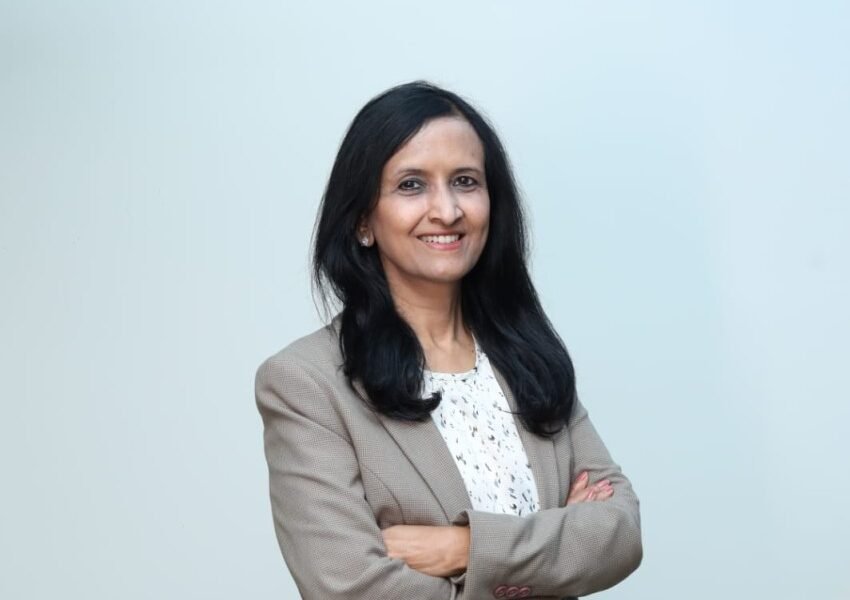
Geetha Ramamoorthi’s leadership journey has been defined by reinvention. Beginning her career in finance after completing her B.Com, CA, and CMA, she built experience across insurance, manufacturing, NBFCs, investment banking, technology, and engineering before moving into broader business leadership.
A pivotal chapter began with her move to Singapore in 1999 as APAC Regional Finance Manager at CH2M Hill. The experience exposed her to regional leadership, multinational operations, and diverse cultures. Her subsequent move to Atkins in 2007 became another defining point, providing an opportunity to expand beyond finance and take on broader organizational responsibilities.
In 2017, Geetha stepped outside her established comfort zone to lead Atkins’ 650-strong Transportation business with P&L responsibility. The transition demanded that she rapidly understand engineering operations, build stakeholder relationships, earn the confidence of her team, and deliver results in an unfamiliar domain. Her success led to her appointment as India Operations Director in 2018.
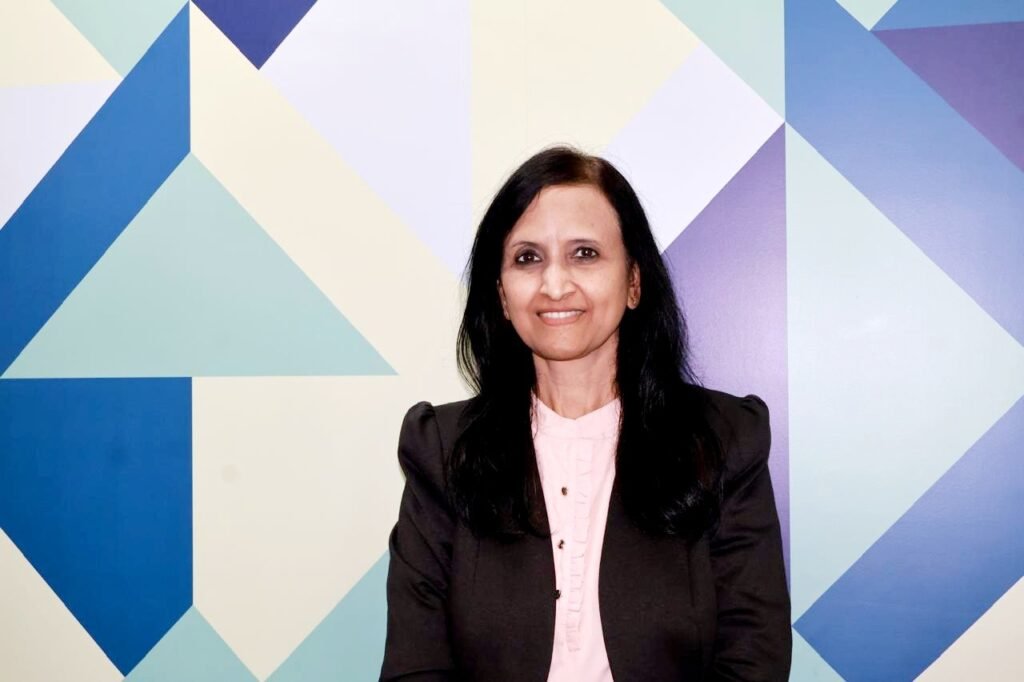
“Architecting Global Capability for the Next Era of Enterprise Growth”
Her next transformation came through digital. After completing a digital transformation program at MIT Sloan, Geetha developed a new perspective on how traditional engineering and consultancy businesses could evolve through platform thinking. As VP of Digital, she helped advance design transformation, digital twins, AI-based solutions, and India’s digital capabilities as a global center of excellence.
The journey ultimately led her to KBR, where she served as India VP and Managing Director and helped grow the business fivefold in four years.
For Geetha, continuous learning, a growth mindset, resilience, and the willingness to step beyond familiar territory have remained central to professional growth.
REDEFINING THE GLOBAL CAPABILITY CENTER
The GCC has undergone a fundamental transformation. What once operated primarily as a shared-services or cost-arbitrage model is increasingly becoming a strategic engine for enterprise value.
Geetha identifies a clear progression: from cost centers to value centers, from execution to innovation, from support functions to core business partners, and from talent pools to leadership hubs.
Modern GCCs increasingly own global products, platforms, engineering capabilities, intellectual property, and business outcomes. They are becoming environments where AI, digital engineering, advanced analytics, cloud, cybersecurity, and automation converge.
The next evolution is the emergence of human-AI organizations, where intelligent technologies augment employees and enable them to focus on higher-value responsibilities.
For Geetha, the strongest GCCs will not simply execute global mandates. They will influence enterprise strategy, create intellectual property, develop products, and become indispensable to global innovation.
LEADERSHIP THROUGH EMPOWERMENT
Geetha’s approach to transformation begins with people.
She believes organizations achieve meaningful change when employees understand not only what must be accomplished but why it matters. A compelling shared vision creates ownership, while collaboration allows diverse perspectives to shape the path forward.
Psychological safety is equally important. Geetha encourages people to challenge assumptions, ask difficult questions, and respectfully disagree. Innovation, in her view, requires environments where thoughtful experimentation is encouraged rather than punished.
Her leadership philosophy combines ambitious expectations with autonomy and support. Leaders must establish accountability while also removing obstacles, developing people, and recognizing contributions.
This people-first approach has been particularly important in her work building inclusive, high-performing organizations.
DIGITAL TRANSFORMATION WITH PURPOSE
For Geetha, digital transformation cannot be reduced to technology implementation.
Organizations need a workforce capable of adapting as technology evolves. That requires continuous learning, experimentation, cross-functional collaboration, and opportunities for employees to take on responsibilities beyond their traditional domains.
She advocates a culture where people can experiment, learn quickly, and embrace a “fail fast” mindset. Structured learning in areas such as design thinking, digital engineering, and AI can help transform emerging technologies from isolated initiatives into organizational capabilities.
Her experience demonstrates that transformation becomes sustainable when technology and talent development move together.
ENGINEERING’S NEXT DIGITAL ERA
Geetha expects the coming decade to be shaped by the convergence of artificial intelligence, data, digital twins, IoT, cloud computing, advanced analytics, automation, robotics, edge computing, and cybersecurity.
Generative AI and Agentic AI are already changing how work is performed, but she believes the greater opportunity lies in combining these technologies into intelligent engineering ecosystems.
Engineering itself is evolving from services to solutions, from solutions toward products, and increasingly toward platform-led engineering. Intelligent platforms can integrate engineering, operations, data, and AI to support continuous innovation and predictive decision-making.
For infrastructure, digital twins, AI-powered design optimization, predictive asset management, and autonomous inspection can improve safety, sustainability, resilience, and lifecycle performance.
GCCs will experience the same transformation, evolving into AI-enabled centers that own platforms, products, intellectual property, and enterprise capabilities.
MAKING INNOVATION PART OF THE DNA
Geetha views innovation as a cultural responsibility rather than a corporate initiative.
During her leadership journey, she has encouraged hackathons, ideathons, innovation forums, structured learning programs, and participation in external innovation competitions. These platforms give employees opportunities to challenge conventional thinking and transform ideas into practical solutions.
Her philosophy is straightforward: failure is not the opposite of innovation; it is part of the learning process.
That mindset has produced tangible outcomes, including recognition for innovative engineering solutions developed by KBR India.
For Geetha, however, the greater achievement is creating an environment where people feel confident enough to experiment in the first place.
LEADING INDIA’S ENERGY TRANSITION
Geetha’s leadership extends beyond digital transformation into the future of sustainable growth. As a member of the CII Council for Energy Transition and Hydrogen, she sees India’s energy transition as one of the country’s most significant industrial opportunities.
She believes business leaders must move sustainability beyond compliance and integrate it into core business strategy.
AI, digital twins, IoT, advanced analytics, and intelligent automation can help optimize energy consumption, improve asset performance, strengthen grid stability, and accelerate the deployment of clean technologies.
Yet technology alone will not deliver the transition. Collaboration between industry, government, academia, startups, research institutions, and financial organizations will be essential.
Equally important is developing the talent required to build the clean-energy economy.
For Geetha, India’s combination of engineering talent, digital capability, renewable resources, and manufacturing potential creates an opportunity to become a global leader in sustainable industrial growth.
BUILDING GLOBALLY CONNECTED ORGANIZATIONS
Global organizations need more than geographically distributed teams. They need a shared purpose, consistent values, strong governance, and a culture capable of connecting people across boundaries.
Geetha advocates clear decision rights and accountability without unnecessary bureaucracy. Governance should create trust and structure while leaving enough space for teams to act with agility.
She also emphasizes breaking geographical and organizational silos. Diverse teams often generate stronger solutions when people are willing to share knowledge, challenge assumptions, and learn from one another.
Ultimately, she believes technology can connect organizations, but people create high-performing cultures.
A LEGACY OF REINVENTION
Geetha’s professional story is ultimately a story of continuous reinvention from finance to operations, engineering, digital transformation, GCC leadership, and energy transition.
Her achievements include leading KBR India through significant growth, recognition for leadership and diversity, participation in prominent industry councils, and involvement in organizations including NASSCOM, CII, the Indo-American Chamber of Commerce, ASME, and the Indian Women’s Network.
Yet the legacy she seeks is not defined solely by awards, titles, or business results.
She wants to be remembered for building organizations where people were empowered to think differently, embrace change, and create lasting value.
Her advice to emerging leaders reflects that philosophy: remain curious, develop the courage to step outside familiar territory, continuously learn and relearn, and never lose sight of people while pursuing technological transformation.
The future of business, in Geetha’s view, belongs to organizations capable of bringing together AI, engineering excellence, platform thinking, sustainability, and exceptional human talent.
That is the architecture of enduring enterprise value.