
It’s not always about winning the case but the impact your contribution to the case leaves on the client.
-Prof. Dr. Dr. Dr. Fredrick O. Aoko, Esq.
FROM EXPERIENCING INJUSTICE TO CHAMPIONING RESOLUTION
For Prof. Dr. Dr. Dr. Fredrick O. Aoko, the foundations of dispute resolution were formed long before he entered the legal profession. Raised in a humble background and having lost his father at a young age, he experienced firsthand how hardship and vulnerability can leave families without a meaningful voice. Following his father’s death, his mother faced a difficult choice between accepting wife inheritance or raising her children independently while sacrificing many privileges. She chose the latter, and Fredrick grew up in circumstances where conflict was common. Rather than allowing those experiences to define him, he naturally became a peacemaker whenever disagreements arose. That early instinct eventually developed into a professional commitment to Alternative Dispute Resolution, beginning with mediation and later expanding into arbitration, adjudication, international legal practice, legislative drafting, academia, and international relations.
Yet, even after overcoming those early hardships and building a distinguished career, Fredrick’s journey carried another deeply personal loss. At the peak of his career, he lost the mother whose sacrifice had made so much of his journey possible. She had endured hardship, made difficult choices, and sacrificed her own privileges so that her children could have the opportunity to build better lives. Fredrick had hoped that she would one day witness his success and feel proud of the sacrifices she had made, but that moment was never to be. She passed away before she could see the full measure of what her sacrifices had helped him achieve. Her absence therefore remains intertwined with his success a reminder that some of the people who make our achievements possible do not always live long enough to witness them.
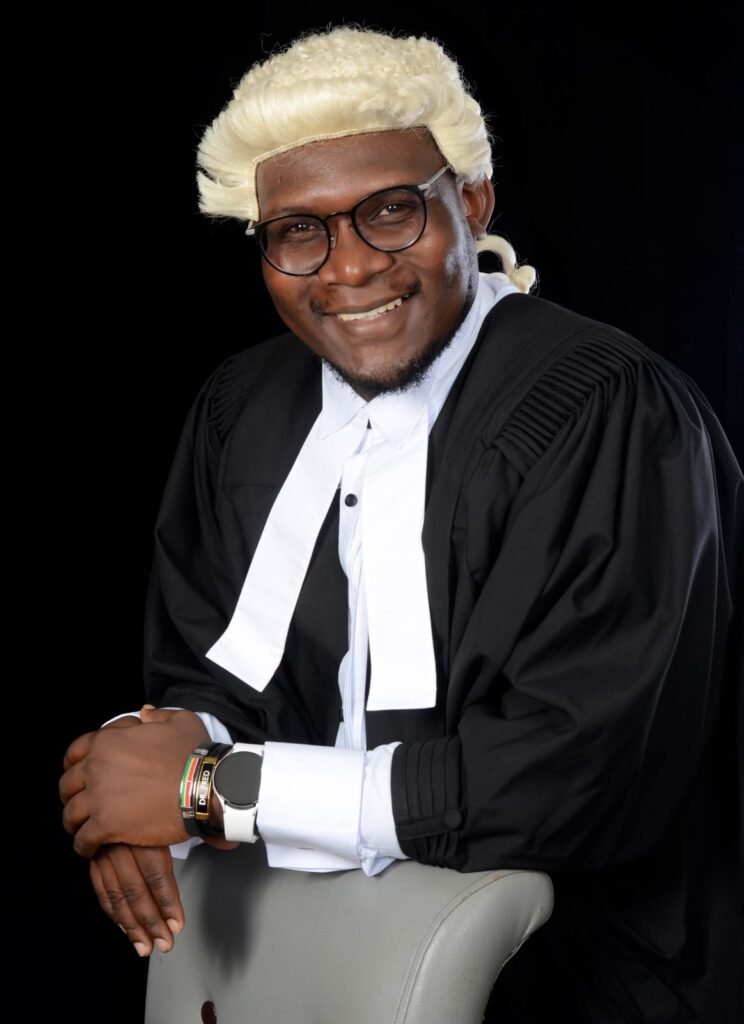
It’s not always about winning the case but the impact your contribution to the case leaves on the client
Kenya’s 2010 Constitution, which incorporated ADR under Article 159, further strengthened a path that had already become central to Fredrick’s professional philosophy. His multidisciplinary career has taught him that different areas of law contribute different tools to resolving complex problems. ADR taught him to listen, legislative drafting taught him to be thorough and decisive in pursuing fairness, while academia sharpened his drafting skills and ability to engage with different clients and perspectives. Exposure to different nationalities through ADR also broadened his international outlook and reinforced his belief that law is an interconnected ecosystem. Rather than approaching disputes solely as contests between opposing parties, Fredrick focuses on identifying their root causes and understanding the impact that a legal professional’s contribution can have on the client and the wider situation.
“It’s not always about winning the case but the impact your contribution to the case leaves on the client.”
NAVIGATING THE COMPLEXITY OF INTERNATIONAL LAW
International legal practice has transformed Fredrick’s approach from a rigid, single-jurisdiction mindset into a flexible and functional one. Cross-border disputes frequently involve complex questions of forum selection, choice of law, enforcement, regulatory frameworks, and different legal traditions. Understanding one jurisdiction in isolation is therefore not enough. Practitioners must also understand how different legal systems interact and how legal principles operate within different commercial, institutional, and cultural environments. Fredrick’s experience has required him to research diverse legal systems, interpret cross-border risks, negotiate international contracts, and convert complicated international doctrines into coherent frameworks that can be applied in real-world situations.
His experience as an international attorney and ADR practitioner has also demonstrated the importance of cultural understanding. Parties from different countries can approach negotiations, evidence, communication, and conflict from very different perspectives. Legal expertise must therefore be accompanied by cultural intelligence and an appreciation of institutional differences. For Fredrick, the international practitioner must be able to navigate these complexities while remaining neutral, practical, and focused on the underlying dispute. This approach becomes particularly valuable when parties operate across increasingly connected markets, where commercial relationships and legal consequences frequently extend beyond national borders.
BRIDGING LEGAL TRADITIONS IN INTERNATIONAL ARBITRATION
Fredrick’s experience in arbitration across jurisdictions including London, the United States, Kenya, and Nigeria has reinforced the importance of understanding procedural and cultural differences. His training with the International Chamber of Commerce highlighted the need for international practitioners to understand different legal traditions, procedural intersections, and local court attitudes toward enforcement. Common law systems may place greater emphasis on documentary evidence and active cross-examination, while civil law systems can rely more heavily on written dossiers and selective evidence. When parties from these traditions meet in an international arbitration, the challenge is to respect those differences while creating a fair and effective process.
Cultural factors can be equally influential. Cross-border arbitration is ultimately conducted between people and institutions, and cultural expectations can shape how parties communicate, negotiate, interpret evidence, and perceive fairness. Fredrick therefore sees successful international arbitration as an exercise in balancing legal knowledge with cultural awareness. Rather than imposing one legal tradition on another, the practitioner must create an environment where diversity is understood and incorporated into the process. This ability to bridge different legal and cultural perspectives strengthens the prospects of effective dispute resolution while preserving the neutrality expected from international practitioners.
FIDIC ADJUDICATION: KEEPING PROJECTS MOVING
As a FIDIC Certified Adjudicator, Fredrick sees adjudication as particularly valuable in large construction and infrastructure projects because it provides a rapid pathway for resolving disputes while the underlying project continues. FIDIC adjudication operates within strict timelines, generally requiring disputes to be addressed within 28 days. This speed can be critical when disagreements arise on active projects, where prolonged disputes can affect contractors, subcontractors, cash flow, schedules, and ultimately the viability of the project itself. A rapid determination allows parties to return to work promptly and reduces the likelihood that one disagreement will bring an entire project to a standstill.
Fredrick also views adjudication as a mechanism for preserving commercial relationships. Construction projects often involve long-term relationships between contractors and subcontractors, meaning that resolving a dispute should not necessarily destroy the relationship required to complete the work. He highlights the value of adjudication for comparatively weaker parties, including subcontractors dealing with larger contractors, because it provides a structured mechanism for addressing disagreements without allowing commercial power differences to prevent resolution. For Fredrick, the real strength of adjudication lies in combining speed, continuity, and practical problem-solving.
MATCHING THE DISPUTE TO THE RIGHT MECHANISM
Fredrick believes the appropriate dispute-resolution mechanism depends on the nature of the dispute, the contract, and the objectives of the parties. Where a contract already contains an ADR clause, that provision provides an important starting point. Otherwise, practitioners must consider whether the parties require a binding and enforceable determination, how much control they want over the process, the relationship between the parties, and their available budget. Mediation can be less expensive and can help preserve relationships, but it may be less effective where there is a significant power imbalance. In such circumstances, arbitration can provide a more structured and binding framework.
Hybrid approaches can also offer valuable alternatives. Fredrick sees potential in mechanisms such as med-arb, which can combine the collaborative advantages of mediation with the possibility of a binding determination. In other situations, litigation may be appropriate, particularly where parties have substantial assets within a jurisdiction supported by reliable courts. His approach is therefore not about promoting one mechanism over another. It is about understanding the problem first and then selecting the process capable of delivering the most appropriate outcome.
DRAFTING FOR PRECISION AND DISPUTE PREVENTION
Fredrick’s experience in legal and legislative drafting has strengthened his belief that effective dispute resolution can begin before a dispute exists. Meticulous drafting requires precision, grammatical clarity, consistency, and a deliberate effort to avoid ambiguity. His preference for plain English and strong structural design allows legal instruments to establish clear hierarchies through sections and subsections, making them more reliable when applied in practice. Scenario planning and carefully structured clauses can also help anticipate circumstances that may otherwise create uncertainty.
His ADR background further influences how he approaches contracts and legal instruments. Dispute-resolution provisions should be thoughtfully incorporated rather than treated as standard language added at the end of an agreement. By anticipating potential disagreements and establishing appropriate mechanisms in advance, drafting can become a form of conflict prevention. For Fredrick, a well-drafted legal instrument should not simply describe the rights and obligations of the parties; it should also provide a practical framework for dealing with uncertainty when circumstances change.
“Precision creates grammatical clarity and consistency; it also avoids ambiguity.”
AI, TECHNOLOGY, AND THE NEW LEGAL LANDSCAPE
Artificial intelligence is becoming an increasingly important force in legal practice, and Fredrick sees its potential to reduce time, costs, and delays across the profession. Automated drafting, evidence analysis, case management, and legal research can streamline activities that traditionally require significant amounts of professional time. AI tools may assist in preparing submissions and analysing large volumes of information, allowing practitioners to devote greater attention to verification, strategy, interpretation, and client advice. Digital platforms are also expanding access to justice, with Kenya’s e-filing systems and virtual court sessions demonstrating how technology can reduce physical and logistical barriers. Fredrick’s own experience conducting ADR sessions online has reinforced his view that virtual dispute resolution can be effective.
However, he believes technological adoption must be accompanied by professional responsibility. AI systems can generate hallucinations, including non-existent legal provisions and precedents, creating serious risks when outputs are accepted without verification. Fredrick points to a recent disciplinary case involving an advocate in Tanzania who was suspended after citing a non-existent legal precedent reportedly resulting from reliance on AI. Such examples demonstrate why legal professionals must remain responsible for the accuracy of their work regardless of the technology used to produce it.
Confidentiality and data protection represent another major concern. Some AI tools may not provide adequate end-to-end encryption, raising questions about the security of confidential client information. At the same time, many jurisdictions are still developing appropriate guidelines and legislation governing AI within the legal profession and ADR. For Fredrick, the challenge is not whether AI should be used, but how much reliance is appropriate and what safeguards must accompany its use. Technology can increase efficiency, but professional judgment, verification, transparency, and accountability must remain at the centre of legal practice.
WHERE INTERNATIONAL LAW MEETS GEOPOLITICAL REALITY
Fredrick’s academic background in International Relations and Political Science adds a broader dimension to his approach to international disputes. Legal rules alone may not fully explain disputes influenced by geopolitical volatility, regulatory changes, expropriation, currency controls, or shifting economic conditions. Understanding diplomatic and political dynamics allows him to consider the wider environment surrounding a dispute while remaining neutral in his role as adviser or dispute-resolution professional.
This perspective is increasingly important as geopolitical developments influence international commerce and enforcement. Rising tariffs and protectionism, for example, can create additional complications for cross-border transactions and the enforcement of foreign decisions or arbitral awards. Fredrick believes practitioners must therefore understand not only the law governing a dispute but also the political, economic, and cultural environment in which that law operates. This interdisciplinary approach strengthens risk assessment and allows international disputes to be viewed in their full context rather than through a purely legal lens.
IDENTIFYING CONFLICT BEFORE IT BECOMES A CRISIS
For Fredrick, effective dispute resolution begins before conflict becomes visible. Most disputes have warning signs, and identifying those signals at an early stage can create opportunities for intervention. Corruption, unfulfilled promises, stakeholder dissatisfaction, and unresolved tensions can act as triggers that eventually develop into open conflict. Governments, corporations, and institutions can therefore benefit from stakeholder engagement and impact assessments designed to identify tensions before they become entrenched.
Fredrick advocates for interest-based negotiation rather than rigid positions. Understanding what stakeholders actually need can create more constructive pathways than simply defending predetermined positions. His philosophy is centred on identifying the tension, understanding the trigger, and addressing the root cause. By moving from reactive dispute settlement toward proactive conflict prevention, organisations can potentially reduce the human, financial, and institutional costs associated with prolonged disputes.
“Find the tension. Identify the trigger. Address the root.”
BUILDING A MORE ACCESSIBLE FUTURE FOR ADR
Looking toward the future, Fredrick envisions a dispute-resolution ecosystem that is more accessible, hybrid, technology-enabled, and focused on sustainable outcomes. He sees significant potential in mechanisms such as med-arb and arb-med, alongside more affordable ADR systems that can extend access to parties who may currently find arbitration financially difficult. He also envisions AI systems capable of providing parties with informed predictions about possible outcomes, helping them assess their positions and make better decisions before disputes become unnecessarily prolonged.
His vision extends beyond technology to strategic problem-solving, early case assessment, and sustainable resolution metrics. In academia, he advocates for an AI- and technology-literate generation capable of understanding both the opportunities and limitations of emerging tools. Ultimately, Fredrick believes the future of international dispute resolution should not be defined by confrontation but by intelligent intervention, accessibility, prevention, and lasting solutions.
His career reflects this philosophy. From the personal experiences that first made him a peacemaker to his work as an international attorney, Professor of Law, arbitrator, mediator, FIDIC Certified Adjudicator, legal drafter, and educator, his professional journey has consistently focused on understanding conflict and finding better ways to resolve it.
PROFESSIONAL RECOGNITION
Fredrick’s contributions to academic excellence, leadership, professional development, and the empowerment of future leaders have received several recognitions. These include the Global Leadership Award in Academic Excellence by World’s Fame Times International Excellence Awards in 2025, the Best Leadership of the Year recognition under the Cluster of Achievers at the World School Summit, hosted at the House of Lords, in July 2026, and the Recognition of Exceptional Dedication and Excellence by Bradford International Alliance in 2024. He also received an Appreciation Award for Inspiration and Dedication to Empowering Future Leaders in February 2025.
Together, these recognitions complement a multidisciplinary career dedicated to international law, dispute resolution, legal education, leadership, and the development of future generations of legal professionals.