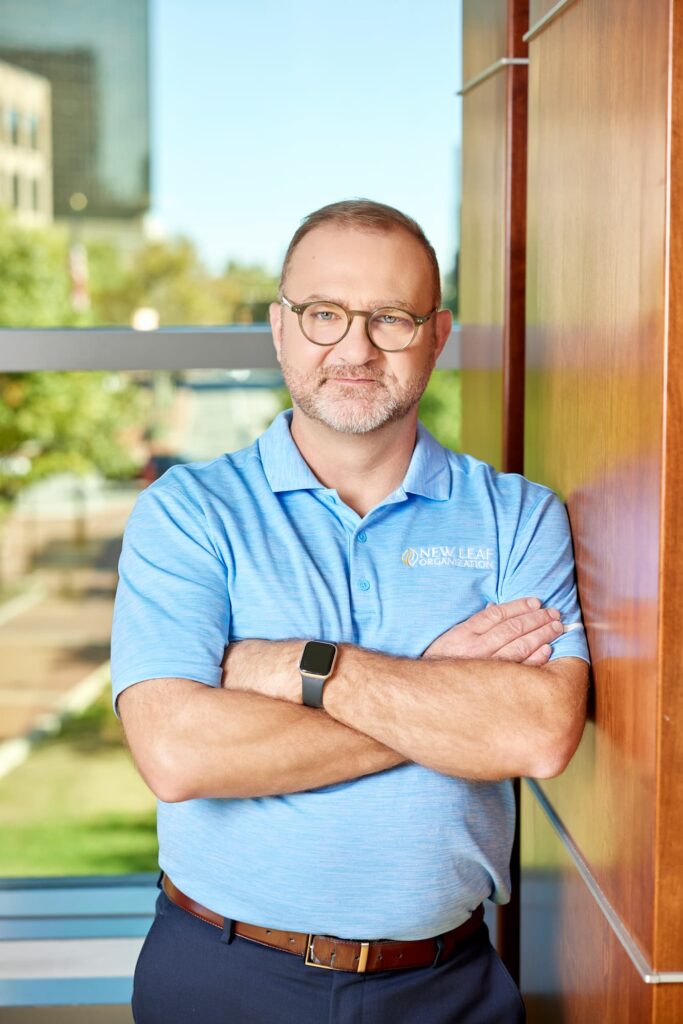
“What happens in the classroom is only a small part of student success. The structural barriers surrounding a child’s life are just as determinative of outcomes as anything happening between a student and a textbook.”
– Buddy Harris
In the landscape of American education, where systems are often built for the majority and the margins are left to fend for themselves, certain leaders emerge not to work within the edges of change but to redefine where the center ought to be. Buddy Harris is one of those rare individuals whose career reads less like a résumé and more like a calling, a steady, purposeful journey driven by one enduring conviction: that every student, regardless of circumstance, deserves to be seen, heard, and given a genuine chance to succeed.
Spanning teaching, public policy, dropout prevention and credit recovery (DOPR) , and organizational strategy, Buddy’s professional life has taken him across classrooms, community organizations, legislative corridors, and school evaluation frameworks. Yet through every transition, his north star has remained constant. Education, in his view, is not simply an academic exercise. It is one of the most powerful forces of transformation available to a human being, and the systems that deliver it carry a profound moral responsibility.
“What I realized was that what happens in the classroom is only a small part of student success,” Buddy reflects. This early insight, formed on the ground in Clinton, Louisiana, would shape the entire architecture of his career to come.
THE DEFINING SOIL: TEACH FOR AMERICA AND THE LESSONS OF POVERTY
Buddy’s journey into educational leadership began with a decision that many idealistic college graduates make but few follow through on with lasting commitment. After completing his undergraduate studies, he joined Teach For America and took on a 6th Grade language arts classroom in one of Louisiana’s most under-resourced communities. What greeted him were not just students struggling with reading comprehension, but young people navigating extreme poverty, fractured systems, and the quiet weight of being overlooked by the very institutions designed to lift them.
“Being a constant learner will be more important than being traditionally educated. We must foster relentless curiosity and adaptability rather than a set of facts or skills that will be obsolete in six months.”
It was there, in those classrooms, that education revealed itself to him not as a subject to be taught but as a lifeline to be extended. The experience also illuminated something else, something that would redirect the entire course of his career. Academic instruction alone, no matter how dedicated the teacher, was insufficient. The structural barriers surrounding a child’s life, community, family, economic precarity, and systemic neglect, were just as determinative of outcomes as anything happening between a student and a textbook.
That recognition pushed Buddy beyond the classroom and into organizations focused on community involvement. From there, the natural progression led him into policy work, where he could examine and attempt to dismantle the structural forces that so often determined a child’s trajectory before they ever walked through a school door.
THE EXCEPTIONAL UTILITY PLAYER: VERSATILITY AS A LEADERSHIP SUPERPOWER
Ask Buddy how he navigates the complex ecosystems of education, and he will describe himself plainly as an “exceptional utility player.” It is a characterization that captures something important about his philosophy. In any given school or organization, everyone is invested and everyone cares. Effective leadership, in his view, is about holding multiple lenses simultaneously: understanding what the data reveals about system wide performance, appreciating the structural conditions that produced those outcomes, and never losing sight of the fact that every data point belongs to a person with a real story.
This layered thinking, moving fluidly between the quantitative and the deeply human, is what has made Buddy effective across such varied roles. Whether designing operational systems, evaluating struggling schools, advising on policy, or building grant strategies, he brings the same foundational discipline: look at the whole picture, understand the forces at work beneath the surface, and keep the individual human being firmly in frame.
His background in policy has been especially formative. In policy work, Buddy learned that every situation involves objective indicators, the needs and wants of constituents, and the particular political or structural forces of the moment. To achieve any objective, all of these dimensions must be held in view at once. He carries that same analytical framework into how he designs and evaluates educational systems today, treating schools not as isolated institutions but as ecosystems embedded in broader social and political realities.
DROPOUT PREVENTION AND CREDIT RECOVERY (DOPR) : THE LAST LINE OF DEFENSE
If there is a single chapter of Buddy’s career that most powerfully captures his values, it is his immersion in the world of DOPR education. What first drew him to this work was not a policy brief or a strategic initiative. It was the people already doing it, the school leaders whose passion for this population was so palpable, so urgent, that it bordered on sacred.
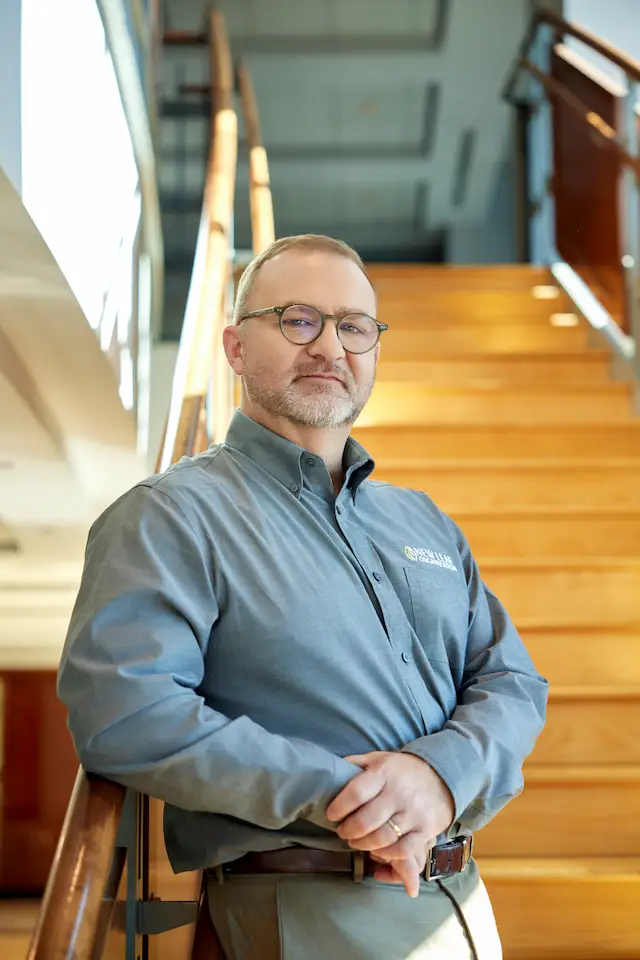
“This is a mission, maybe even more so than traditional education,” Buddy explains, “because everyone involved knows that we might be the last line of defense before a student faces some really bad outcomes.” That phrase, the last line of defense, is not hyperbole. For many DOPR students, a second chance at education is precisely that: a final opportunity before the consequences of being left behind by the system become permanent.
What Buddy found in DOPR education was also something unexpectedly visionary. While mainstream education has only recently begun to grapple with the concept of addressing the whole child, meeting students not just academically but emotionally, socially, and practically, DOPR schools have built that philosophy into their very foundation. The personalization that the broader educational world is now racing to achieve is something these institutions have long practiced out of necessity.
At New Leaf Organization, where Buddy now leads expansion and innovative programming efforts, that foundation of holistic support is paired with forward-looking academic and career-focused education. The result is an environment where a student first feels seen, where no barrier to their success is treated as too inconvenient to address, and where the tools for genuine academic achievement are made available on terms the student can actually meet.
MEETING STUDENTS WHERE THEY ARE: THE NEW LEAF PHILOSOPHY IN ACTION
The phrase “meeting students where they are” can easily become a platitude in educational circles. At New Leaf, it is a lived operational principle. Buddy is unequivocal about what it means in practice: ensuring that the student, first and foremost, feels seen. That the organization is not afraid to help them grapple honestly with the barriers standing between them and success. And that once that foundation of trust and acknowledgment is established, the tools for academic achievement can be meaningfully delivered.
This sequence matters enormously. Attempting to impose academic expectations on a student who does not yet feel that the institution sees or values them is an exercise in frustration for everyone involved. New Leaf understands that sequence, and Buddy’s work in expanding the organization’s programming is built on deepening and extending it.
Among the initiatives that excite him most is the integration of project-based learning and entrepreneurship into the curriculum, particularly through a focus on hydroponics and other hands-on programs that give students direct, tangible experience of their own capability. There is something powerful, he believes, about placing in a student’s hands both the literal tools of growth and the experiential evidence that they can learn, build, and create something of value.
The broader question of how education systems can balance academic achievement with career readiness is one Buddy approaches with characteristic nuance. Balance, he emphasizes, is not a compromise between competing priorities but a recognition that both dimensions are essential and neither is sufficient alone. A student who graduates without employment prospects may feel more disillusioned than before. A student who finds a job but was never truly seen or equipped to navigate difficulty will likely struggle to sustain that success. Both outcomes represent failures of education. True success requires attending to all of these factors with equal seriousness.
STRATEGY, GRANTS, AND THE DISCIPLINE OF CLARITY
Buddy’s policy background has given him a distinctive perspective on how organizations can use the grant process as something far more valuable than a funding mechanism. In his experience, schools often begin with broad, general ambitions, a desire to focus on workforce development, for instance, or community engagement, without the structural specificity needed to translate those ambitions into action.
The discipline of the grant process, with its requirements for articulating objectives, identifying existing systems, and honestly confronting what is missing, forces that productive refinement. Working from the general to the specific, as Buddy describes it, the grant process becomes a tool for organizational clarity, compelling institutions to understand not just what they want to achieve but what infrastructure they currently have and what gaps remain to be addressed.
Having visited and evaluated numerous schools across his career, Buddy has also developed a clear sense of what separates thriving institutions from struggling ones. The answer is less about resources than about culture. Shared vision, mutual accountability that does not depend solely on the principal, a genuine love for students, and a deep commitment to the educational mission are the hallmarks of schools that consistently outperform their circumstances.
A NATIONAL PLATFORM FOR DOPR: CLOSING THE KNOWLEDGE GAP
One of Buddy’s most compelling aspirations is the creation of a national platform for DOPR knowledge sharing, a space where the intellectual infrastructure of this often-overlooked field can be built, documented, and shared across institutions and states. His diagnosis of the current gap is pointed and honest.
For years DOPR schools have occupied what he calls a certain “marginalized status” in the broader educational conversation, mischaracterized by some as diploma mills or social service agencies rather than serious educational institutions. This mischaracterization has real consequences. It limits the research investment, the policy attention, and the professional prestige that this work deserves, and it leaves individual institutions operating in relative isolation when they could be learning from and strengthening one another.
Buddy’s vision for elevating DOPR into a mainstream educational priority begins with a simple but powerful premise: believing that these students can and should still learn, that they carry interests and passions worth cultivating, and that giving up on them is never an acceptable institutional posture. From that starting point, collaboration between educators and policymakers becomes not just possible but natural.
THE ARCHITECTURE OF RESILIENCE: LESSONS FROM A LIFE IN MOTION
Beyond his institutional contributions, Buddy Harris is a man whose personal philosophy has been shaped by experience, adversity, and a hard-won faith in the value of sustained effort. He describes his approach to professional success not as a pursuit of breakthrough moments but as a consistent positioning for opportunity, a practice grounded in intellectual openness and genuine curiosity about people, ideas, and the world.
“It starts with having an open mind and a deep curiosity,” he explains. Listening deeply to people about things they are passionate about, he has found, consistently reveals unexpected overlaps and opens doors that a more transactional approach would never uncover.
During difficult periods, Buddy has drawn sustenance from three convictions: a belief in the inherent value of work itself, a faith that hardship carries important lessons, and a confidence that solutions exist even when they look different from what was originally anticipated. These are not abstract affirmations but practical anchors that have helped him navigate uncertainty without losing direction.
His reflections on personal growth after fifty carry particular texture. Rather than measuring success against singular, elusive outcomes, he has found increasing meaning in what he describes as slow, steady improvement, embracing different definitions of fulfillment and finding joy in incremental progress. It is a philosophy that mirrors, in many ways, what he advocates for students: that growth is a process, not an event, and that resilience is built not in one dramatic moment but across thousands of small, committed choices.
LEADERSHIP AS INVITATION: BUILDING VISIONS LARGE ENOUGH FOR EVERYONE
Buddy’s understanding of leadership is fundamentally relational. When asked what qualities are essential for creating a vision expansive enough for everyone to see themselves in, his answer is revealing. He speaks of willingness to listen, appreciation for the different skills each person brings, the ability to hold multiple perspectives, and something rarer still: the genuine openness to let other people have the best ideas.
This last quality is more unusual in leadership circles than it should be. The ability to synthesize contributions from across a team, to recognize brilliance regardless of its source and channel it toward a shared purpose, is a mark of deep security and genuine mission focus. For Buddy, it reflects a conviction that the work matters more than the credit, and that the best outcomes emerge from environments where every person feels both valued and empowered.
Relationship-building, he believes, is among the most critical skills any professional can develop. Trust, in his framework, is not a soft concept but a strategic asset. When you are trusted, you are trusted with valued things, important projects, important relationships, the things an organization holds most dear. Managing those relationships with integrity and competence is what separates leaders who create lasting change from those who merely occupy positions of authority.
CREATIVITY, STORIES, AND THE HUMAN THREAD
Away from organizational charts and strategic plans, Buddy Harris is a man animated by creative pursuits that replenish and clarify him. Writing and storytelling occupy a central place in his intellectual and professional life. He sees narrative not as decoration but as a binding force, a way of creating empathy across differences and helping people recognize their shared humanity regardless of the varied settings they come from.
Having worked across many different types of institutions and communities, Buddy has experienced firsthand how stories dissolve the barriers that titles, roles, and backgrounds can erect. A well-told story reaches something deeper than a policy argument or a data presentation, and in his work with students and colleagues alike, it has consistently been one of his most powerful tools.
Physical practices, including hiking, running, yoga, and exercise, serve a complementary function. They create space, both literal and metaphorical, for the kind of deep breathing and mental reset that demanding leadership work requires. In those moments of deliberate stillness and physical engagement, creativity surfaces and problems that seemed intractable in the office reveal new angles.
THE FUTURE OF EDUCATION: AGENCY, CURIOSITY, AND THE CONSTANT LEARNER
Looking forward, Buddy envisions a fundamental transformation in the nature of education itself. As technology makes knowledge and skills increasingly accessible to anyone with curiosity and connectivity, the traditional measures of educational attainment will matter less than the capacities that no algorithm can replicate: relentless curiosity, adaptability, and the disposition to keep learning throughout life.
Student empowerment and genuine agency over one’s own learning, he believes, will define the next decade of educational progress. The institutions that thrive will be those that foster not a fixed body of knowledge but a living orientation toward growth, one where students understand themselves as active architects of their own development rather than passive recipients of a curriculum.
For DOPR education, this future is already taking shape. The personalization, the whole-child focus, the integration of real-world relevance into academic programming: these are not experiments at New Leaf. They are the foundation. And Buddy’s ambition is to help carry that philosophy onto a national stage, demonstrating to educators, policymakers, and communities across Ohio and beyond that the students most often written off by conventional systems are precisely those with the most to teach the rest of us about resilience, adaptability, and the enduring human will to grow.
THE LEGACY OF A COMPASSIONATE STRATEGIST
Buddy Harris does not speak of legacy in grand, self-referential terms. His hope is direct and human: to bring the New Leaf philosophy to a national audience in ways that genuinely improve outcomes for students who have been underserved, overlooked, or abandoned by systems that should have caught them long before they needed a second chance.
That modesty is itself instructive. In a field where burnout is rampant and disillusionment is an occupational hazard, the leaders who sustain their commitment across decades tend to be those who have located their motivation not in recognition but in the work itself and in the faces of the students it serves.
Buddy Harris has built a career on the conviction that education, at its best, is an act of profound belief in another person’s potential. Across classrooms in Louisiana, policy offices, school evaluation visits, and the hallways of New Leaf schools, he has extended that belief consistently, patiently, and with the kind of strategic intelligence that transforms good intentions into lasting change.
The students who pass through New Leaf schools carry his investment forward. And through the national platform he envisions, countless more may yet benefit from the philosophy he has spent a lifetime helping to build.