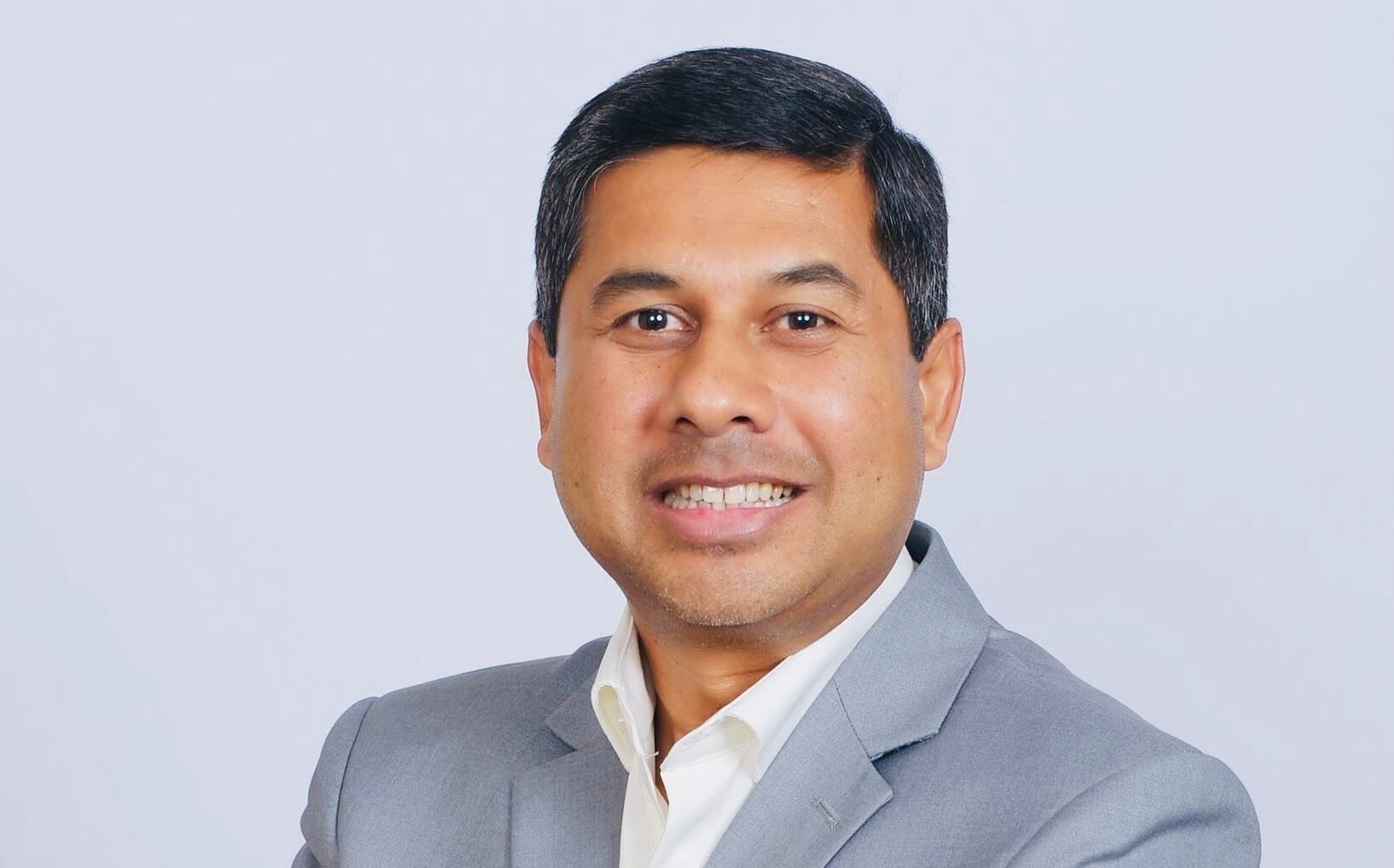
“By offloading immense cognitive load to AI systems, we free ourselves to do the uniquely human work: empathetic problem-solving and strategic innovation. That is the true promise of a human-first, AI-driven future.“
– Abhishek Kumar
In an era saturated with AI proclamations and transformation roadmaps, the leaders who genuinely move the needle are those who understand not just what AI can do, but what it should do and for whom. With over twenty years of global technology experience, Abhishek Kumar, Director of IT Solutions at ICONMA, Forbes Technology Council member, and IEEE Senior Member, has built his reputation at precisely this intersection. His work orchestrating complex ecosystems across healthcare, finance, supply chain, and logistics is not defined merely by the sophistication of the tools he deploys, but by the discipline with which he insists technology serve human ends at an enterprise scale.
A Human-First Philosophy Behind the Technology
Abhishek’s journey from early software development through complex enterprise architecture to AI-driven transformation has been governed by a single, consistent principle: technology earns its value only in service of people. The capacity of artificial intelligence to process millions of data points per second is genuinely remarkable, but his excitement about that capability is always grounded in what it liberates humans to do. When AI absorbs the cognitive load of rote, high-volume execution, it creates space for empathy, judgment, and the kind of strategic thinking that defines irreplaceable human contribution.
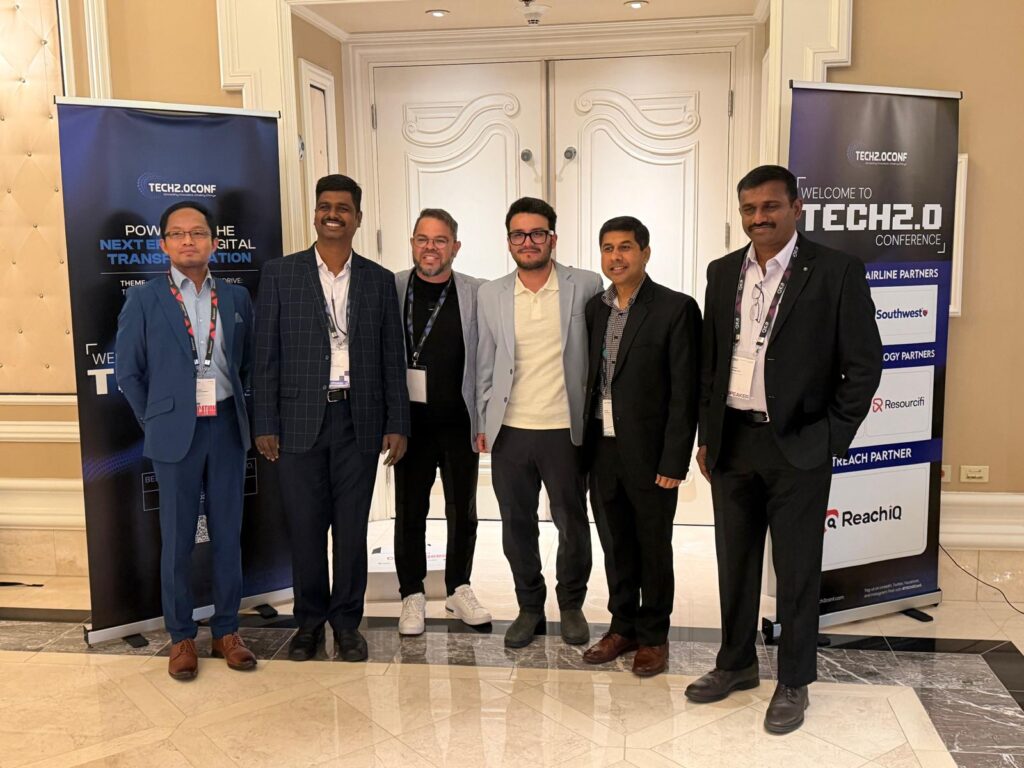
That conviction animates his membership in the Forbes Technology Council and the IEEE – not as status markers, but as communities that sharpen his thinking and connect his work at ICONMA to the broader evolution of how global organizations are navigating the intelligence revolution.
Ecosystem Over Adoption: The Philosophy That Matters
The most persistent misconception in enterprise AI is that transformation is synonymous with adoption. Abhishek dismantles this with directness: implementing a single model is relatively simple; building a sustainable intelligent enterprise is exponentially harder, and the difference lies entirely in the surrounding ecosystem. An advanced foundational model dropped into a fragmented data environment will not produce transformation – it will produce an expensive proof of concept that cannot scale.
A true AI ecosystem, by contrast, harmonizes data pipelines, security protocols, and operational workflows so that AI becomes a systemic, embedded capability – one that continuously learns and adapts rather than slowly degrading into irrelevance. Frameworks like DSPy for algorithmic optimization and MLflow for model lifecycle management are what separate AI that compounds in value from AI that merely accumulates cost.
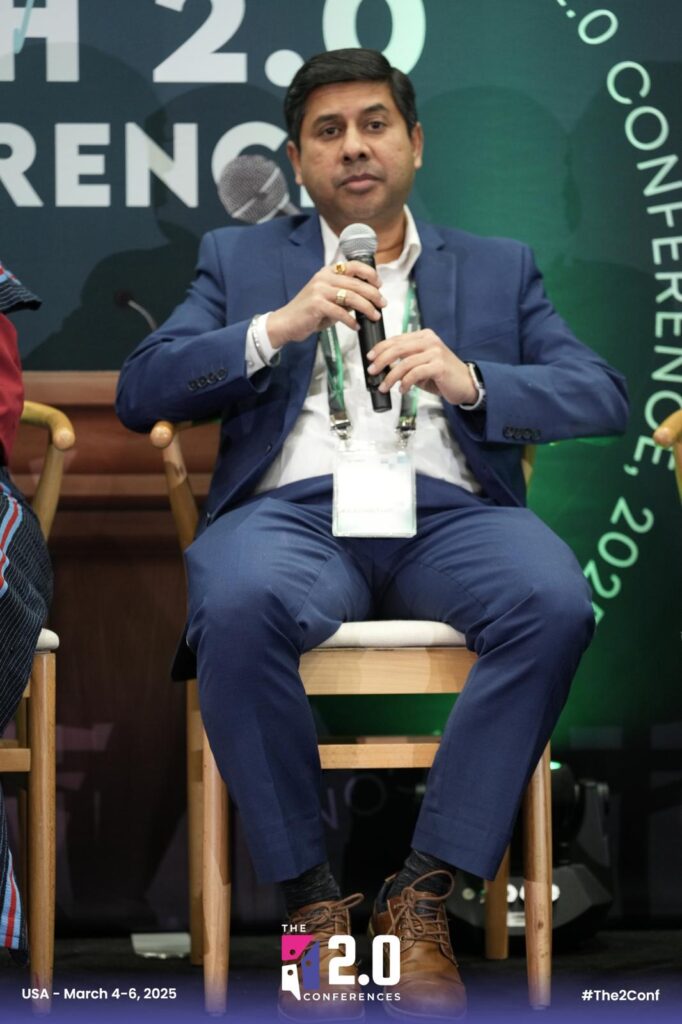
“You cannot drop an advanced foundational model into a fractured data environment and expect transformational results. Build the ecosystem first, and the intelligent enterprise will naturally follow.”
From Generative to Agentic: The Defining Shift
Abhishek has written and spoken extensively – including in his Forbes piece on agentic AI in regulated industries – about what he considers the most consequential inflection point in enterprise technology since cloud computing. Generative AI gave organizations the ability to synthesize and converse. Agentic AI gives them the ability to execute. The shift is from systems that merely answer questions to autonomous frameworks that plan, reason, and complete multi-step workflows with minimal human intervention.
At ICONMA, the agentic solutions his team architects are designed to proactively identify bottlenecks, trigger corrective workflows, and make optimized decisions before problems fully materialize. This is AI not in an advisory capacity, but in an operational one – and the organizational implications are profound. In highly regulated environments like healthcare, where he recently received the Healthcare Excellence Award at Health 2.0, this means deploying agentic frameworks across disparate legacy systems with full auditability, transparency, and ethical governance at every decision node.
Scaling With Discipline: What Early Adopters Get Wrong
His advice to organizations early in their AI journey is counterintuitive in the best possible way: slow down before you speed up. Too many organizations, driven by competitive pressure to appear AI-forward, license models and write code before defining what problem they are actually solving – or why AI is even the appropriate solution. The consequences are stark. McKinsey data shows that while 62% of organizations are exploring AI agents, fewer than 23% are successfully scaling them. Furthermore, Forrester warns that three out of four firms attempting to build agentic architectures independently are likely to fail.
Abhishek’s prescription is highly systematic: assess data maturity honestly, invest in the right MLOps frameworks, ensure your data ecosystems are fully integrated, and solve one high-value problem perfectly before attempting enterprise-wide democratization. Organizations that treat AI merely as a statement of competitive positioning – rather than a calculated solution to a well-understood problem – will ultimately find themselves on the wrong side of those statistics.
The Agentic Future and the Legacy Being Built
When Abhishek accepted the Global Pioneer Award for “Global AI Adoption Advocate of the Year” at the Fluxx Awards USA, his message was unambiguous: we are standing at the threshold of a fully agentic future. Over the next decade, intelligent enterprises will transition from AI-assisted to AI-orchestrated ecosystems, where interconnected agents negotiate priorities, collaborate across organizational boundaries, and execute complex strategies in real time. The human role in that future is not diminished; rather, it is elevated toward the judgment, creativity, and relational intelligence that no autonomous system will replicate.
Every ecosystem Abhishek designs, every governance framework he embeds, and every architecture he delivers is oriented toward that future. Building intelligent enterprises today is an act of preparation for a reality that is arriving faster than most organizational cultures have yet absorbed. His work is to close that gap – one disciplined, purposeful ecosystem at a time.