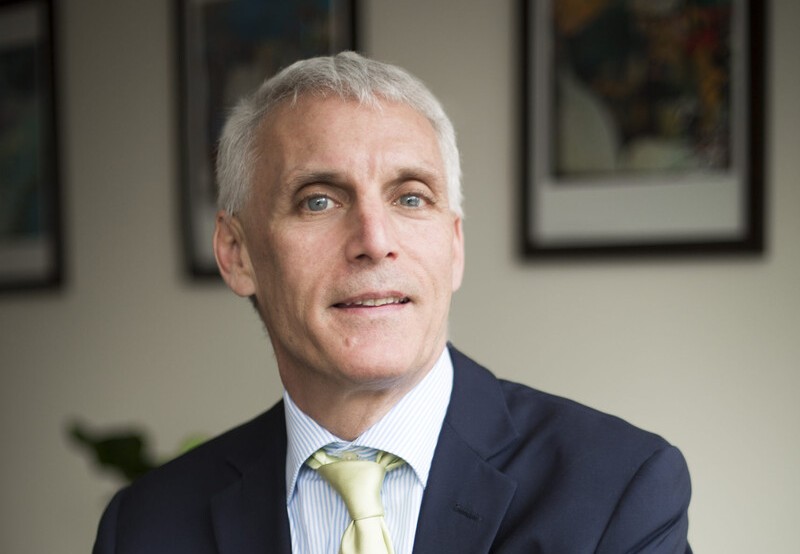
Andrew Wachtel is an internationally recognized education leader, institution builder, and visionary shaping the future of higher education through global collaboration, innovation, and human centered learning. As Co-founder and Director of Compass College of Art and Design Professions and President of inVision U, he has dedicated his career to transforming educational systems and creating meaningful opportunities for students and educators across emerging global regions.
With a PhD in Slavic Languages and Literatures, Wachtel began his professional journey as a scholar and researcher before moving into influential academic leadership roles. His career later expanded into international education administration, including serving as Dean of The Graduate School at Northwestern University and President of the American University of Central Asia. These experiences allowed him to combine academic excellence with institutional leadership while building education systems capable of responding to rapidly evolving global challenges.
For more than fifteen years,
Andrew Wachtel has focused extensively on advancing education in Central Asia, particularly in Kazakhstan and Kyrgyzstan. Rather than viewing the region as educationally limited, he recognized its potential as a space for experimentation, innovation, and transformation. He believes emerging educational ecosystems often possess greater flexibility and openness to change than many traditional Western institutions.
This vision led to the creation of Compass College, the first contemporary school of design in Central Asia, and inVision U, an educational initiative focused on developing future leaders, founders, and changemakers in underserved communities. Through these institutions, Wachtel has worked to create learning environments that balance creativity, practical skill development, intellectual depth, and global competitiveness.
At the heart of his educational philosophy is the belief that modern education must prepare students not only for immediate employment, but also for long term adaptability, leadership, and critical thinking. In an era increasingly shaped by artificial intelligence and technological disruption, Wachtel argues that education must evolve beyond memorization and standardized instruction.
He strongly believes future success will depend less on the ability to answer routine questions and more on the ability to identify meaningful problems, think creatively, collaborate across disciplines, and navigate uncertainty. His institutions therefore emphasize inquiry based learning, project driven education, leadership development, and interdisciplinary collaboration.
Rather than separating theoretical knowledge from practical application,
Andrew Wachtel advocates for educational models where students actively apply their learning in real world contexts. Through collaborative projects, creative problem solving, and entrepreneurial experiences, students develop both technical expertise and the broader human skills necessary to succeed in rapidly changing environments.
A major aspect of his work also focuses on creating globally competitive education systems rooted in local identity and cultural relevance. At Compass College, students are encouraged to draw inspiration from local traditions, materials, and cultural perspectives while developing work that meets international standards. This balance allows students to preserve cultural authenticity while engaging successfully within global creative and professional industries.

Andrew Wachtel is also a strong advocate for genuine international collaboration within education. He believes global partnerships should be based on mutual respect, shared learning, and long term institutional growth rather than one sided academic extraction. Through his leadership, he has developed international collaborations that connect students and faculty from Central Asia with broader global academic networks while strengthening local educational ecosystems.
At inVision U, leadership development forms a central part of the educational experience. Wachtel believes leadership cannot simply be taught through theory alone. Instead, students and faculty must actively practice leadership through real initiatives, collaborative projects, experimentation, and reflective learning experiences. This approach allows learners to develop confidence, resilience, adaptability, and the ability to navigate complex challenges.
As digital transformation continues reshaping education globally, Wachtel maintains a balanced perspective on technology and AI integration. While he recognizes the importance of digital fluency and technological innovation, he consistently emphasizes that the true purpose of education remains deeply human. According to Wachtel, education is fundamentally about teaching individuals to think critically, analyze deeply, collaborate effectively, and lead meaningful lives.
This human centered philosophy shapes every aspect of his institutional vision. Technology serves as a tool to support learning rather than replace mentorship, dialogue, creativity, and intellectual curiosity. He believes students must learn how to engage responsibly with AI and digital tools while still developing emotional intelligence, ethical reasoning, and independent thought.
Another defining aspect of Wachtel’s leadership is his commitment to educational accessibility and talent development within underserved regions. Rather than encouraging all talented students to leave their home countries for opportunities abroad, he actively works to create local institutions capable of providing world class education and meaningful career opportunities within their own regions.
His work therefore contributes not only to individual student success, but also to broader social and economic development across Central Asia. By building globally connected educational institutions locally, he helps strengthen regional innovation ecosystems, leadership pipelines, and entrepreneurial capacity.
Wachtel also emphasizes the importance of adaptability within modern higher education. He predicts that traditional university models will continue evolving significantly as AI and changing workforce demands reshape global education. He believes future education systems will increasingly combine shorter professional programs, interdisciplinary learning, leadership training, and flexible learning pathways designed around real world needs and lifelong learning.
Throughout his career, Andrew Wachtel has remained committed to building institutions that combine intellectual excellence, practical relevance, cultural awareness, and human centered leadership. His work demonstrates that international education can become a powerful force for innovation, inclusion, and long term societal progress when approached with vision, collaboration, and purpose.
Today, through Compass College and inVision U, he continues empowering students, educators, and future leaders to think globally, lead responsibly, and contribute meaningfully to the future of education and society. His leadership represents a transformative model for international education in the twenty first century, one that values creativity, collaboration, ethical thinking, and the limitless potential of learners across all regions of the world.