“Art, at its most powerful, does not decorate space. It transforms it”
– GILDA
A PRESENCE THAT CANNOT BE IGNORED
There is a moment that happens reliably when someone stands before a painting by GILDA for the first time. The colours stop them. Then the animal at the centre of the canvas holds them. And then, quietly, something shifts: the sense that what they are looking at is not simply a painting but a living proposition about the relationship between human beings and the natural world.
That quality does not happen by accident. It is the result of fifty years of disciplined, searching, evolving creative practice by an artist who has never been content to repeat herself, and who has never lost sight of what she believes art is fundamentally for: connection.
FIVE DECADES, ONE UNWAVERING INTENTION
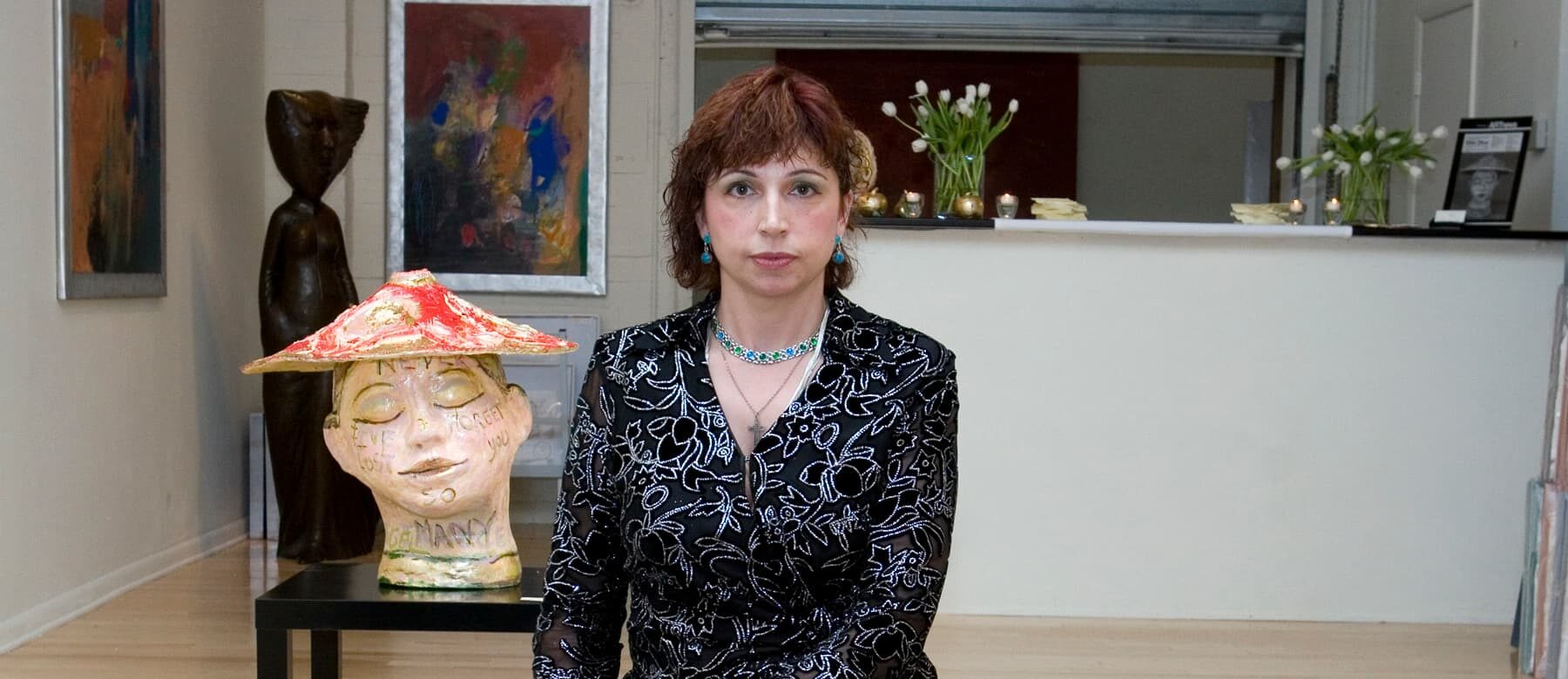
GILDA’s journey to her current visual language was not a straight line. Before the vivid, large-scale animal portraits that now define her studio practice, there were years of figurative ceramic sculpture: oversized heads built from clay, each carrying what she describes as a strange mysterious connection to an outer space feeling, as though her subjects existed simultaneously in this world and somewhere just beyond it.

“The animal remains, always, the calm at the center of everything bumping and flying around them.”
That instinct for the liminal migrated naturally into painting. Oil gave way to acrylic. Ceramic sculpture informed the spatial intelligence of her painted compositions. Years of directing community mosaic murals, often involving hundreds of children and families building pieces as large as nine by twenty-five feet, developed a sensibility for collective meaning that now runs through even her most solitary studio canvases.
Each phase of her career has fed the next. The coherence across fifty years lies not in a fixed style but in an intention that has never wavered: to make visible what daily life makes it too easy to miss.
ANIMALS AS THE MISSING PUZZLE PIECE
At the heart of GILDA’s work are animals. Not as decorative subjects or sentimental portraits, but as what she calls almost like the important and missing puzzle pieces to a larger story, a story puzzle of a yet fully existing but unknown space and time. In her paintings, each animal inhabits its own miniature galaxy, surrounded by things bumping and flying around them, while remaining, always, the innocence and the beauty and the calm at the centre.
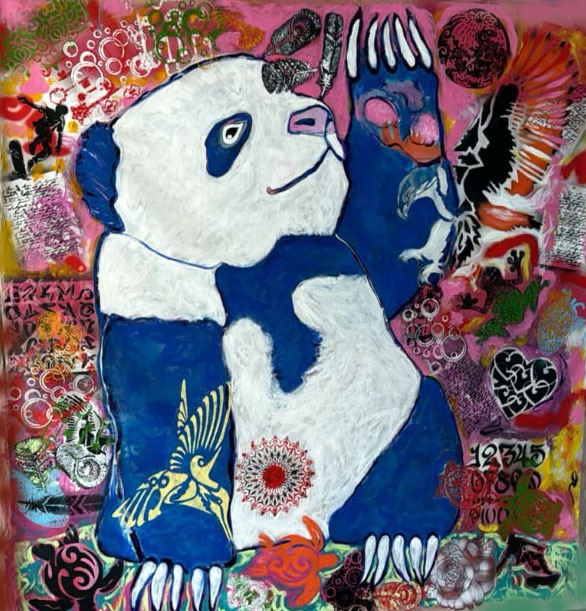
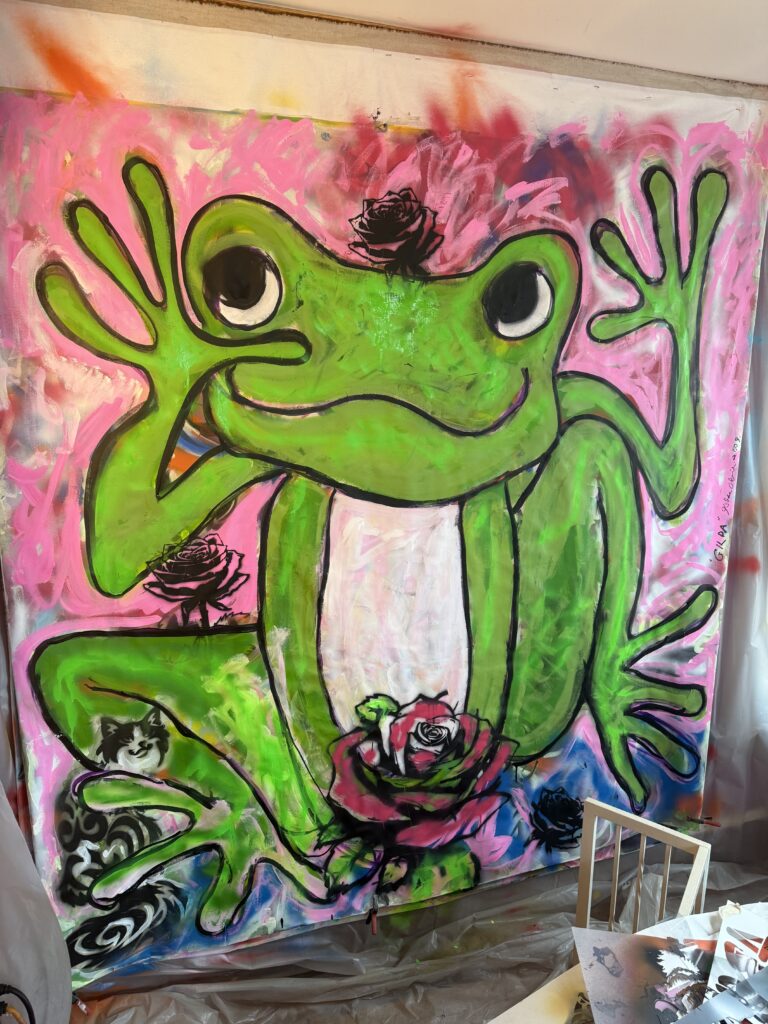
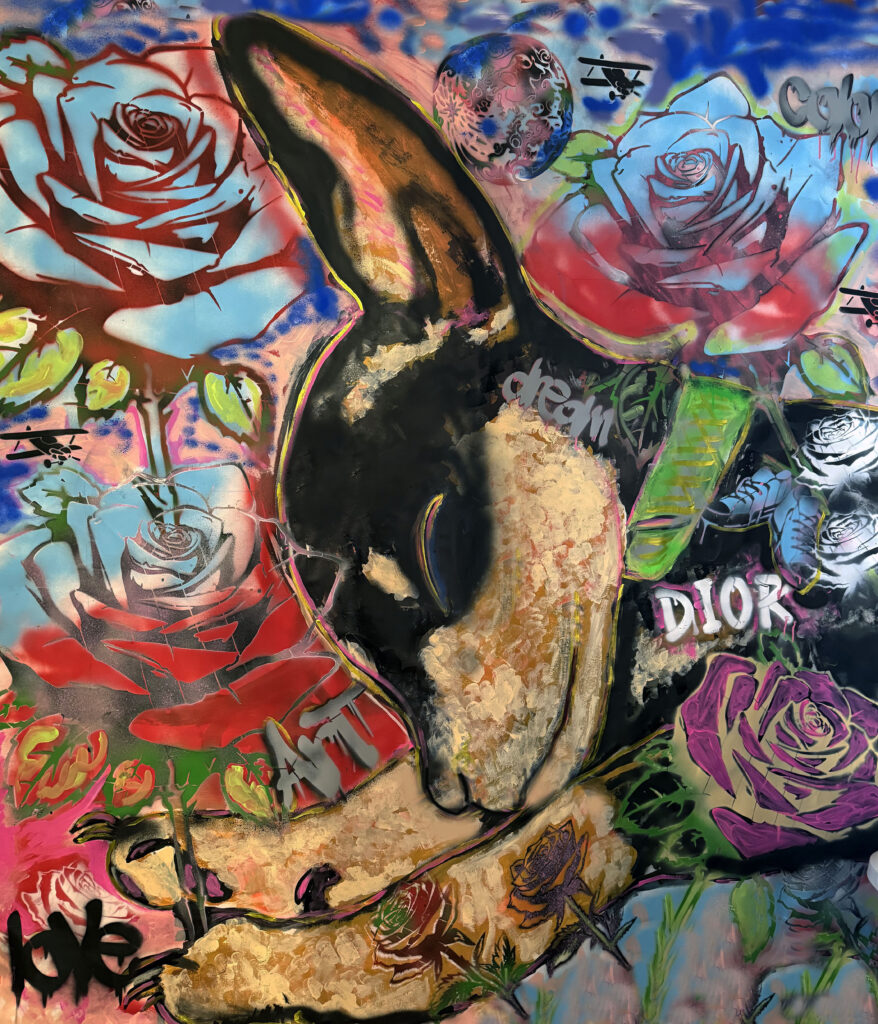
This is philosophically ambitious work. GILDA is not painting nature. She is painting the relationship between nature and us, the quality that animals carry which human beings need and cannot manufacture on their own. Her painted creatures are presences. They ask something of the viewer: not a glance, but genuine attention. That demand is precisely what makes the work endure long after the first encounter.
Her current body of studio work, the Strangely Beautiful Animals series, operates according to a discipline that reflects this philosophy directly. She creates only one depiction of each animal, and the total edition is deliberately constrained. It is a philosophical choice rooted in her resistance to overproduction and her belief that each painting should function as a singular moment of encounter. Works from the series have sold at prices reaching sixty-five thousand dollars, with her broader large-scale body of work approaching appraised values near one million dollars.
THE CRAFT BEHIND THE COLOUR
Technically, what distinguishes GILDA’s paintings is the combination of graphic clarity and atmospheric depth. Animals are rendered with black outlines that read powerfully across a room while retaining a softness that keeps the work from feeling rigid. Backgrounds are saturated fully, sometimes in the near-electric palette of Pop Art, sometimes shifting to dreamlike pastels.
Her primary medium is acrylic artist spray paints, a choice that suits both her instinct for immediacy and her interest in the atmospheric quality surrounding her central figures. Spray produces gradations and halos that brushwork cannot, giving her animals the sense of being bathed in light that originates from within rather than from any external source. Her canvases are typically six by six feet or larger, because the relationship she is building between animal and viewer requires physical presence. Scale is not incidental. It is essential.
ART GIVEN BACK TO THE WORLD
Alongside her studio practice, GILDA’s community mosaic murals represent one of the most distinctive bodies of public art in contemporary America. Created over many years with hundreds of children and community members, these permanent installations now inhabit children’s museums, hospital lobbies, and public spaces. All were donated. None were sold.
That decision speaks directly to her philosophy. These works, appraised at values approaching one million dollars, were conceived as gifts. They carry within their physical surface the accumulated imagination of every person who contributed to their making. GILDA invited everyone involved to offer input as the work progressed, making the finished pieces genuinely collective in a way that gives them a social meaning no single-authored work can replicate.
A GLOBAL STAGE
In 2025, eight large-scale works including the striking seven-foot Spring Panda Bear were selected for exhibition at the LinKong Museum of Contemporary Art in Beijing, in a group show curated by internationally respected curator Xu Jin. The selection marks a meaningful expansion of an international presence that already spans major collections across Europe, North America, and Asia.
For an artist whose deepest subject is the living world of animals, that global resonance feels entirely natural. The animals GILDA paints do not belong to any single culture. Their invitation is universal.
THE ADVENTURE CONTINUES
GILDA describes painting as a positive, wonderful, mysterious adventure, full of new things to discover, and each new canvas as the next part of the story. That sense of a creative journey always in motion, never fully arrived, is palpable in the work itself.
What she has built across fifty years is rare: a practice that combines museum-level refinement with genuine social purpose, studio intimacy with monumental public scale, and a subject, the animal world, whose urgency only grows with time. To encounter GILDA’s work is to be stopped, held, and quietly changed. In an era of relentless noise and acceleration, that is no small thing.