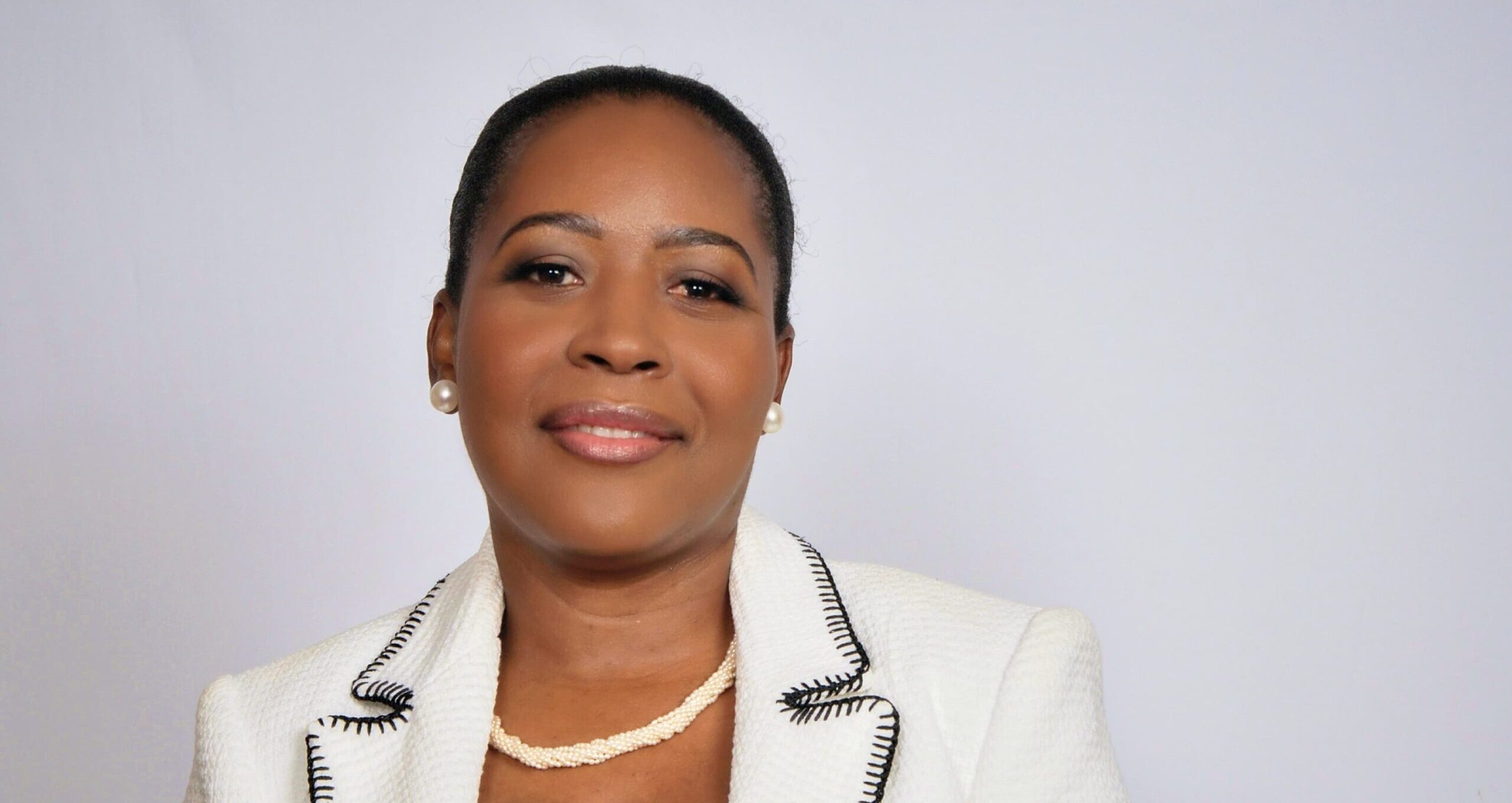
“What matters most is not the technology itself – but what we do with it.”
– Dr. Valrie Grant
Dr. Valrie Grant will tell you, with characteristic candour, that she got into GIS by accident. As an undergraduate studying geology, she actively disliked the subject and came close to dropping the course entirely. What stopped her was one of her geology professor who refused to let her walk away. Professor Edward Robinson insisted, quite firmly, that no geologist could afford to be without computerised mapping. She respected him too much to argue. She stayed. She completed the course. And what she did not yet understand was that in that moment of reluctant compliance, the trajectory of her entire career had shifted.
A SEED PLANTED, A PATH TRANSFORMED
The seed planted during her undergraduate GIS course began to grow during what Grant had intended as a brief summer job with Spatial Innovision. Her plan was clear: finish the placement, then pursue a Master’s in hydrogeology and continue along a pre-decided path. The job was a stop along the way, nothing more. But exposure changes perspective. Immersed in real-world applications of spatial data and mentored by Dr. Silburn Clarke, she found something she had not expected: genuine curiosity. The power of geospatial technologies began to resolve itself from an abstract technical obligation into something she could see mattering enormously in the world.
She abandoned the hydrogeology plan. She pursued a Master’s in GIS and the Environment instead, and from there kept going deeper into the field. What had begun as resistance became vocation. Two decades later, she is among the most distinctive voices in geospatial and hydrospatial intelligence in the Caribbean and beyond. The accidental beginning has been followed, as she puts it, by a very intentional staying of the course.
FROM NICHE TO NECESSITY: THE EVOLUTION OF GEOSPATIAL INTELLIGENCE
Grant has had a front-row seat to one of the most significant transformations in modern science: the movement of GIS from a technical specialism accessible to a narrow professional cohort to a foundational layer of how we understand and respond to complex global challenges. Real-time data, cloud platforms, integrated systems, and now artificial intelligence have collectively shifted what is possible. The technology is no longer a mapping tool used by specialists. It is infrastructure for decision-making at every scale.
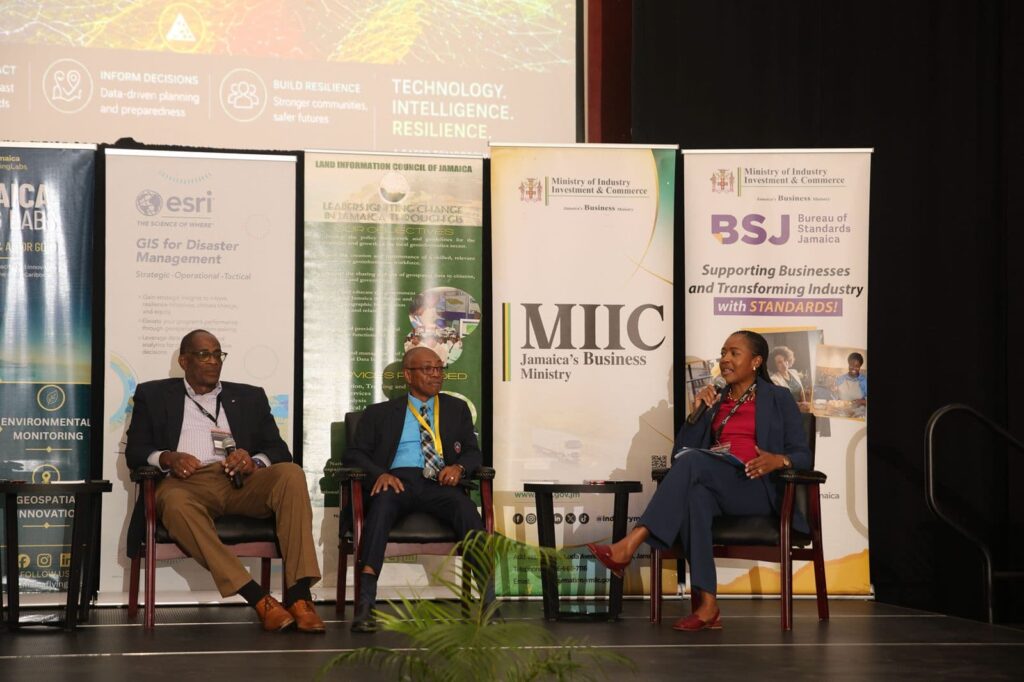
But her most consistent message about this evolution is the one that cuts against the excitement surrounding the tools themselves: what matters most is not the technology but what we do with it. That distinction is not rhetorical caution. It is the organising principle of her entire practice, rooted in years of working in contexts where the gap between technological capability and applied benefit is not a matter of budget cycles but of lived vulnerability.
SMALL ISLAND STATES, HIGH STAKES: THE CARIBBEAN AS A CLIMATE LABORATORY
Grant’s work has been deeply rooted in Small Island Developing States, particularly across the Caribbean. In these contexts, the abstract language of climate risk becomes concrete with uncomfortable speed. Stronger storms, rising seas, coastal erosion, and infrastructure vulnerability are not projections in a risk register. They are lived realities. At the same time, many Caribbean nations are navigating limited resources, fragmented data systems, and gaps in institutional capacity. That combination creates serious risk. It also creates the conditions in which geospatial intelligence, properly embedded, can have an outsized impact.
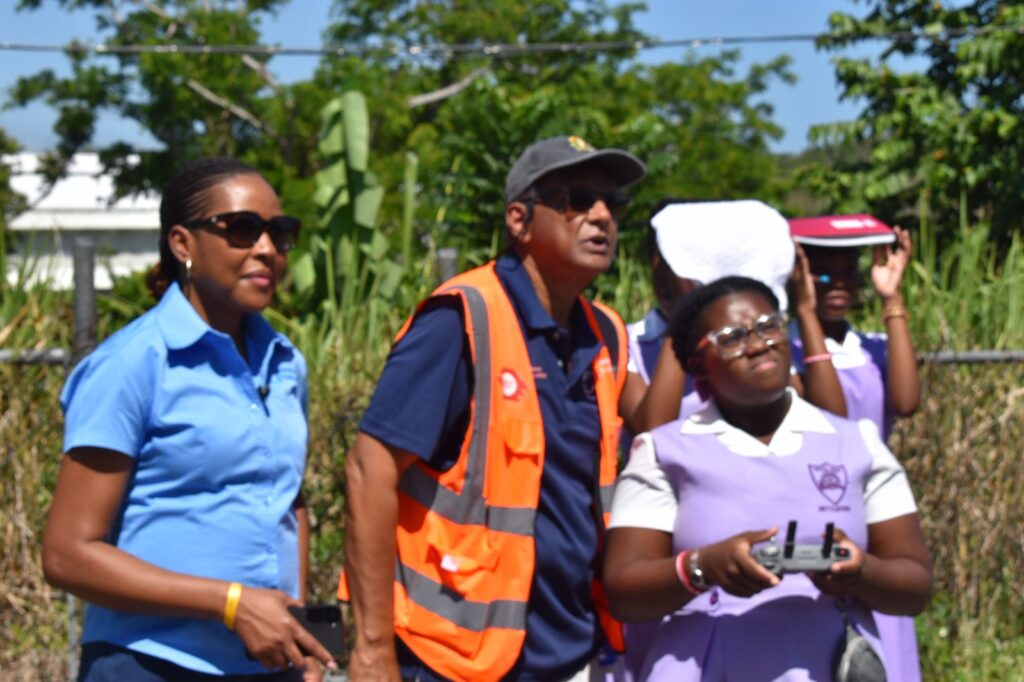
For Big Ocean States, Hydrospatial Intelligence Is Not Optional. It Is Foundational
When timely, accurate spatial data is available, disaster response changes. Planning becomes more strategic, prioritisation becomes clearer, and coordination improves. A shared spatial picture, a common operating picture in moments of crisis, has a direct bearing on outcomes. Grant has seen this firsthand. The power of geospatial intelligence in the Caribbean is not theoretical. It is measurable in the quality of decisions made before, during, and after the storms that define life in the region.
THE OCEAN HALF: WHY HYDROSPATIAL INTELLIGENCE CANNOT BE OVERLOOKED
One of Grant’s many contributions to the regional conversation is her insistence on extending the geospatial frame to include the marine environment. For Small Island Developing States, which are in her preferred framing genuinely Big Ocean States, focusing only on what happens on land misses the larger context. The ocean is not a border or a backdrop. It is the primary resource, the primary risk surface, and the primary economic opportunity.
Hydrospatial technologies, from satellite-derived bathymetry to coastal monitoring and seafloor mapping, provide the spatial intelligence needed to understand and manage that environment with the same rigour applied to land. They are essential for resilience planning, environmental protection, carbon accounting, and the development of sustainable blue economies. In a region where the marine space is both the greatest asset and the greatest exposure, treating hydrospatial intelligence as an optional extension of the geospatial toolkit is, Grant argues, a fundamental strategic error.
COLLABORATION AT THE SPEED OF TRUST
As a strategic advisor, Grant occupies the space where technology meets policy, where data meets decisions, and where global frameworks must be translated into local realities. The lesson she returns to most consistently from this work is one that has nothing to do with hardware or algorithms: collaboration happens at the speed of trust, and that trust must be built before it is needed. Real collaboration requires more than intention. It requires alignment, systems, and relationships strong enough to hold under pressure.
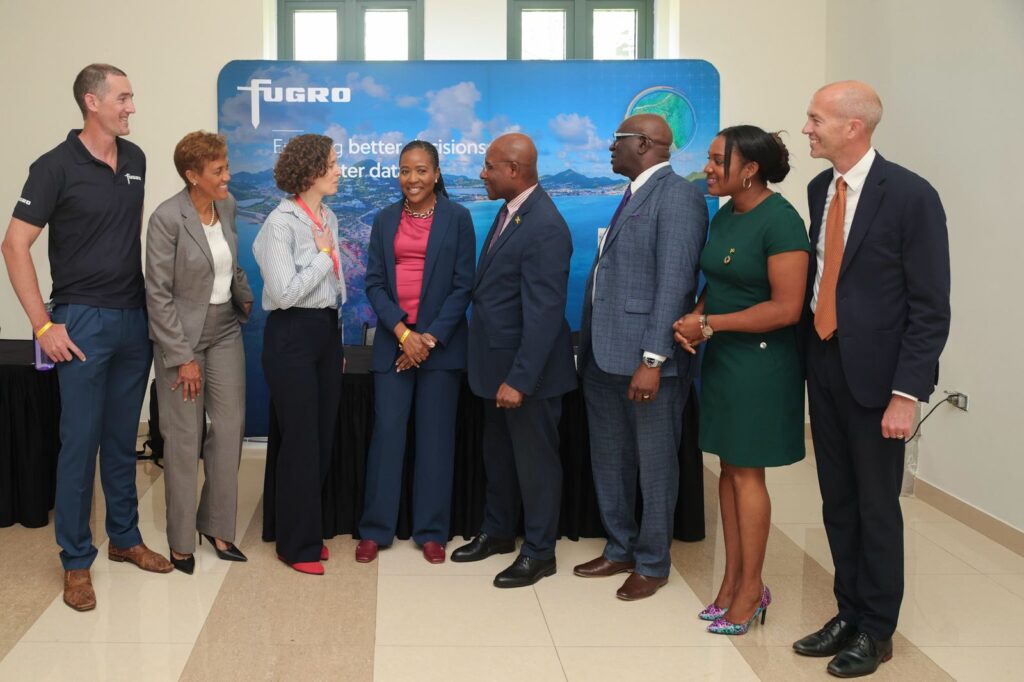
Her podcast, Mapping the Conversations, and her work facilitating the Caribbean Climate Conversations at Fugro have given her a platform for exactly the discussions she believes the field needs most: conversations that go beyond tools to questions of governance, access, ethics, and impact. Who owns the data? Who benefits from it? How is it changing how decisions are made? How do we ensure that innovation is inclusive and does not deepen the gaps it claims to address? These are not peripheral questions. They are the questions that will determine whether the democratisation of spatial intelligence actually reaches the communities that need it most.
GEOGRAPHY DOES NOT HAVE TO DICTATE DESTINY
To the next generation of professionals entering the geospatial field, Grant’s advice draws directly from the shape of her own career: do not worry if the path is not linear. Build technical skills, but invest equally in the ability to communicate, collaborate, and think critically. Stay curious. Be genuinely open to the opportunities that arrive sideways. And above all, focus on work that connects to something you care about, because that is what sustains a career through the difficult stretches.
Her own sustaining conviction is expressed in a sentence she returns to with quiet confidence: with the right data, the right systems, and the right leadership, geography does not have to dictate destiny. For the island communities whose futures depend on the intelligence gathered from their coasts, their ocean floors, and their increasingly turbulent skies, Dr. Valrie Grant is helping transform information into action, creating opportunities for more resilient communities and a more sustainable future.