. “AI is not industry-specific. It is context-dependent. The organizations that succeed will be those that build systems understanding context, adapting to behaviour, and fitting into real decision-making.”
– Dr. Vincent Njoku
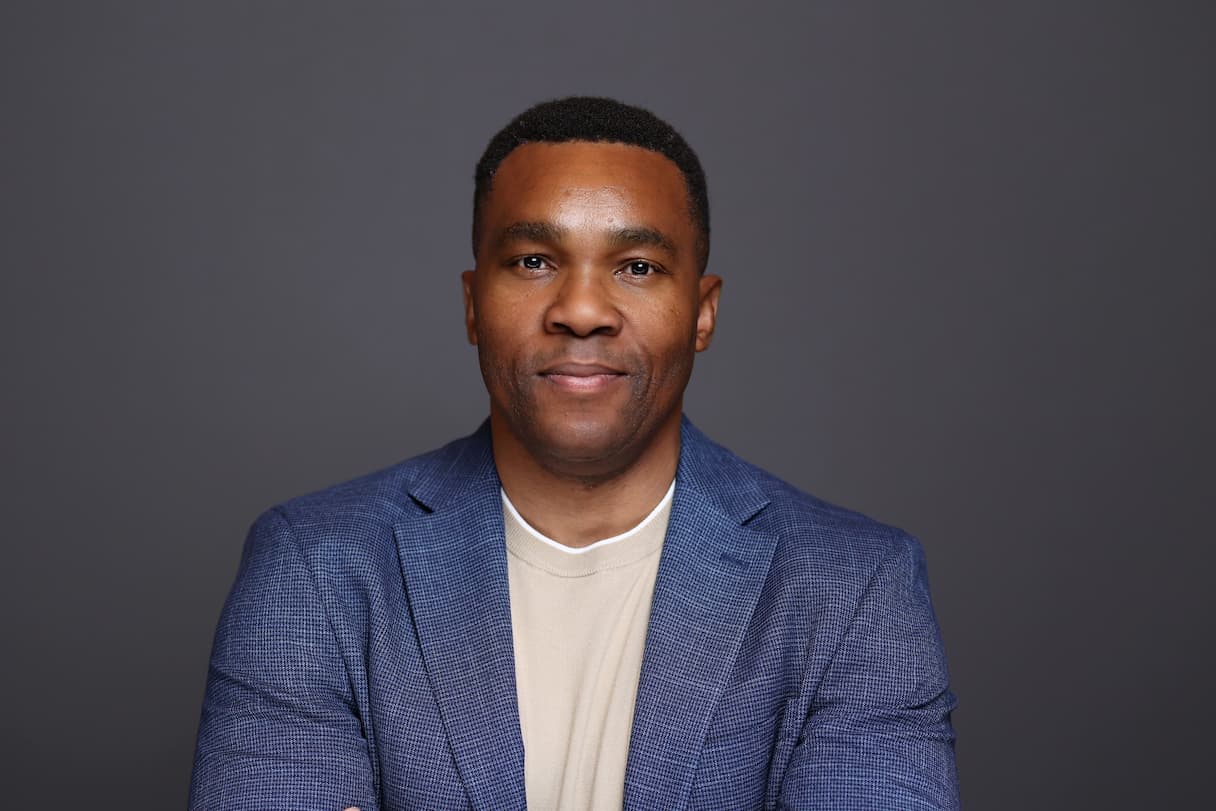
The question that launched Dr. Vincent Njoku’s career in artificial intelligence was not a technical one. It was a human one: why do systems with so much data still fail to truly understand people? He encountered that paradox early, working across healthcare and retail, watching organisations accumulate enormous volumes of data while their decision-making remained reactive, fragmented, and persistently disconnected from the human outcomes that data was supposed to serve. In healthcare, it meant delayed interventions. In retail, it meant missed opportunities to understand customers as people rather than transactions. That disconnect became his professional preoccupation, and the answer he has spent his career building is one of the most compelling propositions in AI today: systems that do not merely analyse what has happened, but learn, predict, and respond in real time to what is happening right now.
CONTEXT IS EVERYTHING: LESSONS FROM CROSS-INDUSTRY AI
Dr. Njoku’s work across healthcare, retail, and consumer technology gave him something that purely technical training cannot: an understanding of why the same underlying AI capabilities produce radically different results depending on the environment in which they are deployed. Healthcare demands precision, safety, and ethical rigour. Retail demands speed, personalisation, and responsiveness. Consumer technology sits at the intersection, where innovation must be matched by usability. What all three share, he observed, is the fundamental challenge of turning data into useful insight at scale, and doing so in a way that fits the specific human, regulatory, and operational context of each domain.

“Our vision is to make health intelligence as dynamic as the human body turning wellness from a fixed plan into a living system that grows with each person.”
This cross-industry formation produced a conviction that now shapes everything he builds: AI is not industry-specific. It is context-dependent. The organisations that will lead the next decade are not those that build the most models, but those that build systems capable of understanding context, adapting to behaviour, and integrating smoothly into actual decision-making processes. AI, in his view, marks a fundamental shift from information systems to intelligence systems, and that distinction carries implications far beyond technology.
NUTRIFLEX AI: HEALTH AS A LIVING SYSTEM
The founding insight behind NutriFlex AI, established in San Francisco in 2025, is both simple and radical: health is always changing, but most health solutions stay the same. Traditional wellness platforms operate on fixed plans, generic diets, standardised exercise routines, and one-size-fits-all advice that ignores the reality of how bodies actually function. Human physiology responds dynamically to sleep, stress, recovery, and environment. A health system that cannot respond to those fluctuations is not truly serving the person it claims to support.
NutriFlex AI was built to close that gap. The platform learns from biometric signals and behaviour patterns to provide real-time, personalised guidance that evolves alongside the individual using it. This is not data tracking. It is data understanding followed by adaptive action. Dr. Njoku describes the vision as making health intelligence as dynamic as the human body itself: transforming wellness from a fixed plan into a living system that grows with each person. It is, at its core, the same conviction that launched his career, now applied to one of the most personal domains in human life.
RESPONSIBLE AI: TRUST AS THE FOUNDATION OF LASTING INNOVATION
Dr. Njoku’s approach to AI governance is grounded in three principles he returns to consistently: transparency, accountability, and human-centred design. Transparency ensures that AI systems are explainable, not opaque. Accountability ensures that outcomes have clear ownership, so that when systems produce results, someone can be held responsible for those results. Human-centred design ensures that the technology serves people rather than the reverse. These are not compliance requirements layered over an otherwise unconstrained system. They are built into the architecture from the first stage of development.
His argument about the relationship between ethics and innovation is direct: responsible AI is not a limitation. It is the foundation for lasting innovation. The organisations that will lead are not the fastest adopters but those that build the most trust. In an environment where public confidence in AI systems is fragile and regulatory scrutiny is intensifying, that observation is not idealism. It is competitive strategy.
THE DECADE AHEAD: INTELLIGENCE THAT NEVER STOPS LEARNING
Looking at the decade ahead, Dr. Njoku sees business strategy being redefined by a convergence of cloud infrastructure, advanced analytics, and machine learning that will shift organisations from reactive to genuinely anticipatory modes of operation. Analytics will move from describing what happened to recommending what to do next. Machine learning will migrate from isolated applications to becoming embedded in core business operations. Real-time data streams from IoT devices and wearables will make continuous intelligence the norm rather than the exception.
The organisations that will separate themselves are those capable of personalising at scale: delivering tailored experiences and decisions without sacrificing operational efficiency. That capability, he argues, will define competitive advantage across industries in a way that no single product or technology feature can replicate. But realising it requires confronting what he identifies as the most persistent misconception in the field: the belief that AI works out of the box. It does not. AI is only as good as the data quality, governance structure, change management discipline, and strategic alignment behind it. Leaders who understand that from the start will build real capability. Those who discover it after the fact will spend their budgets correcting the gap.

A LEGACY MEASURED IN PURPOSE, NOT PROCESSING POWER
The legacy Dr. Vincent Njoku is working toward is captured in the distinction he draws between AI that is powerful and AI that is purposeful. He wants to build platforms and frameworks that make intelligence accessible, adaptable, and genuinely human-centred, systems that help people and organisations make better decisions in real time rather than simply generating more output for analysts to interpret. Through NutriFlex AI, he is building that future in one of the domains where it matters most. Through his broader AI and data strategy work, he is building the principles that will define how responsible, impactful AI operates across industries. In both cases, the measure he applies is the same: not technical performance, but the value the system brings to the lives of the people it serves.