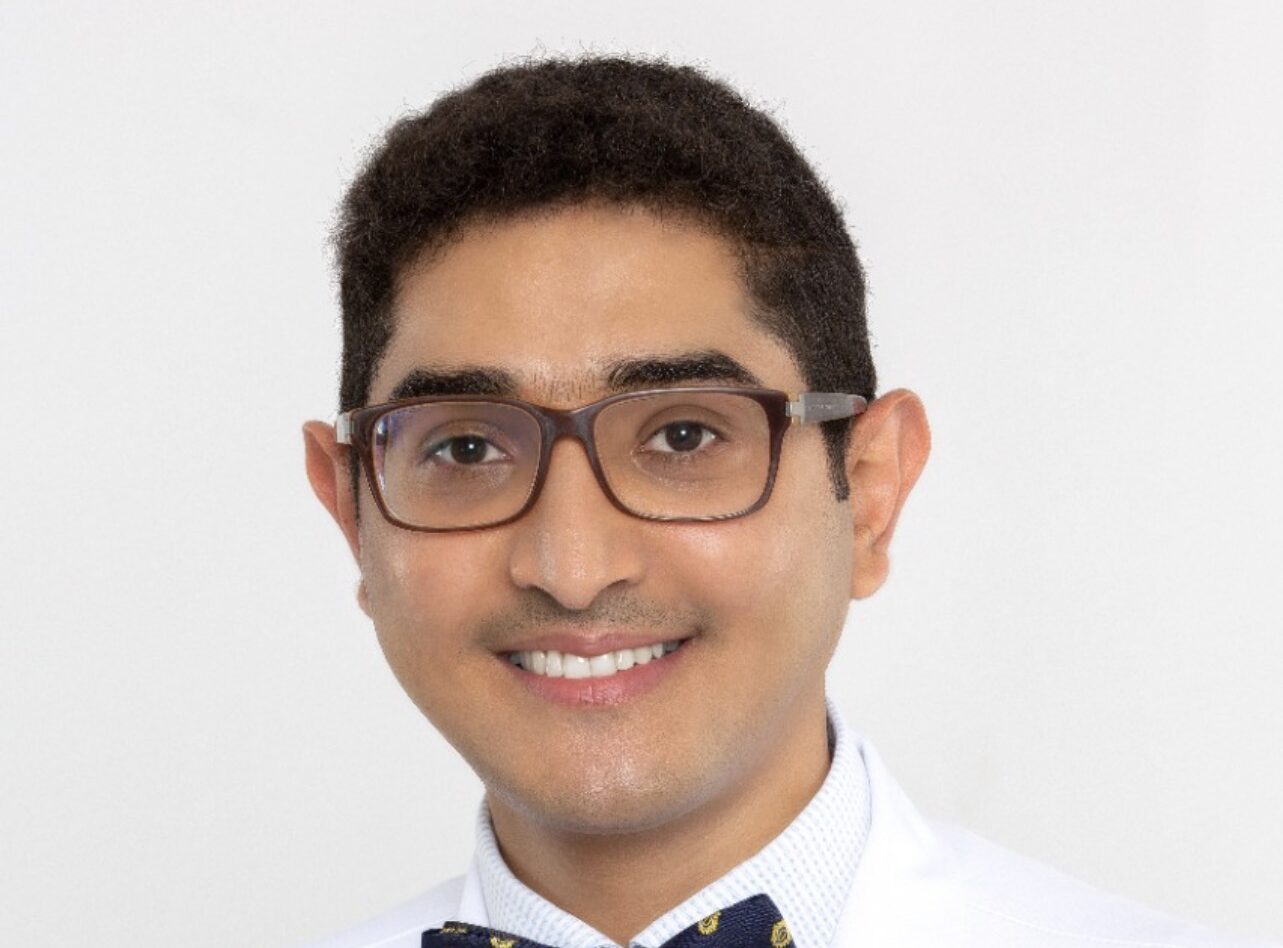
“I realized that healing is not always synonymous with curing, and that medicine’s responsibility does not end when disease-directed treatments reach their limits.”
– Dr. Musab Aldhari
In the precise world of diagnostic algorithms and outcome-driven medicine, there exists a recurring silence, moments when patients and families need something clinical training rarely teaches: presence, clarity, and meaning during profound uncertainty. It was within this unmet space that Dr. Musab Aldhari discovered his calling, one that would transform not only his medical career but the very fabric of palliative care delivery in the region.
Dr. Aldhari’s journey into palliative and supportive care did not arrive through a single epiphany. Rather, it emerged through an accumulation of encounters that challenged his understanding of what medicine truly means. Early in his training, immersed in the rigor of diagnostic precision, he observed a troubling pattern: patients with complex, life-limiting illnesses receiving technically excellent care while still experiencing profound distress, physical, psychosocial, and emotional.
“I realized that healing is not always synonymous with curing, and that medicine’s responsibility does not end when disease-directed treatments reach their limits,” Dr. Aldhari reflects. This realization became the foundation of a philosophy that would guide his entire career.
What distinguishes Dr. Aldhari’s approach is his recognition that the principles of palliative care are not modern inventions but rediscoveries of ancient wisdom. Raised within a context where spirituality and ethical responsibility are deeply woven into daily life and clinical decision-making, he found that Islamic medical ethics had long articulated concepts we now describe as patient-centered or value-based care.
The 14th-century scholar Ibn al-Qayyim Al-Jawziyya wrote in his multi-volume work Zad al-Maʿad: “The skilled physician is the one who observes 20 rules … His goal should not only be to cure illness, but rather to cure it in a way that prevents a more serious illness. If removing the illness is feared to result in a greater illness, then the physician should leave the illness as it is and it is a must to palliate it.”

“Long before palliative care became a formal specialty, principles such as alleviating suffering, avoiding harm, and honoring human dignity were articulated within Islamic medical ethics,” Dr. Aldhari explains. “What we now describe as patient-centered care is, in many ways, a rediscovery of wisdom deeply rooted in our tradition.”
This understanding evolved his calling from bedside advocacy into system-level leadership. Today, palliative care represents not merely a clinical specialty for Dr. Aldhari, but a comprehensive philosophy informing how entire healthcare systems should be designed, integrating compassion, communication, and quality outcomes at every level.
REDEFINING COMPASSION IN THE AGE OF PRECISION MEDICINE
In modern healthcare discourse, compassion is often reduced to kindness, a soft skill peripheral to technical excellence. Dr. Aldhari challenges this reductive view with a more demanding definition: true compassion is active, requiring intentional action within complex care systems.
“Compassion in modern healthcare means recognizing suffering in all its forms and responding with competence, accountability, and respect,” he emphasizes. In high-pressure clinical environments, this manifests through deliberate choices: how clinicians listen under severe time constraints, how they explain complex realities without avoidance, and how they advocate for patients even when doing so challenges established workflows.
But Dr. Aldhari’s vision extends beyond patient care to encompass the healthcare professionals themselves. Sustained compassion, he argues, requires psychologically safe and supportive systems. Caring for caregivers is not ancillary to compassionate medicine; it is foundational.
One of the most challenging yet essential shifts in modern medicine, Dr. Aldhari observes, is recognizing that death itself is not a medical failure. It is a biological certainty. Poorly managed death, however, represents a profound failure of care. Despite extraordinary advances in diagnostics, pharmacology, and precision medicine, humanity continues to face a mortality rate of 100 percent. “Every soul shall taste death.” (Qur’an, Surah Aali ‘Imran, Ayah 185).
“Palliative care exists not in opposition to medical progress, but in recognition of this reality, ensuring that when cure is no longer possible, care, dignity, and meaning remain uncompromised,” Dr. Aldhari states. Drawing on the work of existential psychiatrist Professor Irvin Yalom, he notes in his book “Staring at the Sun, overcoming the terror of death”, that death is universally acknowledged yet deeply avoided, seen clearly but rarely confronted directly.
For Dr. Aldhari, compassionate excellence is achieved when empathy and efficiency coexist, not when one is sacrificed for the other. This integration requires fundamentally rethinking how healthcare systems measure success.
THE CLINICAL POWER OF CONVERSATION
Communication stands as one of the most powerful yet underutilized clinical interventions in medical practice. When executed with skill and intention, it reduces anxiety, aligns care with patient values, prevents unwanted interventions, and strengthens trust between clinicians, patients, and families.
Dr. Aldhari describes how effective communication transforms outcomes by shifting care from reactive decision-making to proactive planning. It empowers patients to articulate what matters most to them, rather than simply responding to what is medically offered. In advanced care planning, communication becomes a tool for reclaiming agency during profoundly vulnerable moments.
The benefits extend throughout the healthcare ecosystem. Communication enhances team function, reducing moral distress among clinicians and minimizing fragmented care. It transforms abstract medical information into actionable understanding, allowing families to participate meaningfully without feeling overwhelmed.
CONFRONTING MISCONCEPTIONS, EXPANDING ACCESS
Despite its proven benefits, palliative care continues to face persistent misconceptions that delay referrals and deprive patients of essential support. The most damaging misconception equates palliative care with end-of-life care or “giving up.” This misunderstanding prevents patients from accessing early symptom control, psychosocial support, and informed decision-making when they could benefit most.
Another common misconception positions palliative care as separate from disease-directed treatment. “In reality, it is complementary, working alongside cardiology, oncology services, critical care, and other specialties to improve quality of life throughout the illness trajectory,” Dr. Aldhari explains.
To address these misconceptions, Dr. Aldhari took concrete action by co-founding and co-writing the first Comprehensive Palliative Care Encyclopedia in Arabic. Designed to serve patients, families, clinicians, and healthcare providers alike, this initiative aimed to demystify palliative care, align understanding across stakeholders, and make accurate, culturally relevant information accessible.
“The goal was to bridge a critical knowledge gap that often fuels delayed or fragmented care,” he notes. Changing these perceptions ultimately requires sustained education, visibility, and consistent demonstration of value across clinical, ethical, and economic dimensions.
SYSTEMS THAT SUPPORT COMPASSION
As a physician deeply engaged in leadership and quality management, Dr. Aldhari confronts a question that challenges healthcare leaders globally: how to balance clinical empathy with system-level efficiency and outcomes.
His response requires reframing efficiency itself. “Efficiency should not be measured solely by throughput or cost reduction, but by value, outcomes that matter to patients,” he argues. From a leadership perspective, this means designing systems that support compassionate care rather than relying on individual heroism.
Standardized symptom pathways, structured communication tools, and interdisciplinary workflows allow clinicians to deliver empathetic care more consistently and sustainably. When systems align with patient-centered goals, empathy becomes a driver of efficiency rather than a barrier to it.
Dr. Aldhari shares the example of a 36-year-old gentleman with advanced brain malignancy who valued independence and cognitive clarity above all else. Traditional escalation pathways prioritized intense symptom control at the expense of alertness, directly conflicting with the patient’s goals.
Through deliberate conversations, the care team co-created a plan that balanced symptom relief with preserved autonomy. This involved adjusting medications, redefining success metrics, and involving family as partners rather than decision-makers.
“The result was not only improved symptom control, but restored dignity and meaning during a profoundly vulnerable period,” Dr. Aldhari recalls. “What made it successful was alignment between clinical expertise, patient values, and family understanding.”
THE FUTURE OF PAIN AND SYMPTOM MANAGEMENT
Excellence in pain and complex symptom management is evolving toward precision-based approaches that integrate non-pharmacologic, pharmacologic, interventional, psychosocial-spiritual, and digital tools. Advances in opioid stewardship, neuromodulation, and personalized dosing algorithms continue to improve both safety and effectiveness.
Equally important are innovations in care delivery models: early integration, community-based services, and tele-palliative platforms that extend specialized expertise beyond hospital walls. These developments promise to enhance access to palliative care, for patients and families.
“By 2026 onwards, the standard of excellence will be defined not only by what treatments we offer, but by how early, equitably, and thoughtfully they are delivered,” Dr. Aldhari predicts.
FAMILIES AS PARTNERS, NOT BYSTANDERS
In Dr. Aldhari’s practice, families are integral to palliative care, not peripheral. He involves them through structured family meetings, transparent communication, and explicit acknowledgment of their emotional burden.
Critically, partnership does not mean transferring responsibility. “It means supporting families with information, guidance, and reassurance, so they can participate meaningfully without feeling overwhelmed,” he clarifies.
This approach is particularly important within cultural contexts where patients are rarely viewed in isolation from their families. Decision-making is often relational rather than purely individual, grounded in trust, shared responsibility, and collective values.
“Engaging families in discussions about goals of care is not only ethically acceptable but culturally expected,” Dr. Aldhari notes. “Meaningful care requires sensitivity to each patient’s perception, beliefs, and preferences, recognizing that autonomy may be expressed through family inclusion rather than separation.”
When families are engaged early, care becomes more coherent, conflicts are reduced, and outcomes improve for everyone involved.
ADVANCE CARE PLANNING AS ONGOING DIALOGUE
Advance care planning represents one of the most emotionally complex aspects of palliative care. Dr. Aldhari approaches these conversations not as single events centered on documents, but as ongoing dialogues that start early, revisit often, and adapt as circumstances change.
By individualizing conversations and honoring family dynamics, care planning becomes more aligned, respectful, and effective. This approach transforms potentially traumatic discussions into opportunities for connection and clarification.
ADDRESSING SYSTEMIC GAPS IN PATIENT-CENTERED CARE
From his leadership perspective, Dr. Aldhari identifies significant gaps currently limiting truly patient-centered care delivery. The most prominent is fragmentation between specialties, care settings, and priorities. Patients often experience healthcare as disjointed episodes rather than a continuous journey.
Another critical gap involves underinvestment in communication training, psychosocial care, and clinician well-being. “Patient-centered care cannot thrive in systems that overlook the human needs of both patients and providers,” Dr. Aldhari emphasizes.
Bridging these gaps requires leadership commitment, cultural change, and measurable accountability. One transformative development addressing these challenges is the deliberate integration of palliative care within the ongoing Saudi healthcare transformation under Vision 2030.
Within this reform, palliative care is recognized as a dedicated pillar embedded across the continuum of care, from home and community settings to tertiary hospitals and back to the patient’s home. This model is supported by clearly defined pathways, regulatory frameworks, and process-based integration, while thoughtfully leveraging advanced digital and health technologies within the core philosophy of palliative care.
“Such a system-level commitment reflects a proactive, faith-based, values-driven approach to ensuring continuity, equity, and person-centered care across all stages of illness,” Dr. Aldhari observes.
BEYOND MULTIDISCIPLINARY TO TRANSDISCIPLINARY CARE
In palliative care, team-based practice has evolved beyond traditional multidisciplinary models toward interdisciplinary and increasingly transdisciplinary care. At this highest level of team function, professional boundaries become more functionally integrated, with disciplines cross-trained and united by shared goals rather than siloed roles.
This evolution reflects Dr. Aldhari’s personal philosophy that palliative care is not synonymous with palliative medicine alone. While palliative medicine often focuses on pharmacologic and symptom-based interventions, palliative care is fundamentally holistic and multidimensional, addressing physical, psychological, social, spiritual, and ethical dimensions of suffering through coordinated, integrated care.
“Physicians play a critical leadership role, not as authority figures, but as facilitators who integrate expertise, align goals, and model respectful collaboration,” Dr. Aldhari explains. “When teams function cohesively, care becomes more responsive, comprehensive, and humane.”
BUILDING CULTURES OF EXCELLENCE AND COMPASSION
As a chief, founder, and director, Dr. Aldhari understands that organizational culture is shaped by what leaders prioritize, reward, and tolerate. He fosters excellence by setting clear expectations, supporting professional development, and encouraging reflective practice.
Compassion is reinforced through psychological safety, where team members feel valued, heard, and supported. In his view, accountability and kindness are not opposing forces but mutually reinforcing elements of effective leadership.
This commitment was recognized when Dr. Aldhari received an international award for pioneering and transformational leadership in palliative care in 2025 in Doha, Qatar. While deeply humbling, he views such recognition as less a personal milestone than a collective one, reflecting the efforts of committed teams, mentors, and collaborators.
“For me, it serves as a renewed commitment to advancing the field thoughtfully, ethically, and collaboratively, recognizing that leadership in palliative care is ultimately measured by the systems we strengthen and the lives we serve,” he reflects.
SHAPING FUTURE GENERATIONS THROUGH EDUCATION
Education represents the most sustainable form of advocacy. Through academic engagement, healthcare leaders shape not only clinical skills but professional identity. By integrating palliative principles into undergraduate and postgraduate training, future physicians learn to view compassionate care as foundational, not optional.
Mentorship, research, and curriculum innovation are essential to advancing the field nationally, regionally, and globally. Dr. Aldhari’s academic role allows him to influence how the next generation understands suffering, communication, and the physician’s role in honoring human dignity.
INNOVATIONS DEFINING THE FUTURE OF PALLIATIVE CARE
Looking ahead, Dr. Aldhari identifies both clinical and cultural innovations that will transform palliative care delivery. Traditionally, palliative care has been described as a discipline focused on quality of life. Increasingly, evidence and experience are affirming another essential dimension: quality of death.
“These are not competing concepts, but complementary ones,” Dr. Aldhari notes. “A well-lived life and a well-supported dying process both reflect the same ethical commitment: to relieve suffering, honor values, and respect the human experience until the very end.”
Beyond clinical advancements, digital health platforms, data-driven quality metrics, and value-based care models will redefine how palliative services are accessed and evaluated. Equally important is the growing recognition of palliative care as a public health priority, embedded across disease trajectories and care settings.
The historical context enriches this forward vision. Palliative care was first established in the early 1990s at King Faisal Specialist Hospital and Research Centre, Riyadh, a leading institution in Saudi Arabia, marking the first such service not only in the Kingdom but across the Gulf region and the Middle East. Since then, the program has continued to lead through academic innovation, structured training, and sustained research productivity, evolving into a nationally, regionally, and globally recognized model.
“This legacy is not static; it continues to inform how palliative care is reimagined, scaled, and integrated into healthcare systems,” Dr. Aldhari observes.
ADVICE FOR THE NEXT GENERATION
To young physicians aspiring to combine clinical excellence, leadership, and advocacy, Dr. Aldhari offers clear guidance: cultivate intellectual curiosity, anchor your practice in the lived experiences of patients, and recognize communication as a core clinical competency.
“Meaningful change often begins in individual encounters, but its influence is ultimately shaped at the level of systems, culture, and policy,” he emphasizes.
A FINAL REFLECTION ON LIFE AND LEGACY
As Abraham Lincoln once observed, “It is not the years in your life that count, it is the life in your years.” In palliative care, this wisdom extends further, reminding us that how we live and how we are supported at the end of life are equally worthy of intention, compassion, and excellence.
If there is one principle that underpins Dr. Aldhari’s work, it is this: healthcare systems must be designed not only to treat disease but to honor humanity. Palliative care, at its best, reminds us that excellence and compassion are not competing ideals. They are inseparable.
Dr. Musab Aldhari represents a new generation of medical leaders who understand that true healing extends beyond cure, that dignity matters as much as diagnosis, and that the measure of healthcare excellence lies not only in lives saved but in suffering relieved and meaning preserved. His vision for palliative care is both ancient and revolutionary, grounded in timeless ethical principles while embracing the innovations that will define 21st-century medicine onward. Through his clinical practice, leadership, education, and advocacy, Dr. Aldhari is transforming how healthcare systems understand their fundamental purpose: not merely to extend life, but to honor it in all its complexity, vulnerability, and profound dignity.