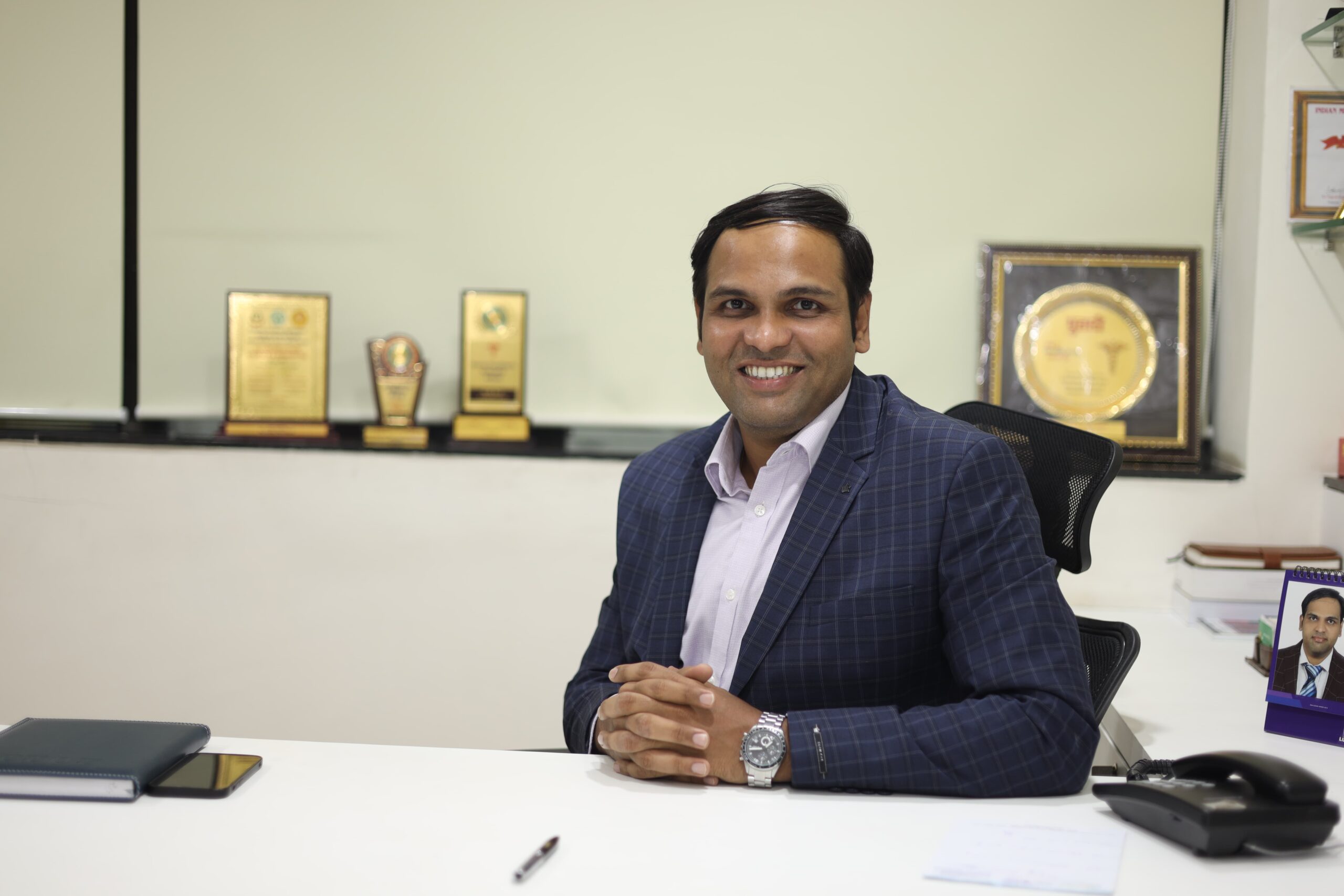
Cancer care is undergoing a profound transformation. Precision medicine, immunotherapy, molecular diagnostics, and AI-driven oncology are redefining treatment outcomes across the world. Yet for many patients in regional India, access to advanced cancer care remains uneven, often determined not by medical possibility, but by geography, delayed diagnosis, misinformation, and the burden of travel.
Dr. Akshay is among the emerging oncology leaders working to close that gap.
As the Founder of CuraLife Cancer Centre, his mission extends beyond treatment delivery. He is building a model where evidence-based oncology, compassionate care, and advanced treatment access are no longer limited to metropolitan healthcare ecosystems. His vision is rooted in a simple but powerful belief: cancer should never be treated with guesswork.
At a time when misinformation can be as dangerous as disease progression itself, his approach represents a critical shift toward precision, transparency, and patient-centered cancer care closer to home.
CLOSING THE REGIONAL CANCER CARE GAP
One of the greatest barriers in oncology is not simply the disease itself, but delayed access to the right care.
Across South Maharashtra, North Karnataka, and the Konkan region, many cancer patients travel long distances while already physically exhausted, emotionally overwhelmed, and financially strained. In that vulnerable state, misinformation, fear-driven myths, and unproven treatment claims can significantly delay timely intervention.
Dr. Akshay recognized this systemic gap early.
For him, the challenge was not merely establishing another treatment center, but creating a trusted ecosystem where patients could access transparent medical guidance, scientifically validated therapies, and compassionate support within their own region.
“Cancer treatment is not only about medicines or surgery,” he emphasizes. “It is also about trust, education, accessibility, and helping patients make informed decisions at the right time.”
This philosophy became the foundation of CuraLife Cancer Centre—a regional oncology model designed to reduce uncertainty, improve continuity of care, and make advanced treatment more accessible.
PRECISION WITHOUT GUESSWORK
Modern oncology has evolved far beyond one-size-fits-all treatment.
Cancer is not a single disease, and even tumors originating in the same organ may behave differently depending on genetic drivers, molecular markers, and tumor biology. That complexity makes precision medicine essential.
For Dr. Akshay, evidence-based oncology is not simply a clinical preference—it is a professional responsibility.
Precision medicine allows clinicians to move beyond assumptions by tailoring treatment to the biological behavior of each patient’s cancer. Molecular diagnostics, genomic profiling, and validated treatment protocols help create highly personalized therapeutic strategies rather than generalized interventions.
“Evidence-based protocols remove guesswork from cancer care,” he explains. “They help us make decisions based on proven outcomes rather than assumptions or myths.”
The impact is significant: improved treatment effectiveness, reduced unnecessary toxicity, fewer ineffective therapies, and greater patient confidence in the treatment journey.
This scientific rigor sits at the heart of his oncology philosophy.
BRINGING ADVANCED CANCER CARE BEYOND METRO CITIES
One of the defining inequities in Indian healthcare is the concentration of advanced cancer treatment within major metropolitan centers.
While immunotherapy and targeted therapies are transforming global oncology outcomes, many patients in tier-2 and tier-3 regions remain unaware that these options even exist.
Dr. Akshay believes accessibility must be understood more broadly.
Access is not simply about making drugs available. It also means awareness, affordability, timely diagnosis, molecular testing support, treatment continuity, and local clinical expertise.
Through CuraLife, he is working to bring international standards of cancer care closer to regional populations through multidisciplinary treatment planning, patient education, advanced diagnostics, and regionally accessible treatment pathways.
This localized approach reduces travel burdens while ensuring patients receive globally aligned care without needing to relocate entirely for treatment.
For regional healthcare transformation, that model is both practical and urgently needed.
TREATING COMPLEX CANCERS WITH HUMAN DEPTH
Dr. Akshay’s clinical expertise spans some of oncology’s most challenging and emotionally sensitive domains.
Women’s cancers often present late due to limited awareness and inadequate screening participation. Lung cancer remains one of the most difficult areas because many patients present only at advanced stages. Genitourinary cancers frequently require not just clinical treatment, but deeply sensitive counseling due to their impact on identity, dignity, and quality of life.
Adolescent malignancies present another level of complexity altogether.
In younger patients, treatment decisions must balance aggressive disease management with long-term considerations such as fertility preservation, mental health, education continuity, and survivorship quality.
Across all these specialties, recurring systemic barriers remain strikingly consistent: delayed diagnosis, awareness gaps, affordability challenges, and limited access to specialist care.
For Dr. Akshay, oncology is never just about treating the disease—it is about treating the patient’s full lived experience.
CRITICAL CARE THINKING IN ONCOLOGY
A distinguishing dimension of his clinical approach comes from multidisciplinary training beyond conventional oncology practice.
As the first ECMO-certified specialist practicing in his region, Dr. Akshay brings a broader perspective that combines oncology with critical care and emergency clinical decision-making.
Cancer patients can deteriorate rapidly due to infections, treatment complications, organ dysfunction, or disease progression. In such high-risk scenarios, rapid judgment and integrated clinical thinking become essential.
His critical care training strengthens not only emergency preparedness, but also treatment safety and holistic patient management.
“My approach has always been holistic,” he notes. “Combining oncology, critical care, and personalized patient management improves both safety and outcomes.”
That systems-based perspective adds an important layer of resilience to his oncology leadership.
COMBATING MYTHS WITH SCIENCE
In cancer care, misinformation remains one of the most dangerous hidden threats.
Many patients still believe that a cancer diagnosis automatically means the end of life. Others fear chemotherapy as uniformly unbearable or place hope in unproven alternative therapies without scientific support.
These misconceptions can delay timely treatment, reduce survival chances, and create avoidable suffering.
Dr. Akshay sees myth-busting as an essential extension of oncology practice.
Improving awareness, he believes, requires honest conversations, community education, early screening programs, and access to reliable medical information in regional languages.
“Patients need guidance based on science not fear.”
For him, oncology leadership extends beyond hospital walls into public education and community awareness.
THE FUTURE OF SMARTER CANCER CARE
The next decade in oncology will be shaped by precision, prediction, and personalization.
Dr. Akshay sees genomics, AI-assisted diagnostics, immunotherapy, and molecular profiling as the most transformative forces in modern cancer treatment.
AI will increasingly strengthen treatment planning and decision-making. Genomic medicine will help identify targeted therapies with improved efficacy and fewer side effects. Immunotherapy will continue expanding survival possibilities across previously difficult cancers.
Together, these innovations will create oncology that is more precise, predictive, and patient-centered.
But innovation alone is not enough.
Its real value lies in how effectively it reaches patients who need it most.
A LEGACY OF HOPE, ACCESS, AND HUMAN-CENTERED ONCOLOGY
Through CuraLife Cancer Centre, Dr. Akshay is building more than a treatment institution he is building a movement toward regionally accessible advanced cancer care.
His long-term vision is rooted in trust, early detection, public awareness, scientific excellence, and compassionate treatment delivered close to home.
That ambition extends toward a larger community aspiration: a healthier, cancer-aware society and the dream of a Cancer-Free Kolhapur through education, early diagnosis, and timely intervention.
His message to patients and families is clear: hope matters, but early action matters even more.
And for the next generation of oncologists, his philosophy remains deeply human—treat cancer scientifically, but never forget to treat every patient with empathy, dignity, and compassion.
Because the future of oncology will not be defined by technology alone.
It will be defined by how meaningfully we bring progress closer to people.