“Financial advice should be about what you want to happen for sure not about what’s possible.”
– D’Andre Clayton
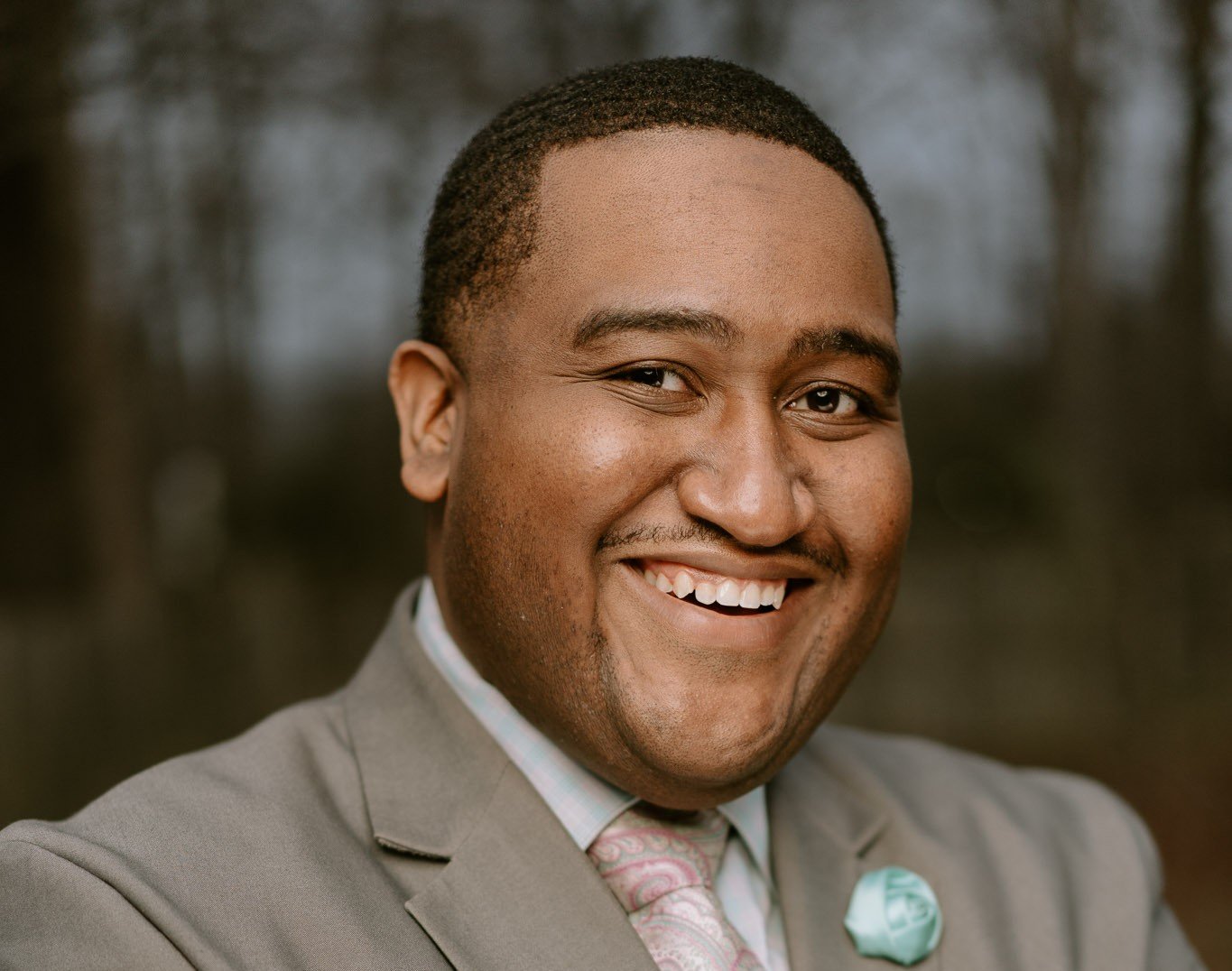
The conventional financial services industry was built on silos. Investment advisors manage portfolios. Insurance agents sell products. Tax professionals file returns. Medicare specialists handle enrollment. And seniors, who experience all of these forces simultaneously as a single financial reality, are left to stitch the pieces together on their own. D’Andre Clayton built his career and ultimately his firm to fix exactly that. Co-founder of Clayton Financial Solutions and an IRMAA Certified Professional, D’Andre brings to his clients something the broader industry has largely failed to offer: a complete picture, told in plain language, grounded in real numbers, and built around outcomes rather than hope.
An Engineer’s Mind in a World Built on Hypotheticals
D’Andre did not arrive in financial services through the conventional path. His background in electronic engineering trained him to think in systems, in precise inputs and predictable outputs. That precision made him uncomfortable with the way mainstream financial planning operates built on projected returns, assumed tax brackets, and market hypotheticals that real people are expected to retire on.
That discomfort became purpose when he began serving teachers in his first role as a retirement specialist for a local school system. He saw firsthand what fragmented, assumption-laden planning looked like in practice: professionals who had spent decades serving their communities arriving at retirement with far less than they had been told to expect. The industry, he recognized early, was creating confusion precisely because there was no cohesion particularly between Medicare planning and the income strategies that govern retirement cashflow. That observation set the trajectory for everything that followed.
The Clayton 360: Integration as the Answer
Clayton Financial Solutions was built around a single insight: clients do not live in silos, so their financial plan should not either. A retiree does not experience investment risk separately from healthcare cost risk or tax risk. They experience them together, as one outcome. The Clayton 360 approach integrates every moving part investments, insurance, tax strategy, Medicare planning, and legacy considerations into a unified framework organized around three phases: Clarity, Simplicity, and Fortification.
The goal, as D’Andre puts it directly, is to make retirement outcomes predictable rather than hopeful. IRMAA the Income-Related Monthly Adjustment Amount that triggers higher Medicare premiums is a telling example of what fragmented planning misses. Most seniors making common decisions, such as downsizing their home, never realize that the income event associated with the sale could spike their Medicare premiums two years later, costing them the equivalent of what four hundred thousand dollars generates at a safe withdrawal rate, while also accelerating taxation on Social Security. IRMAA isn’t just a surcharge, It is a signal. It tells you whether your income strategy is coordinated or not.
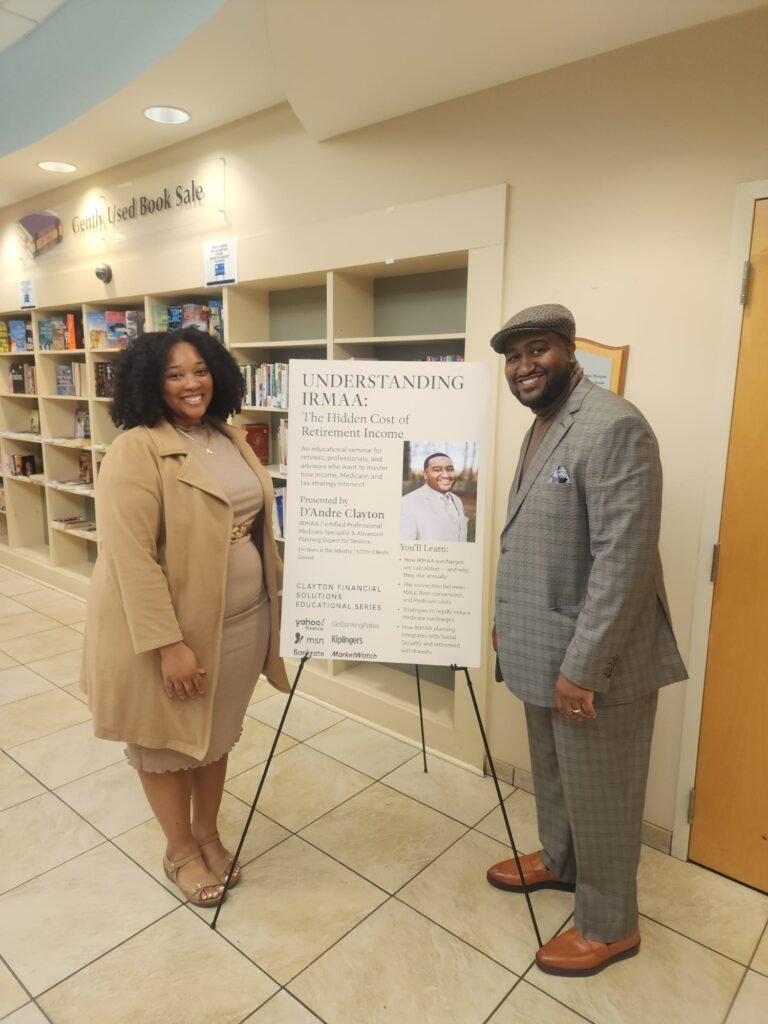
“The client doesn’t live in silos. A retiree doesn’t experience investment risk separately from healthcare cost risk or tax risk. They experience them as one reality and one outcome.”
Empathy as Strategy: The Teacher Who Changed Everything
D’Andre’s philosophy was not shaped in a boardroom. It was shaped in a moment of silence during his first year in the business. Sitting across from a teacher who had spent her career in service, he completed her pension analysis and could not find the words. Her pension would pay her thirteen thousand dollars a year. It was not enough, and he knew it. Rather than recommend a product that would have earned him a commission, he looked up a senior administrative role at a state agency that paid nearly double her current salary. Six months later she called to say she had gotten the job. Her pension, calculated on her top four consecutive earning years, would double without saving a single additional dollar.
The company he worked for was not pleased. There was no commission in that solution. But that one act of genuine advocacy generated years of referrals from her family and friends. It is the model he carries into every client relationship today: three mandatory meetings before any recommendation is made, full disclosure of every tradeoff, and a willingness to say no when a strategy does not serve the client’s actual goals.
What the Industry Gets Wrong and What It Costs Seniors
D’Andre is candid about the systemic failures he witnesses routinely. Sixty-five-year-olds with a hundred percent equity exposure. Retirement projections built entirely on hypothetical market performance, with Medicare costs nowhere in the calculation. Clients told they will be in a lower tax bracket in retirement, without any accounting for the tax tripwires built into RMD structures, Social Security taxation thresholds, or the compounding effect of non-spousal inherited IRA rules. An industry that measures success by account balances rather than by whether the person in front of them will actually reach the income outcome they need.
His community outreach work Social Security and IRMAA workshops, classroom financial literacy sessions, lunch-and-learns with medical offices, radio appearances, and podcast features is designed to create awareness before a crisis forces the conversation. Financial literacy, in his view, is not about delegating responsibility to an advisor. It is about understanding enough to hold that advisor accountable. “When every scenario is one you trust but don’t understand,” he says, “you lose control of the real culprit.”
A Legacy Built on Outcomes, Not Projections
The family D’Andre worked with six years out from retirement illustrates what integrated planning actually produces. They came with a familiar question pay off the home or invest more and left with a strategy that eliminated consumer debt, leveraged a first-lien HELOC to aggressively reduce their mortgage, and added two income-generating tiny homes to their property. Today they carry roughly forty-five thousand dollars in remaining mortgage debt, generate an additional twenty-four hundred dollars a month in rental income, and are on track for eight thousand dollars a month in retirement income with no debt obligation. Their 401k has been repositioned to cover long-term care needs and provide supplemental income, structured specifically to manage MAGI and avoid IRMAA exposure. A brokerage account was added not for growth, but to improve taxation and remove the compulsion to spend.
That is what D’Andre Clayton means when he says financial advice should be about what you want to happen for sure. Not projections. Not potential. Outcomes engineered with the same precision he brought from engineering into every client relationship he has built since.