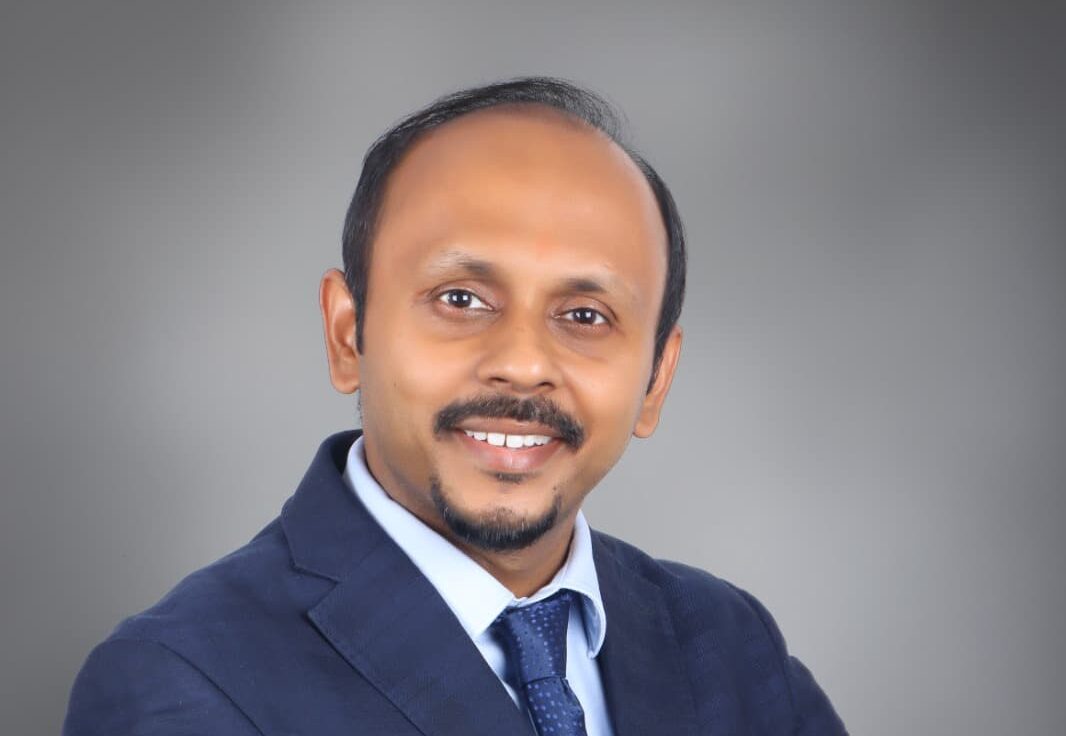
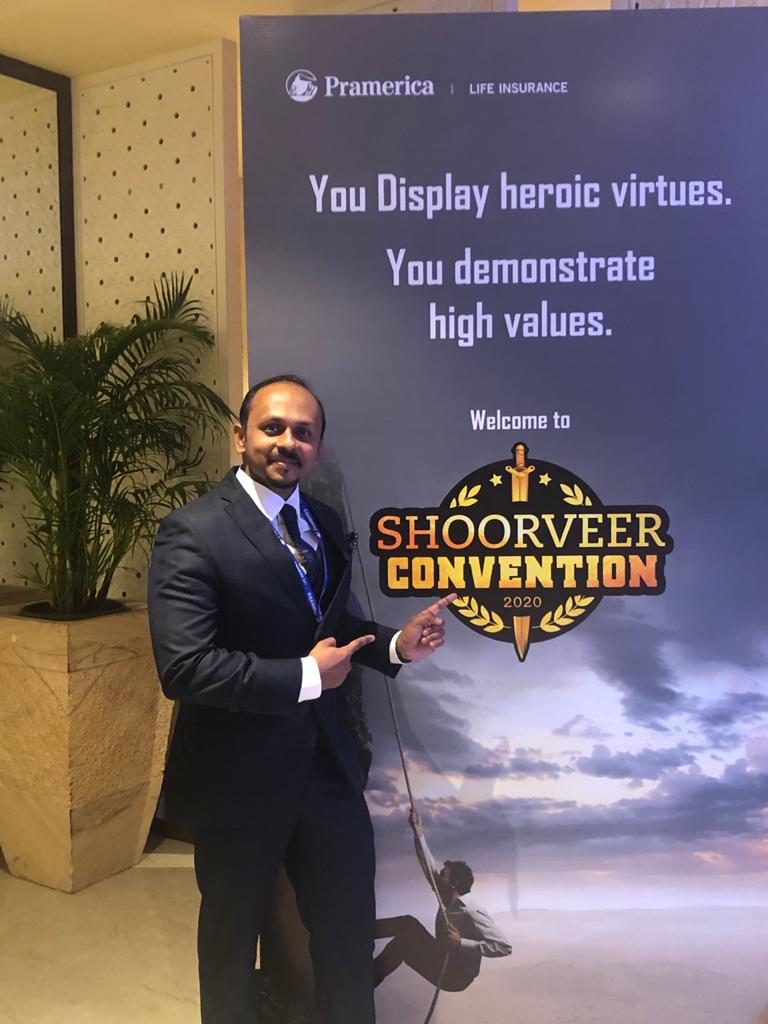
Few careers follow a predetermined path, and fewer still emerge from circumstances that initially seem unremarkable. Vedant Srivastava’s journey into healthcare and insurance began in 2001, immediately after completing his schooling, when a friend convinced him to attend a 100-hour training program to become an insurance advisor. The motivation was remarkably simple: free meals during training and the appeal of owning a visiting card at an age when such symbols mattered.
“Honestly, the initial attraction was quite simple,” he recalls with characteristic candor. “Little did I know that this accidental beginning would eventually shape my life’s work and give me a deep sense of purpose.”
What began as a career by chance slowly transformed into a career by choice. Starting on the frontline, managing daily sales activity, handling objections, and understanding human behavior at the retail level, Vedant learned lessons that no classroom could teach. He discovered that customers rarely buy products. They buy trust, reassurance, and confidence in moments of uncertainty.
“Healthcare is not only about having the best hospitals or the best insurance plans. It is about ensuring that the ecosystem works cohesively enough to deliver the right care at the right time. Timely consultation, preventive intervention, diagnostics, or managed care could change outcomes.”
This insight, earned through thousands of customer interactions across his early career at organizations like HSBC, ICICI Prudential, MetLife, and Edelweiss Tokio, became the foundation upon which everything else would be built. As he progressed through branch management, larger leadership roles, and eventually full P&L ownership, his perspective deepened and broadened.
“Managing a P&L forces you to stop thinking in silos,” Vedant explains. Suddenly, the interconnectedness became clear: distribution productivity, cost structures, customer retention, claims behavior, provider relationships, technology investments, and long-term scalability were not separate concerns but deeply interwoven elements of sustainable business models.
TWO MOMENTS THAT CHANGED EVERYTHING
Professional experience shapes perspective, but personal experience shapes purpose. For Vedant, two moments proved transformative in fundamentally redirecting his career toward integrated healthcare ecosystems.
The first came early in his insurance career when he accompanied an advisor to personally deliver an insurance claim cheque to a family that had lost their primary earning member. Until that moment, insurance existed in his mind largely through the lens of targets, policies, and business numbers.
“Witnessing the emotional and financial impact of that claim changed my perspective completely,” he reflects. “In that moment, I understood the true meaning of financial security and the silent but critical role insurance professionals play during life’s most vulnerable situations.”
That experience gave his work meaning beyond commercial metrics. He understood, viscerally, that the policies and procedures he managed touched lives at their most fragile moments. Over two decades, this conviction has remained steady: through life and health insurance, he has been privileged to support countless families during critical moments of need.
But the second experience cut deeper still.
During the COVID-19 pandemic, Vedant lost someone very close despite having access to the best healthcare infrastructure, strong industry relationships, financial resources, and deep familiarity with the healthcare system. The loss was devastating, but it forced him to confront an uncomfortable reality.
“The problem was not the absence of hospitals, insurance, or even medical expertise,” he states. “The real issue was fragmentation.”
The systems were operating in silos. Critical care navigation consumed precious time. Access required navigation through competing systems. Coordination happened across disconnected channels. In healthcare, time is often the difference between recovery and tragedy.
This realization crystallized a conviction that would reshape his entire professional direction: “Healthcare is not only about having the best hospitals or the best insurance plans. It is about ensuring that the ecosystem works cohesively enough to deliver the right care at the right time.”
A timely consultation, preventive intervention, proper diagnostics, or managed care pathway could potentially have changed the outcome. Vedant, with his experience and industry exposure, found it difficult to navigate the complexity during crisis. He wondered what the reality looked like for millions of ordinary families across India facing similar situations without his advantages.
“That period changed my thinking permanently,” he acknowledges. He stopped viewing healthcare problems only through the lens of distribution, claims, or provider networks. His focus shifted toward understanding larger ecosystem gaps, how insurers, hospitals, diagnostics, preventive healthcare, technology platforms, and wellness systems could work together more intelligently.
BUILDING THE FRAMEWORK FOR INTEGRATION
Over his more than two decades in financial services and healthcare, Vedant studied global healthcare models and transformation journeys not to replicate them blindly, but to understand what India could realistically adapt while keeping affordability, accessibility, and scalability central.
What further shaped his perspective was the realization that many of healthcare’s challenges closely mirrored the distribution challenges he had spent years solving across insurance and financial services. Having built retail distribution channels, managed enterprise partnerships, led large sales organizations, and overseen complex stakeholder ecosystems, he developed a unique lens for identifying operational bottlenecks and designing scalable solutions.
His experience taught him that sustainable growth rarely fails because of a lack of capability. More often, it breaks down because of fragmentation, misaligned incentives, disconnected execution, and the absence of a common purpose across stakeholders.
“As I studied healthcare more deeply, I found striking parallels with distribution ecosystems,” Vedant explains. “Whether you are managing advisors, branches, enterprise partners, hospitals, diagnostics providers, or wellness networks, the core challenge remains the same: creating alignment, building trust, reducing friction, and enabling every stakeholder to work toward a common outcome.”
This perspective allowed him to approach healthcare bottlenecks differently. Rather than viewing insurers, providers, diagnostics partners, and technology platforms as separate entities, he began seeing them as interconnected nodes within a larger healthcare distribution ecosystem. Many of the principles he had successfully implemented in retail and enterprise distribution, including network optimization, stakeholder alignment, service standardization, incentive design, customer journey management, and scalable execution, became the foundation for building a more connected and coordinated healthcare model.
Today, at HealthAssure, he oversees one of India’s largest integrated primary healthcare ecosystems: more than 14,000 providers across 1,200 cities and 15,000 pin codes. But the scale of the operation is not his primary concern. What matters is how these providers connect to create seamless healthcare experiences.
From this experience managing massive networks emerged his framework for integrated healthcare: SIMPLE. Not simple in the sense of reduced sophistication, but simple in reducing complexity for the end customer.
The SIMPLE Framework represents six foundational pillars. Scalable Accessibility ensures healthcare reaches beyond metros into Tier 2, Tier 3, and emerging India, democratizing quality healthcare while maintaining consistency. Intelligent Technology Integration makes technology the operating backbone, enabling speed, scalability, interoperability, longitudinal health tracking, and seamless experiences.
Multi Stakeholder Alignment recognizes that ecosystems fail when stakeholders operate in silos. Insurers, providers, diagnostics, wellness platforms, technology players, and consumers must align toward healthcare outcomes rather than transactional engagement.
Predictive and Preventive Care moves beyond hospitalization centric models toward proactive primary care, chronic disease management, early intervention, and long term wellness. Low Friction AI Led Navigation harnesses AI to reduce transactional costs, improve navigation, minimize operational friction, and simplify healthcare journeys.
Finally, Empathy Driven Trust and Service Fulfilment acknowledges that while technology enables access, human empathy builds long term credibility. The strongest ecosystems combine digital efficiency with compassionate service during vulnerable moments.
“The future healthcare leaders will not necessarily be the organizations with the largest hospitals individually,” Vedant asserts. “They will be the ones capable of making healthcare truly SIMPLE for the customer.”
THE ARCHITECTURE OF NETWORK EXCELLENCE
Managing over 10,000 partners across 15,000 pin codes requires more than operational excellence. It demands a clear North Star that aligns decision-making across stakeholders.
For Vedant, that guiding principle remains constant: “Building a connected healthcare ecosystem where every stakeholder succeeds through better patient outcomes.”
To operationalize this vision at scale, five strategic pillars have proven effective. Quantality balances scalable network expansion with consistent service quality through structured provider onboarding. Timely Payouts & Incentivized Outcomes recognizes that trust is the currency of ecosystems; transparent engagement models and incentivizing providers for reduced turnaround times and higher satisfaction create long-term ecosystem stability.
Strategic Tech Integration makes technology the operating backbone, enabling real-time dashboards, utilization analytics, automated workflows, and partner performance tracking that improve customer experience while reducing costs. Strong Governance & Regulatory Discipline maintains consistency and trust through field audits, quality reviews, and standardized operating frameworks.
Finally, Decentralized Accountability & Relationship Management recognizes that healthcare remains hyper-local. Regional ownership improves execution speed while continuous partner engagement ensures stakeholders do not operate in silos.
Vedant’s leadership approach draws an unexpected parallel: “Leadership at scale works very similarly to how Shri Krishna approached coordination in the Mahabharata—less through control and more through alignment.” When managing thousands of partners across geographies, centralized control becomes impossible. The role of leadership becomes creating common purpose, ensuring accountability, and enabling teams to make the right decisions independently.
TECHNOLOGY AS CONNECTIVE TISSUE
Technology in healthcare serves a purpose beyond mere digitization. For Vedant, the distinction between “Tech First” and “Strategic Tech” proves critical.
“Integrating with a hospital or diagnostics partner through APIs is basic technology adoption,” he explains. “But creating SKU-level interoperability across consultations, diagnostics, wellness, pharmacy, claims, and care pathways to deliver a seamless healthcare journey for the customer that is Smart Tech.”
The challenge in India is that healthcare remains fragmented and hyper-local. Most ecosystems focus only on organized players who have already digitized. But real India depends heavily on hyperlocal providers, standalone clinics, neighborhood diagnostics, and regional healthcare partners.
“If technology only works for the top layer of organized healthcare, then integration remains incomplete,” Vedant insists. “The real opportunity lies in building technology frameworks that are scalable enough for enterprise players but simple enough for hyperlocal ecosystems to participate in and grow with.”
This conviction shapes every technology decision: ensure interoperability, accessibility, scalability, affordability, and continuity of care while assetizing healthcare journeys through connected utilization and long-term customer value creation.
SUSTAINABLE GROWTH WITH PURPOSE
Sustainable healthcare growth differs fundamentally from other industries because it operates on trust, continuity, and long-term relationships. Vedant identifies five pillars for scalable growth: solving real consumer problems rather than simply launching products, strong distribution and execution capability rooted in ground realities, ecosystem thinking that connects all stakeholders, balancing growth with governance, and what he calls “Purpose-Driven Profitability.”
“Sustainable success comes when commercial growth aligns with better healthcare outcomes, stronger accessibility, improved customer experience, and long-term ecosystem value creation,” he emphasizes.
Underlying all these pillars is intelligent technology and data integration to improve both customer outcomes and operational efficiency.
INDIA’S UNIQUE HEALTHCARE FUTURE
Looking ahead, Vedant envisions India’s healthcare future as distinctly hybrid. “It will not be American, European, Chinese, Japanese, or purely Indian,” he states. “It will borrow America’s innovation, Europe’s access philosophy, Germany’s insurance discipline, Singapore’s efficiency, Japan’s preventive care culture, China’s digital scale, and India’s affordability-led execution.”
The next generation of healthcare leaders will be ecosystem builders, bringing together insurance, providers, technology, partnerships, operations, regulation, and most importantly consumer trust.
“My advice to emerging leaders driving transformation in healthcare would be,” Vedant concludes, “Think Global, Act Local.” Learn from the best healthcare ecosystems globally, but build solutions that are practical, scalable, affordable, and deeply relevant to India’s realities.
This conviction, born from a chance encounter with insurance in 2001 and forged through decades of building trust, managing networks, and learning from personal loss, guides his work today. In connecting fragmented healthcare into seamless ecosystems, Vedant Srivastav is not merely building a business. By applying the lessons of retail, enterprise, and network distribution to healthcare, he is creating a model where alignment, accessibility, trust, and coordinated care become the foundation of better health outcomes. In doing so, he is helping build the infrastructure through which India’s healthcare future will be delivered.