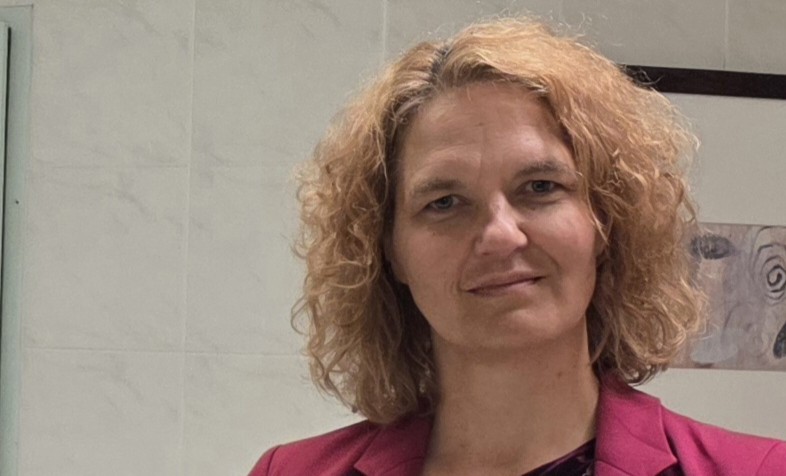
“Systems thinking encourages humility it acknowledges that no single actor controls the system but it also creates clarity by highlighting leverage points where small design decisions can have large effects.”
– Katrien Verwimp
In the complex machinery of Europe’s energy transition, where policies intersect with markets and ambition collides with implementation, there exists a layer of infrastructure that most people never see. It is not the wind turbines or solar panels that capture public imagination, nor the policy announcements that make headlines. It is something more fundamental: the systems that make renewable energy claims credible, comparable, and actionable.
Katrien Verwimp has spent more than two decades working in this essential but often invisible space. As CEO and founder of Enunda, Strategy Coordinator in the Association of Issuing Bodies, and Standards Accreditation Lead at EnergyTag, she operates at the intersection of technology, policy, and market design. Her work focuses on what she calls “the connective tissue of the energy system”: tracking mechanisms, standards, governance models, and cross-border alignment.
“Renewable energy succeeds when systems are coherent,” Katrien explains. “That is the space where I felt I could contribute most meaningfully.”
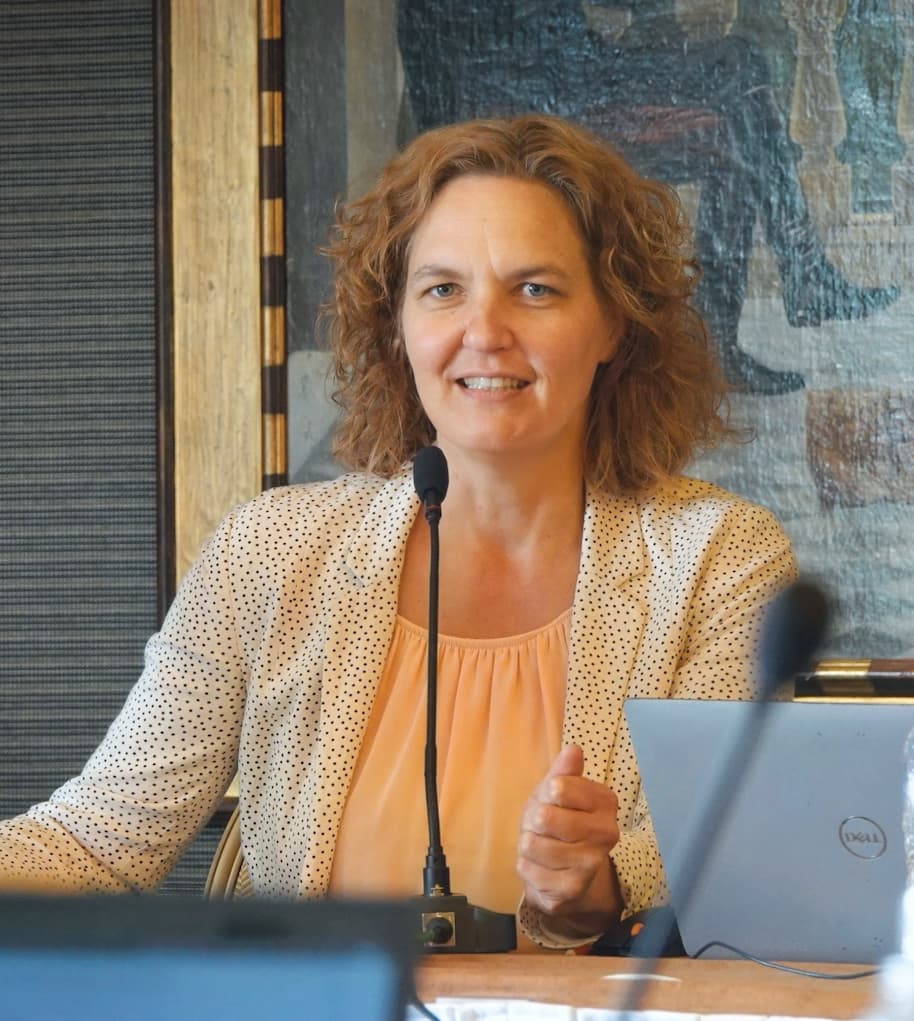
Her journey reveals how technical infrastructure and human collaboration converge to enable one of the most significant transformations of our time. It is a story not of heroic individual achievement, but of patient system building, cross-border cooperation, and the power of making invisible mechanisms work reliably at scale.
THE POWER OF CONSUMER AWARENESS
Katrien’s path into renewable energy tracking began with a deceptively simple insight: transparency changes behavior. More than twenty years ago, when she first entered this field, renewable energy was not something most people discussed. Consumers used energy without knowing or particularly caring about its origin.
“What drew me to the field is understanding the power of consumer awareness,” Katrien reflects. “People consume energy anyways, regardless of its origin. Where the origin of supplied energy is made transparent, consumers become more aware of it.”
This realization took on practical form through her work implementing Guarantees of Origin at the regulatory authority in Belgium-Flanders. These certificates, which track renewable energy from generation through to consumption, became the mechanism through which abstract environmental values translated into market choices. When suppliers became subject to disclosure obligations in Europe, some began differentiating themselves with renewable energy offers. This created something new: consumer awareness and a sense of agency.
“When they understand that their choice of supplier or product makes a difference to the climate, this impacts purchasing behavior, brings topics to the public debate and impacts their influence on policy making,” Katrien notes.
Yet the system had to be more than transparent. It had to be trustworthy. Working at the regulatory level provided Katrien with insights into the system’s strengths and, crucially, opportunities to refine it. Collaborating with colleagues across countries on international harmonization through the Association of Issuing Bodies awakened her enthusiasm for continuously synchronizing and improving system design features.
What became clear through this work was that energy tracking is not merely a technical accounting exercise. It is the infrastructure through which renewable energy markets function, investments flow, and climate claims gain credibility. Without robust tracking, double counting proliferates, trust erodes, and the entire market premise collapses.
FROM IMPLEMENTATION TO ENTREPRENEURSHIP
The transition from regulatory work to founding Enunda represented a natural evolution in Katrien’s mission. In recent years, new policies incentivizing the energy transition have increasingly built on energy tracking systems. This created both opportunity and risk.
“I have been deeply triggered by the realization that well designed tracking systems empower energy consumers and governments to have an actual impact on the energy transition,” Katrien explains. “On the other hand, where different policies aren’t well synchronized, this can lead to inconsistency and confusion in the market.”
Enunda emerged from this recognition. The company focuses on system design, strategy coordination, and capacity building across the renewable energy ecosystem. Through education, moderation, studies, and advisory work, Enunda helps strengthen what Katrien calls “system architects” with deeper insights into interacting dynamics.
The company’s Academy component reflects Katrien’s belief that systemic change requires not just good design, but widespread understanding. When stakeholders comprehend how systems work, they become more likely to trust and support them. Education becomes infrastructure.
This entrepreneurial phase allowed Katrien to work across multiple levels simultaneously: with governments on policy design, with standard setters on technical specifications, with market participants on implementation challenges, and with students and practitioners on capacity building. Each perspective informs the others, creating a comprehensive view of how energy systems actually function in practice.
SYSTEMS THINKING IN A COMPLEX WORLD
At the heart of Katrien’s approach lies a distinctive methodology: systems thinking. In a field often dominated by linear planning and siloed interventions, this perspective offers something different.
“Systems thinking forces us to move beyond linear cause and effect assumptions,” Katrien explains. “Climate and energy challenges are complex precisely because interventions in one part of the system often create unintended consequences elsewhere.”
The examples are numerous and consequential. Introducing a renewable support mechanism without aligning it with tracking systems can undermine market trust. Designing hydrogen policy without clear rules for electricity sourcing can distort investment signals. Creating national standards that diverge from neighboring countries can fragment markets and slow investment.
Systems thinking helps identify these feedback loops early, before policies harden into implementation. It focuses attention on interfaces: between policy and markets, between data and trust, between national rules and cross-border trade. These boundary zones, where different subsystems meet, often determine whether grand ambitions translate into practical results.
“Systems thinking encourages humility,” Katrien notes. “It acknowledges that no single actor controls the system, but it also creates clarity by highlighting leverage points where small design decisions can have large effects.”
This approach requires moving beyond the question of whether individual components work in isolation. The relevant question becomes whether incentives, data flows, standards, and governance structures pull in the same direction. Without that coherence, even ambitious climate strategies struggle to deliver durable results.
THE INTEGRATION CHALLENGE
Europe’s energy landscape is undergoing a fundamental restructuring. What were once separate sectors for electricity, gas, heating, and cooling are being integrated into a single, interconnected ecosystem. Hydrogen is emerging as both energy carrier and storage medium. The boundaries between energy production, distribution, and consumption are blurring.
This integration creates enormous opportunities. It allows renewable energy to be used more efficiently, reduces system costs, and enables decarbonization of sectors that were previously difficult to address. It creates flexibility, enables new storage solutions, and supports business models that were impossible in siloed systems.
Yet the risks are equally significant. “Integration increases complexity, and complexity amplifies the consequences of poor design,” Katrien warns. “If tracking systems are inconsistent across energy carriers, trust erodes. If standards diverge between countries, investment slows. If rules are unclear, green claims become contested.”
One of the biggest risks, in Katrien’s view, is assuming that integration will happen naturally through market forces alone. It will not. Integration requires deliberate system design: aligned definitions, interoperable data systems, and governance structures capable of handling cross-sector interactions.
The challenge is not purely technical. It is institutional. Organizations that never before had to cooperate now need to engage together in consistent macro-level strategies. Regulatory authorities accustomed to overseeing electricity must coordinate with those governing gas networks. Market operators must align their rules and data formats. National governments must recognize that energy flows and climate impacts do not respect borders.
“Europe’s success will depend on whether it can design integrated systems that are understandable, verifiable, and credible for all participants,” Katrien observes.
ALIGNMENT THROUGH UNDERSTANDING
In her multiple roles spanning Enunda, the Association of Issuing Bodies, and EnergyTag, Katrien faces a recurring challenge: ensuring alignment between market innovation and regulatory frameworks. Her approach to this challenge reveals much about her leadership philosophy.
“Alignment starts with understanding,” Katrien emphasizes. “Before discussing solutions or mechanisms, it is essential to understand why certain objectives matter, how they are interpreted across different countries, and what underlying drivers shape national and organizational choices.”
European energy policy operates across vastly different institutional cultures. Policymakers in various countries work within distinct legal traditions, administrative structures, and political contexts. Yet they all benefit from harmonization where markets are interconnected. The key insight is that alignment does not mean uniformity. It means ensuring that diverse approaches can function coherently within a shared framework.
Importantly, policy is not shaped only by those explicitly designated as policy designers. It is also formed in practice by implementers: regulatory authorities, transmission system operators, market operators, certification frameworks, and IT system designers who translate legal text into operational systems. Their interpretations and design choices have real market impacts.
“Recognizing their role is essential for meaningful alignment,” Katrien notes.
Her work focuses on creating spaces where these different actors can build mutual understanding. This includes understanding differences between countries and organizations, understanding their respective constraints and incentives, and understanding the steps already taken within each system. From there, it becomes possible to reconnect these perspectives around joint objectives and shared future goals.
Trust emerges as the critical factor. “Trust grows from understanding: understanding differences, understanding drivers, and understanding how decisions are made and implemented,” Katrien explains. “Once that trust exists, actors are far more willing to coordinate, adapt, and take joint steps forward.”
In complex, cross-border energy systems, alignment is not a one-time achievement but an ongoing process built on continuous understanding and collaboration.
MAKING RENEWABLE ENERGY VERIFIABLE
The promise of renewable energy markets rests on a foundation of trust. Consumers, whether households or corporations, need confidence that their renewable energy claims are genuine. Investors need assurance that green investments deliver actual environmental benefits. Policymakers need verification that incentives are achieving intended outcomes.
This is where reliable tracking and certification become essential. “Trust is the currency of energy markets,” Katrien states. “Without reliable tracking and certification, claims about renewable origin become unverifiable, and confidence erodes.”
Robust tracking systems provide a shared factual basis that prevents double counting of the same renewable energy. They allow all stakeholders to understand what is being claimed, on what basis, and with what level of certainty. This becomes particularly relevant for cross-border transfer of renewable energy, and even more critical as markets move toward more granular, time-based claims about enhanced environmental impact.
Yet certification alone is insufficient. It must be embedded in well-designed systems with transparent rules and strong governance. The technical infrastructure must be matched by institutional capacity and clear accountability.
When done well, energy tracking reduces risk, lowers transaction costs, and enables investment. It transforms renewable energy from an abstract ambition into a verifiable economic reality. Markets can function efficiently because participants share a common understanding of what is being traded.
“In essence, reliable tracking transforms renewable energy from an abstract ambition into a verifiable economic reality,” Katrien summarizes.
THE GLOBAL DIMENSION
While Katrien’s work centers on Europe, her perspective extends beyond continental boundaries. This global outlook is particularly relevant for renewable gases and hydrogen, which are expected to develop international supply chains linking production regions outside Europe with European consumption and regulatory frameworks.
“Standards provide a common language. Transparency ensures that claims can be scrutinized. Smart data structuring enables verification at scale,” Katrien explains. “Without these elements, cross-border energy collaboration becomes fragmented, politicized, or contested.”
The challenge intensifies when collaboration extends beyond Europe. Governmental policies, regulatory cultures, and levels of institutional maturity may differ far more than those between European countries. Production regions may have different approaches to environmental standards, labor protections, and governance.
Robust data infrastructures and internationally aligned standards become essential to bridge these differences. They allow technical harmonization of tracking and verification of energy attribute flows across borders, even when legal systems, market designs, and policy objectives diverge.
“In this sense, data, transparency, and standards are not merely technical tools; they are instruments of cooperation,” Katrien observes. “They enable Europe to engage with global renewable energy markets while maintaining credibility, integrity, and confidence in renewable and low-carbon energy claims.”
This perspective recognizes that Europe’s energy transition cannot succeed in isolation. Climate change is a global challenge requiring global solutions. The systems Europe builds must be capable of interfacing with diverse approaches worldwide while maintaining high standards of integrity and verification.
BRIDGING THE IMPLEMENTATION GAP
Through her close work with governments and standard setters, Katrien has observed recurring gaps between policy design and real-world implementation. Understanding these gaps is crucial for anyone seeking to accelerate the energy transition.
One common issue is underestimating operational complexity. “Policies are often designed at a conceptual level, without sufficient attention to how they will be implemented by registries, market participants, or auditors,” Katrien notes.
The result can be policies that look elegant on paper but prove difficult or impossible to implement in practice. Technical specifications may be unclear. Data requirements may exceed collection capabilities. Compliance costs may be underestimated.
Timing presents another challenge. Infrastructure and capacity building take time, yet policies sometimes assume immediate readiness. This creates pressure on systems that are still evolving, potentially compromising quality or forcing expensive emergency measures.
Perhaps most subtle is the gap between formal compliance and practical usability. A system can meet all regulatory requirements yet still be unusable or fail to achieve desired effects in practice. The letter of the law may be satisfied while the spirit is missed.
“Bridging these gaps requires early engagement with implementers and continuous learning after rollout,” Katrien emphasizes.
This insight points toward a different approach to policy development: one that involves implementers from the beginning, that builds in time for system development, and that treats initial rollout as a learning phase rather than a final product.
COORDINATED ACTION FOR CLIMATE GOALS
Europe has set ambitious climate targets: significant emissions reductions by 2030 and climate neutrality by 2050. Achieving these goals requires coordination across corporate, government, and regulatory actors. Each has distinct roles, but success depends on how effectively these roles interact.
“Governments set direction and boundaries. Regulators ensure integrity and enforcement. Corporates innovate and invest,” Katrien explains. “What is often missing is structured dialogue that allows these roles to interact constructively.”
Corporates need clarity to invest. Long-term commitments require stable policy frameworks and predictable regulatory approaches. Uncertainty about future rules or standards delays investment decisions and raises capital costs.
Regulators need insight into market realities. Abstract rules must function in actual market conditions, and regulators benefit from understanding how market participants respond to different approaches.
Governments need feedback on policy outcomes. Good intentions do not guarantee good results, and adaptive policy requires understanding what works and what does not.
Platforms for shared learning become essential. Whether through formal working groups or structured knowledge exchanges, creating spaces where different actors can share perspectives, identify problems, and develop solutions together strengthens the entire system.
“Climate goals will not be achieved through isolated action, but through coordinated system design,” Katrien concludes.
LEADERSHIP THROUGH CONNECTION
When asked about the leadership qualities most important for managing cross-organizational and international energy programs, Katrien’s response reveals her fundamental approach.
“Working with organizations is working with people,” she begins. “Deeply connect with people and value them for who they are. Seek to understand their underlying drivers and find common ground.”
This human-centered leadership approach recognizes that systems are ultimately designed, implemented, and operated by people. Technical excellence matters, but so does the ability to build relationships, understand motivations, and create shared purpose.
“A good leader connects people to joint purpose,” Katrien explains. “Doing so, for me starts with understanding their individual uniqueness and their personal drivers, see whether and how this naturally relates to a joint objective. Then help people find community and strengthen that what they found that binds them.”
Listening emerges as fundamental. Complex systems involve diverse perspectives, and effective leadership begins with understanding those perspectives. This requires genuine curiosity about how others see problems and what constraints they face.
Persistence is equally important. Systemic change takes time, and progress is often incremental. Leaders must be comfortable working without immediate results, maintaining commitment through periods when change seems slow or uncertain.
Finally, integrity matters deeply. “In fields like energy and climate, credibility is everything,” Katrien emphasizes. “Trust, once lost, is difficult to rebuild. Leaders must therefore be consistent, transparent, and principled in their decisions.”
ECONOMIC VIABILITY AND SOCIAL INCLUSION
As renewable energy systems scale, questions of economic viability and social inclusion become increasingly important. Some view these as competing priorities, requiring tradeoffs between environmental goals and economic or social concerns.
Katrien rejects this framing. “Economic viability and social inclusion are not opposing goals; they are mutually reinforcing,” she argues. “Systems that are perceived as unfair or opaque will face resistance.”
This perspective recognizes that the energy transition is not merely a technical or economic transformation. It is also a social transition that affects how people live, work, and participate in economic life. Systems that exclude certain groups or that concentrate benefits narrowly will struggle to maintain public support.
Affordability, transparency, and access must be built into system design from the start. This includes efficiency in system design to control costs, clear communication so stakeholders understand how systems work, consumer protection mechanisms, and structures that allow participation beyond large incumbents.
Education and capacity building play critical roles. When stakeholders understand how systems work, they are more likely to trust and support them. This is one reason Katrien has invested significantly in Enunda’s Academy, which aims to strengthen system architects with deeper insights into interacting dynamics.
The renewable energy sector must ensure that the transition creates broadly shared benefits rather than new forms of exclusion or inequality.
A LEGACY OF COHERENT SYSTEMS
When asked about the legacy she hopes to create, Katrien’s response reflects her commitment to building durable infrastructure rather than seeking personal recognition.
“I aim to grow understanding with many more people, to grow capacity for stronger system design,” she explains. “That is one of the drivers behind Enunda’s Academy. We aim to strengthen system architects with deeper insights into interacting dynamics.”
Her ambition extends beyond any single project or organization. “I hope to contribute to systems that outlast individual projects or organizations. My ambition is to help build frameworks that are coherent, trustworthy, and resilient.”
This long-term perspective recognizes that energy systems, once established, tend to persist for decades. The design choices made today will shape how European energy markets function for a generation or more. Getting those design choices right matters enormously.
The measure of success, for Katrien, is functional rather than personal. “If renewable energy markets function smoothly, policies are implemented effectively, and stakeholders are empowered through trustworthy systems, I would consider that a meaningful legacy.”
THE INVISIBLE INFRASTRUCTURE
Katrien Verwimp’s work reminds us that transformation happens not just through visible technologies or high-profile policies, but through the careful construction of systems that most people never see. Energy tracking mechanisms, data standards, governance frameworks, and coordination platforms lack the visual drama of wind farms or the political theater of international climate negotiations. Yet they are equally essential.
Her career demonstrates that patient system building, grounded in deep technical understanding and sustained by genuine human connection, can enable change at scale. The renewable energy transition depends on millions of individual decisions by consumers, investors, and policymakers. Those decisions depend on information systems that make renewable energy claims credible and comparable.
Building those systems requires what Katrien calls systems thinking: the ability to see connections, anticipate feedback loops, and design for coherence rather than optimizing isolated components. It requires working across organizational and national boundaries, building trust through understanding, and maintaining integrity when short-term pressures might suggest compromises.
As Europe continues its energy transition, leaders like Katrien provide essential guidance on how to build systems that work reliably at scale, that maintain trust across diverse stakeholders, and that align technical excellence with human needs. Her example shows that meaningful contribution to climate action takes many forms. Sometimes the most important work happens not in the spotlight, but in the careful construction of the connective tissue that holds everything together.