“The future of banking belongs to institutions that combine intelligence, agility, and trust.”
– Sunil Gupta
From global commerce to strategic banking leadership
Global banking has long served as the invisible engine behind international commerce, connecting businesses, enabling liquidity, mitigating risk, and ensuring trade flows continue across borders regardless of complexity. For Sunil Gupta, this interconnected world of finance and global trade has been the defining arena of a leadership journey spanning more than 25 years across trade finance, compliance, banking transformation, treasury solutions, and product innovation.
What initially drew him to banking was not merely finance itself, but the extraordinary coordination required to make global commerce function. Early in his career, he developed a deep appreciation for how transactions initiated in one market could be structured, financed, risk-managed, and ultimately fulfilled through an intricate global ecosystem of institutions, systems, and partnerships.
That fascination quickly evolved into purpose.
Working directly on trade finance transactions gave him a front-row view into the strategic role banking plays in enabling business growth. Trade finance, whether through letters of credit, receivables finance, or liquidity solutions, was far more than a transactional mechanism. It was a catalyst for growth, resilience, and competitive advantage.
That perspective would shape the leadership philosophy that continues to define his work today.
Redefining trade finance for the digital era
Trade finance is undergoing one of the most significant transformations in its modern history.
For decades, the industry operated through paper-intensive, manual, transaction-based processes that often created friction, delays, and operational inefficiencies. But in an increasingly digital global economy, that model is rapidly becoming obsolete.
Sunil sees the future of trade finance as fundamentally different.
The evolution is no longer simply from product enhancement to incremental modernization. It is a structural shift from products to platforms, from documents to data, and from transactional banking to strategic ecosystem enablement.
This transformation will redefine how businesses manage working capital, liquidity, supply chain resilience, and global trade execution.
Digital ecosystems, electronic documentation, API connectivity, and real-time data visibility are already accelerating transaction cycles and improving transparency. Meanwhile, artificial intelligence and predictive analytics are shifting trade finance from reactive funding toward proactive working capital optimization.
The result is a future where trade finance becomes less about isolated instruments and more about integrated strategic capability.
Building client-centric global solutions
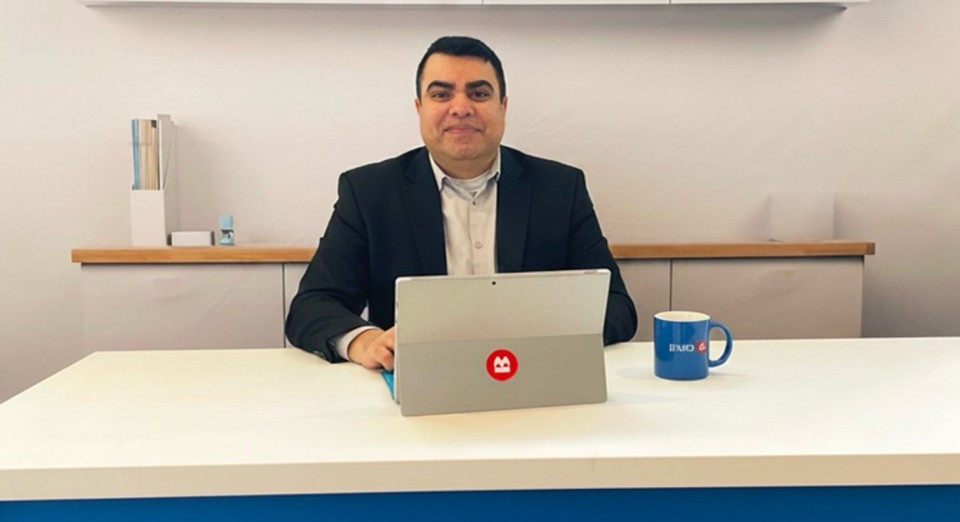
As Global Trade Product Head at BMO Financial Group, Sunil’s leadership priorities reflect this changing landscape.
At the center of his approach is a clear focus on client-centric innovation.
Global clients today operate in increasingly complex environments defined by supply chain volatility, geopolitical disruption, regulatory scrutiny, and rising expectations around speed, transparency, and operational efficiency. Meeting those expectations requires far more than traditional product delivery.
It requires scalable, digitally enabled, strategically integrated solutions.
Sunil’s focus spans platform modernization, automation, supply chain finance expansion, balance sheet optimization, and strategic partnerships that improve liquidity, reduce friction, and strengthen risk management capabilities.
But beneath the strategic priorities lies a consistent principle: solutions must solve real client problems.
This client-first orientation has become a defining feature of his leadership philosophy.
Where innovation meets responsible banking
Few banking leaders bring as multidimensional a perspective to innovation as Sunil Gupta.
His experience across sales, product development, operations, compliance, and anti-money laundering has given him a uniquely balanced understanding of how innovation must function in highly regulated environments.
For many organizations, innovation and compliance are often treated as competing priorities.
Sunil rejects that assumption.
His leadership reflects a philosophy of responsible innovation one where technology, governance, operational resilience, and client value are embedded together from the outset rather than addressed sequentially.
This multidimensional experience allows him to bridge organizational silos effectively, aligning technology teams, business leaders, compliance functions, and risk stakeholders around integrated outcomes.
The result is innovation that is not only ambitious, but scalable, compliant, and sustainable.
In modern banking, that balance is not optional.
It is essential.
Building resilience in a volatile global trade environment
Global trade has entered an era defined by disruption.
Geopolitical instability, supply chain fragmentation, inflationary pressures, macroeconomic volatility, and regulatory complexity have fundamentally changed how businesses think about resilience.
In this environment, trade finance has evolved far beyond efficiency.
It has become a resilience mechanism.
Sunil believes financial institutions play a critical role in helping businesses maintain continuity amid uncertainty. Liquidity certainty, working capital optimization, supplier ecosystem stability, and payment assurance have become strategic priorities for clients navigating increasingly unpredictable environments.
Solutions such as supply chain finance, receivables finance, guarantees, and letters of credit now serve a broader strategic function helping businesses preserve continuity, mitigate risk, and protect operational confidence.
Equally important is flexibility.
Digital platforms, diversified funding models, broader supplier onboarding, and greater transaction visibility are enabling businesses to respond more effectively to disruption.
In today’s global environment, resilience is no longer a defensive strategy.
It is a competitive advantage.
Technology reshaping global trade
Technology is accelerating this transformation at extraordinary speed.
Sunil identifies several technologies that will define the future of trade finance and treasury solutions.
APIs are enabling seamless integration between banking systems and client ecosystems, dramatically improving automation, operational speed, and transaction efficiency.
Artificial intelligence and advanced analytics are enhancing decision-making, automating document processing, strengthening risk management, and enabling predictive insights that improve liquidity planning.
Digital trade documentation including electronic bills of lading is reducing friction, improving speed, and minimizing fraud risk.
Meanwhile, real-time visibility tools such as vessel tracking and supply chain monitoring are providing unprecedented transparency across global trade ecosystems.
Together, these technologies are reshaping trade finance into something far more intelligent, connected, and strategic than its traditional form.
A global leader’s perspective
Having held product mandates across North America, Europe, Asia, the UK, and Ireland, Sunil brings a distinctly global perspective to leadership.
That international experience has reinforced a critical insight: while trade finance operates globally, regional realities matter profoundly.
In Asia, growth momentum, supply chain expansion, and rapid working capital adoption continue to drive innovation.
In Europe, regulatory complexity particularly around AML, compliance, and cross-border governance heavily influences product design and execution.
In North America, the emphasis increasingly centers around liquidity resilience, risk certainty, and strategic adaptability amid macroeconomic and geopolitical volatility.
These regional differences have shaped Sunil’s belief in building globally consistent yet locally adaptable solutions balancing scale with flexibility while maintaining strong governance frameworks.
That global perspective is one of his strongest leadership differentiators.
Leading transformation through collaboration
Modern banking transformation requires far more than technical expertise.
It requires leadership capable of navigating complexity across business, technology, regulation, and execution.
For Sunil, effective leadership is built on strategic clarity, adaptability, disciplined execution, and collaboration.
Transformation succeeds when teams are empowered to innovate responsibly, operate with accountability, and remain committed to continuous learning.
Equally important is curiosity.
For emerging professionals aspiring to leadership, his advice is clear: build breadth across product, operations, risk, and client engagement. Trade finance is inherently cross-functional, and the most effective leaders understand the entire ecosystem not just individual components.
Relationships matter too.
Global banking leadership is rarely built in isolation.
It is built through trust, collaboration, and the ability to bring diverse teams together around meaningful outcomes.
The legacy of strategic banking innovation
Sunil Gupta’s vision for legacy extends beyond product leadership or organizational transformation.
He hopes to help reshape trade finance itself.
Not as a transactional banking function.
But as a strategic, client-centric capability that enables global commerce with greater efficiency, transparency, resilience, and intelligence.
Equally important is the cultural legacy of responsible innovation where technology, governance, and client outcomes are aligned from the beginning, not retrofitted later.
If the next generation of banking leaders inherits a more connected, agile, digitally integrated trade ecosystem and the leadership mindset to continue evolving it then that legacy will have created lasting impact.
Because the future of trade finance will not simply belong to institutions that move money.
It will belong to those that move global commerce forward.