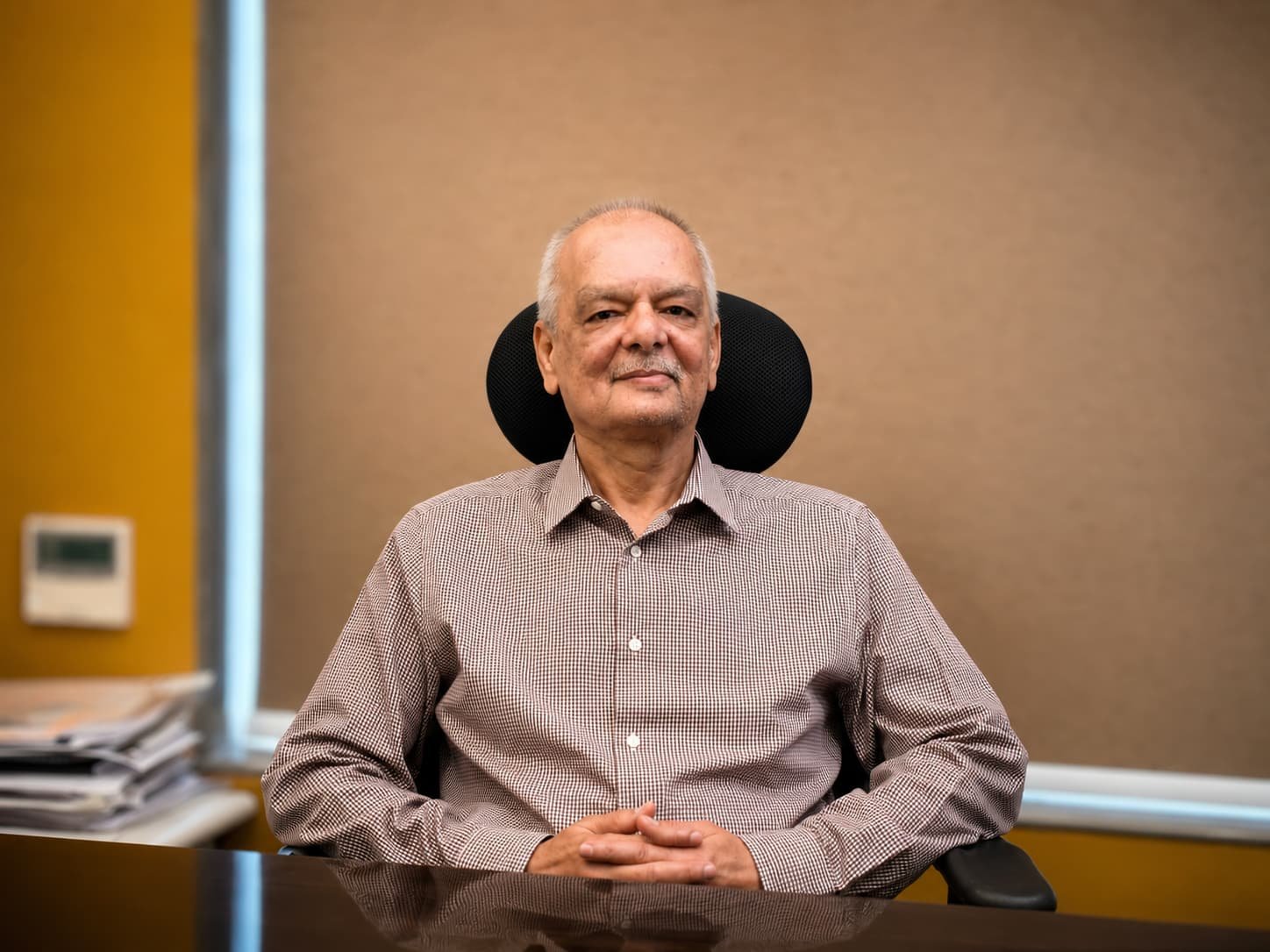
“Trust is the only form of capital that appreciates with every commitment you honour.”
– Vikram Oza
From numbers to strategy: the evolution of a finance leader
The true measure of a finance leader is rarely found in financial statements alone. It is reflected in the confidence of investors, the trust of lenders, the resilience of an organization during uncertainty, and the ability to transform financial discipline into sustainable business growth. Over more than four decades, Vikram Oza has built a distinguished career founded on precisely these principles, earning recognition not simply as a finance executive but as a trusted strategic advisor whose leadership continues to influence some of India’s largest business enterprises.
Beginning his professional journey at a time when Chartered Accountants were expected to master every aspect of finance, taxation, accounting, and compliance, Vikram entered a profession built upon integrity, precision, and public trust. Specialization was virtually nonexistent, and every Chartered Accountant was regarded as a custodian of financial ethics whose judgment carried exceptional credibility. Rather than pursuing a narrowly defined career path, he embraced every responsibility presented to him, allowing experience itself to shape his professional evolution.
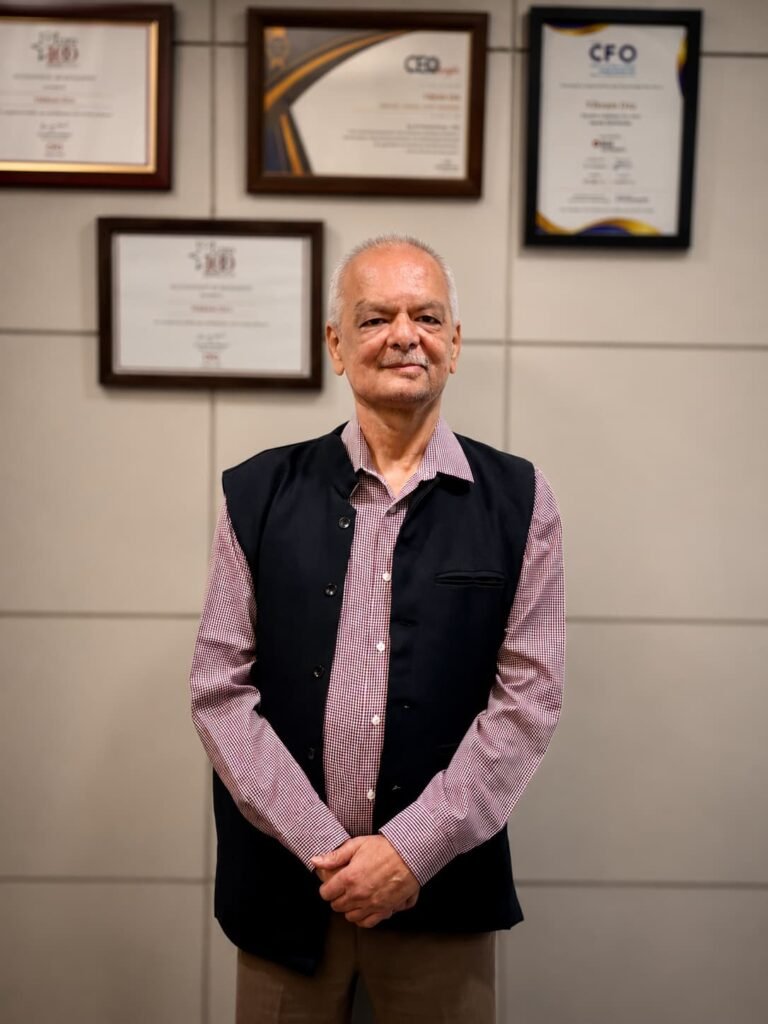
“Transforming Corporate Finance Through Credibility, Governance, and Sustainable Growth”
As technology gradually transformed accounting practices during the 1990s, new opportunities emerged for finance professionals to move beyond traditional bookkeeping and become strategic contributors to organizational growth. Recognizing that finance represented the lifeblood of every enterprise, Vikram immersed himself in capital markets, banking relationships, and corporate finance, learning directly from financial institutions while expanding his understanding of business strategy. Looking back, he describes his journey not as the result of carefully planned decisions but as a willingness to embrace every challenge that circumstances presented. That openness to continuous learning remains one of the defining characteristics of his leadership today.
Why trust remains the strongest currency in finance
Throughout a career spanning multiple industries including paper, engineering, pharmaceuticals, FMCG, textiles, and large-scale manufacturing Vikram has consistently believed that financial leadership begins long before capital is raised or investments are secured. It begins with credibility.
Whether working with domestic banks, international financial institutions, or overseas funding partners, he has discovered that lasting financial relationships are never built solely on balance sheets or projections. They are built on trust earned through consistency between words and actions. Every commitment honored strengthens confidence. Every transparent decision reinforces credibility. Over time, these seemingly simple principles become an organization’s most valuable financial asset.
His success in leading complex domestic and international capital-raising initiatives reflects this philosophy. Rather than viewing financing as a transactional exercise, he approaches it as the cultivation of long-term partnerships founded upon transparency, ethical conduct, and mutual respect. Reputation, once earned through years of disciplined leadership, often becomes more valuable than any individual financial instrument because it opens doors that financial models alone cannot.
Equally important has been his belief in empathy as an essential leadership quality. Inspired by the lessons taught by his parents, Vikram learned early that understanding another person’s perspective strengthens decision-making and builds stronger professional relationships. He believes financial negotiations become significantly more productive when leaders place themselves in the position of every stakeholder involved, balancing commercial objectives with fairness and mutual benefit.
The modern cfo: from number cruncher to strategic partner
Few professionals have witnessed the transformation of corporate finance as comprehensively as Vikram. During the early years of his career, accounting systems were entirely manual, and the Chief Financial Officer’s responsibilities centered largely on ensuring the accuracy of financial reporting. Today, the role has evolved into one of the most strategically influential positions within any organization.
In Vikram’s view, the modern CFO serves as far more than a financial controller. He describes today’s finance leader as the organization’s strategic conscience—working alongside the Chief Executive Officer to ensure ambition remains balanced by disciplined judgment. While business leaders naturally accelerate growth, explore new markets, and pursue opportunities, the CFO provides the necessary governance that ensures expansion remains sustainable, compliant, and aligned with long-term objectives.
At Jindal Worldwide Limited, one of India’s leading integrated textile organizations, this responsibility extends well beyond traditional finance. Every strategic investment, expansion initiative, capital allocation decision, and risk assessment requires financial insight capable of balancing immediate commercial opportunities with lasting shareholder value. Rather than restricting innovation, Vikram believes financial discipline creates the stability necessary for organizations to pursue growth confidently without compromising ethical standards or long-term sustainability.
Leading growth with discipline, governance, and vision
Managing finance within a rapidly evolving business environment demands far more than safeguarding financial resources. It requires balancing growth ambitions with disciplined governance while ensuring that every strategic decision contributes to sustainable value creation. Throughout his leadership at Jindal Worldwide Limited, Vikram has consistently viewed his responsibility as protecting the long-term interests of the organization without slowing its entrepreneurial momentum.
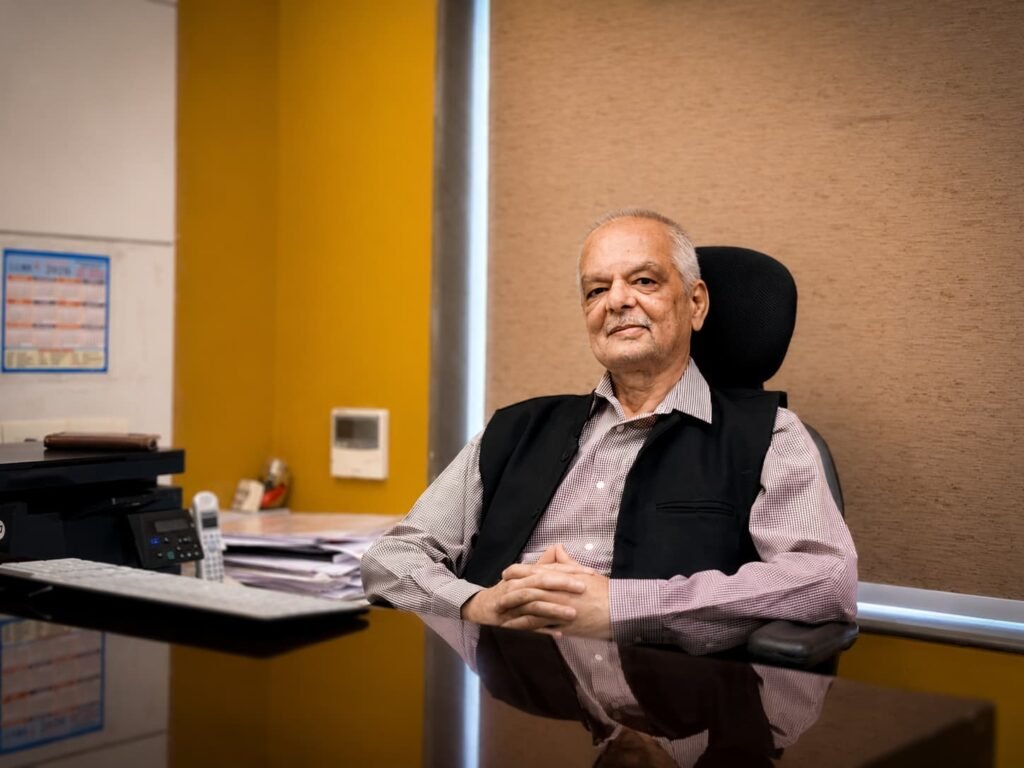
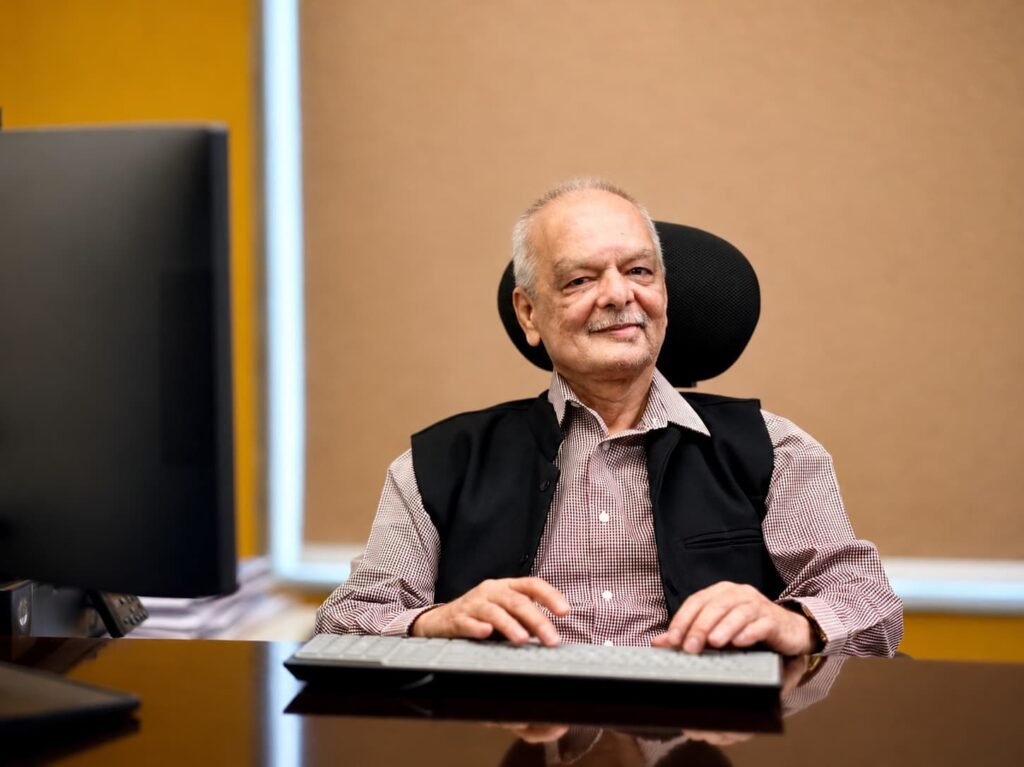
He often compares the relationship between the Chief Executive Officer and the Chief Financial Officer to that of an accelerator and a brake within the same vehicle. While leadership naturally drives organizations toward expansion, innovation, and new opportunities, the finance function ensures those ambitions remain aligned with ethical principles, regulatory frameworks, and prudent risk management. This balance is not intended to discourage progress but to ensure that organizations move confidently without compromising stability or integrity.
For Vikram, effective risk management begins with asking difficult questions before decisions are made. Every investment carries opportunity alongside uncertainty, and every strategic initiative deserves careful evaluation of both potential rewards and possible consequences. By quantifying risk, maintaining financial discipline, and providing objective counsel to executive leadership, he believes finance becomes an indispensable partner in shaping sustainable corporate growth rather than merely reporting financial outcomes after the fact.
Building relationships that outlast transactions
One of the defining strengths of Vikram’s career has been his ability to cultivate enduring relationships across India’s financial ecosystem. Decades of working closely with commercial banks, financial institutions, overseas lenders, investors, and regulatory authorities have reinforced his conviction that professional credibility cannot be manufactured overnight. It is earned gradually through consistency, transparency, and an unwavering commitment to honoring commitments regardless of circumstance.
He believes successful finance leaders must possess far more than technical expertise. Strong interpersonal relationships, active listening, and a genuine willingness to support others often create opportunities that no financial model can predict. Networking, in his view, is not about collecting business contacts but about building mutual trust through meaningful professional interactions over many years.
Perhaps most importantly, Vikram believes leaders should never ignore requests for guidance or assistance. Throughout his career, he has tried to make himself available whenever colleagues, bankers, professionals, or young finance executives sought advice. While financial knowledge may create competence, generosity with that knowledge builds reputation, respect, and influence that extend far beyond any individual transaction.
Why knowledge sharing is a leader’s greatest responsibility
Among the many accomplishments throughout his distinguished career, Vikram derives particular satisfaction not from awards or professional recognition but from mentoring others. He firmly believes that experience gains its greatest value only when it is shared.
Guided by the simple philosophy that “sharing is caring,” he has consistently participated in leadership forums, industry conferences, banking seminars, and interactions with students and emerging finance professionals. For him, every presentation represents an opportunity not only to educate others but also to refine his own understanding. Explaining complex financial concepts often deepens one’s own clarity while creating practical solutions for fellow professionals facing similar challenges.
One memorable experience perfectly illustrates this belief. During a finance leadership forum, Vikram shared his interpretation of complex provisions relating to borrowing powers, loans, advances, and corporate guarantees under the Companies Act. Following the session, another finance executive approached him to explain that his organization had been struggling with precisely the same regulatory issue and that external auditors had refused to approve the financial statements because of differing interpretations. The discussion provided the clarity needed to resolve the impasse.
For Vikram, moments like these represent the true reward of leadership. The satisfaction of helping another professional overcome a seemingly impossible challenge cannot be measured in financial terms. It reinforces his belief that experienced leaders carry a responsibility to strengthen the profession by empowering those who will shape its future.
Excellence is always a team achievement
Recognition has accompanied Vikram throughout much of his professional journey. His inclusion among India’s CFO100 Roll of Honour for seven consecutive years, most recently in 2026, reflects sustained excellence across one of the country’s most competitive finance leadership communities. Yet he remains remarkably humble about these achievements.
He consistently emphasizes that leadership recognition belongs not to individuals but to the teams standing behind them. Public awards may carry one person’s name, but they represent the collective efforts of countless professionals working together toward shared objectives. In his view, effective leaders simply become visible representatives of the organizations and teams that make success possible.
This perspective is deeply influenced by the teachings of the Bhagavad Gita, which encourages individuals to focus on sincere effort rather than becoming attached to rewards. Vikram believes genuine recognition often arrives naturally when leaders concentrate on excellence instead of pursuing accolades. Awards become outcomes rather than objectives, reflecting consistent commitment rather than personal ambition.
Technology, ai, and the future of corporate finance
While artificial intelligence, machine learning, advanced analytics, and digital technologies continue transforming finance functions across the world, Vikram believes technological progress alone will never define exceptional financial leadership.
Today’s organizations possess unprecedented access to information. Sophisticated software can generate reports within seconds, automate routine accounting processes, analyze enormous datasets, and provide predictive insights at remarkable speed. Yet information itself possesses little value unless leaders possess the judgment required to interpret it effectively.
For Vikram, the next decade will belong to finance professionals capable of combining technological fluency with sound fundamental principles. Financial products will continue evolving, regulations will become increasingly sophisticated, and innovation will reshape capital markets at an accelerating pace. Nevertheless, the foundations of finance integrity, prudence, analytical thinking, adaptability, and continuous learning will remain unchanged.
He often describes modern developments as “old wine in a new bottle.” Technology changes. Business models evolve. Markets transform. Yet leaders who thoroughly understand financial fundamentals will always possess the ability to navigate new environments with confidence because principles outlast tools.
A legacy of character, commitment, and the five d’s
As Vikram reflects on the legacy he hopes to leave, he speaks less about financial achievements and more about values.
He often attributes his career to lessons inherited across generations of his family. One particularly meaningful memory continues to shape his outlook. Shortly after his birth, his grandfather an accomplished astrologer predicted that he would one day become a Chartered Accountant and recorded that prediction on a small handwritten note. Years later, despite coming from a family deeply rooted in science and engineering, his father revealed the preserved note just as Vikram was deciding his future. That single conversation inspired him to choose commerce, setting in motion a career spanning more than four decades. Looking back, he views both his grandfather’s foresight and his father’s patience as profound blessings that shaped every professional milestone that followed.
For aspiring Chartered Accountants and future Chief Financial Officers, Vikram offers no shortcuts or secret formulas. Instead, he shares the philosophy that has guided his own life the Five D’s: Desire, Discipline, Dedication, Determination, and Divine Intervention. Together, these principles remind young professionals that lasting success is earned through perseverance, integrity, humility, and faith rather than ambition alone.
Ultimately, Vikram Oza’s legacy extends far beyond balance sheets, capital markets, and financial performance.
It is the legacy of a leader who demonstrated that trust remains the strongest form of capital, that character creates opportunities no financial model can predict, and that the most enduring wealth any finance leader can build is the confidence others place in their judgment.